
A hospital schedules two gastrointestinal studies one morning: an adult for solid-meal gastric emptying after fasting since midnight, and an infant with suspected reflux who will be fed at 8 AM. Which acquisition plan matches both the gastric emptying and reflux protocols?
Select an answer to reveal the explanation.
Short Explanation
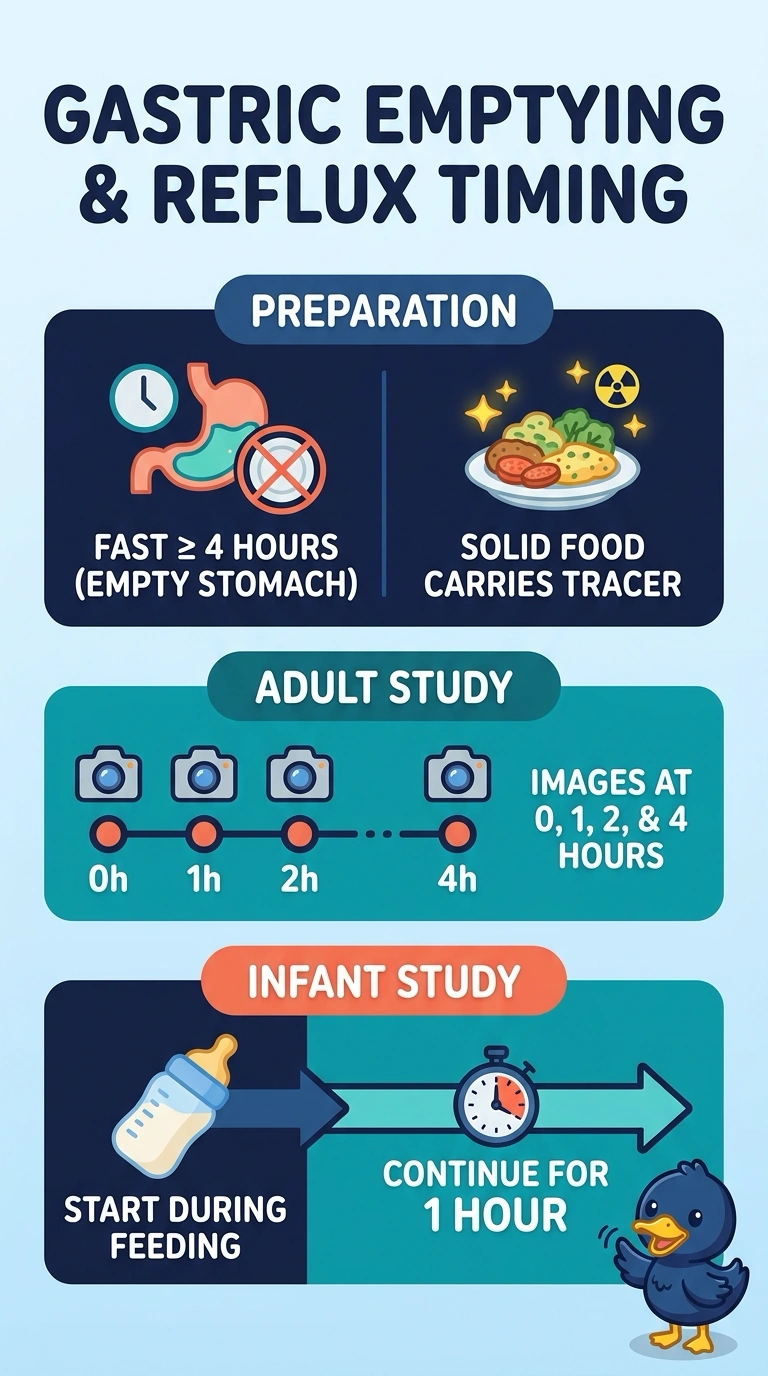
You’ll start the infant’s imaging during feeding and continue for an hour to catch reflux in action, like watching a scene as it unfolds. For the adult, you’ll image at zero, one, two, and four hours to check for delayed emptying.
Full Explanation
The correct plan starts the infant’s acquisition during feeding and continues for an hour, so you can capture reflux as it occurs; the adult’s solid-meal gastric-emptying study uses images at zero, one, two, and four hours to follow retention over time. Starting the infant’s study only after feeding ends can miss reflux triggered during the feed. Imaging the adult at zero, thirty, and sixty minutes ends too soon to assess delayed emptying across the intended four-hour period. Having the adult fast for only two hours before the same four time-point series does not meet the recommended minimum four-hour fast; food left in the stomach can affect baseline retention. Exam caveat: meal composition, exact time points, fasting instructions, and imaging duration can vary by department protocol and published procedure standards. As a practical check, confirm the adult’s last oral intake time, verify that the ordered activity is used to label the meal, and begin the infant’s acquisition before or as feeding starts.