
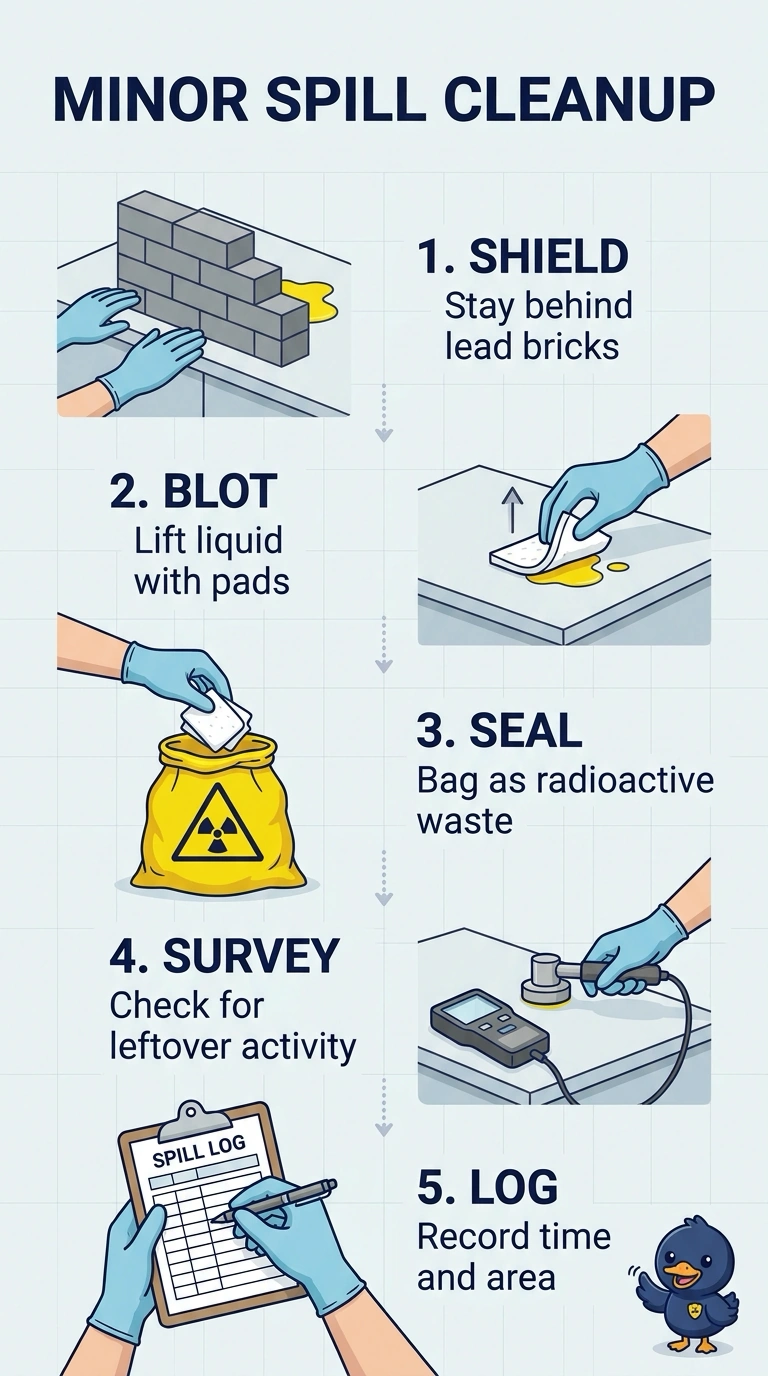
While drawing a dose, a syringe of Tc-99m pertechnetate cracks on the hot lab bench, and the puddle stays on that surface. Policy here keeps shielding in place during cleanup, calls for a fresh survey after it, and records every spill. Which response manages this minor spill while satisfying all three rules?
Select an answer to reveal the explanation.
Short Explanation
You’ve got three rules to keep together: leave the shielding in place, survey after cleanup, and record every spill. Even when the bench is clean, the log matters because your department needs a record of the event.
Full Explanation
Blotting the puddle from behind the shield, sealing the pads as radioactive waste, surveying the bench after cleanup, and logging the spill meets all three stated requirements. Shielding limits exposure during cleanup, the sealed pads contain contaminated material, and a post-cleanup survey checks whether contamination remains on the bench; recording the event fulfills the policy even if the cleanup is successful. Blotting and containing the waste but skipping the survey leaves residual contamination unchecked. Making the log conditional on a survey finding contamination fails because every spill must be recorded, including one with no detectable residual activity. Surveying before cleanup may characterize the spill, but it cannot verify the bench’s condition after the contaminated material has been removed; logging it does not replace that post-cleanup check. Exam caveat: follow the facility’s spill procedure and reporting thresholds; calling a spill minor does not waive required surveys or documentation. Practical check: use a survey instrument suitable for the radionuclide and contamination being assessed, then record the post-cleanup result and spill in the required record.