
A patient checks in for a scheduled Tc-99m sestamibi parathyroid study, but the signed order lists the clinical indication as restaging of metastatic melanoma after therapy while the visit note documents workup of a suspected parathyroid adenoma. Department policy requires a confirmed patient identity and an order that matches the documented reason for care before dosing. Which verification sequence must be completed before any activity is drawn?
Select an answer to reveal the explanation.
Short Explanation
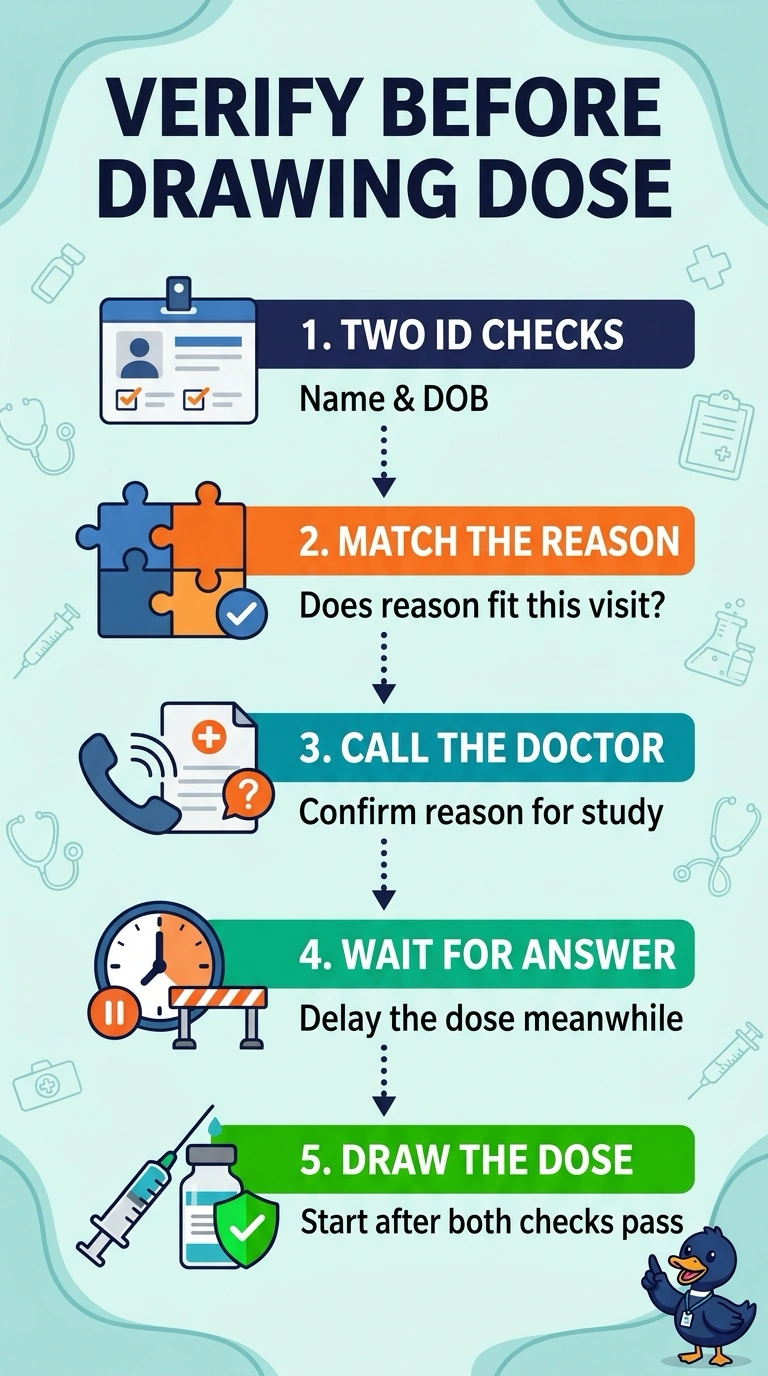
You need two identifiers to confirm the patient and a reconciliation with the ordering clinician to confirm the right study before any activity is drawn. Both checks matter: the indication match ensures the order agrees with the documented reason for care.
Full Explanation
The required sequence confirms the patient with two identifiers, then contacts the ordering clinician to reconcile the order with the documented indication before any activity is drawn. Department policy requires both a confirmed identity and an order that matches the reason for care before dosing, so neither check can be skipped. Confirming identity by name alone and contacting the ordering clinician to correct the discrepancy addresses the indication but does not meet the two-identifier identity check. Using two identifiers and obtaining verbal confirmation of the parathyroid indication still leaves the signed order unreconciled; drawing while an amendment is pending means proceeding before the required checks are complete. Having the nuclear medicine physician infer the intended indication from the visit note confirms neither the ordering clinician’s intent nor a reconciled order, even when two identifiers are used. Exam caveat: verbal clarification can help resolve uncertainty, but do not assume it replaces the required order reconciliation. Practical check: before drawing, verify that two identifiers were used and that the ordering clinician has reconciled the order so it matches the documented indication.