
At shift start, three patients arrive on a medical unit: one with fever and cough being evaluated for pulmonary tuberculosis, one with a draining wound colonized with vancomycin-resistant enterococcus, and one who recently received an allogeneic hematopoietic stem-cell transplant. Which set of transmission-based and protective-environment precautions matches each patient?
Select an answer to reveal the explanation.
Short Explanation
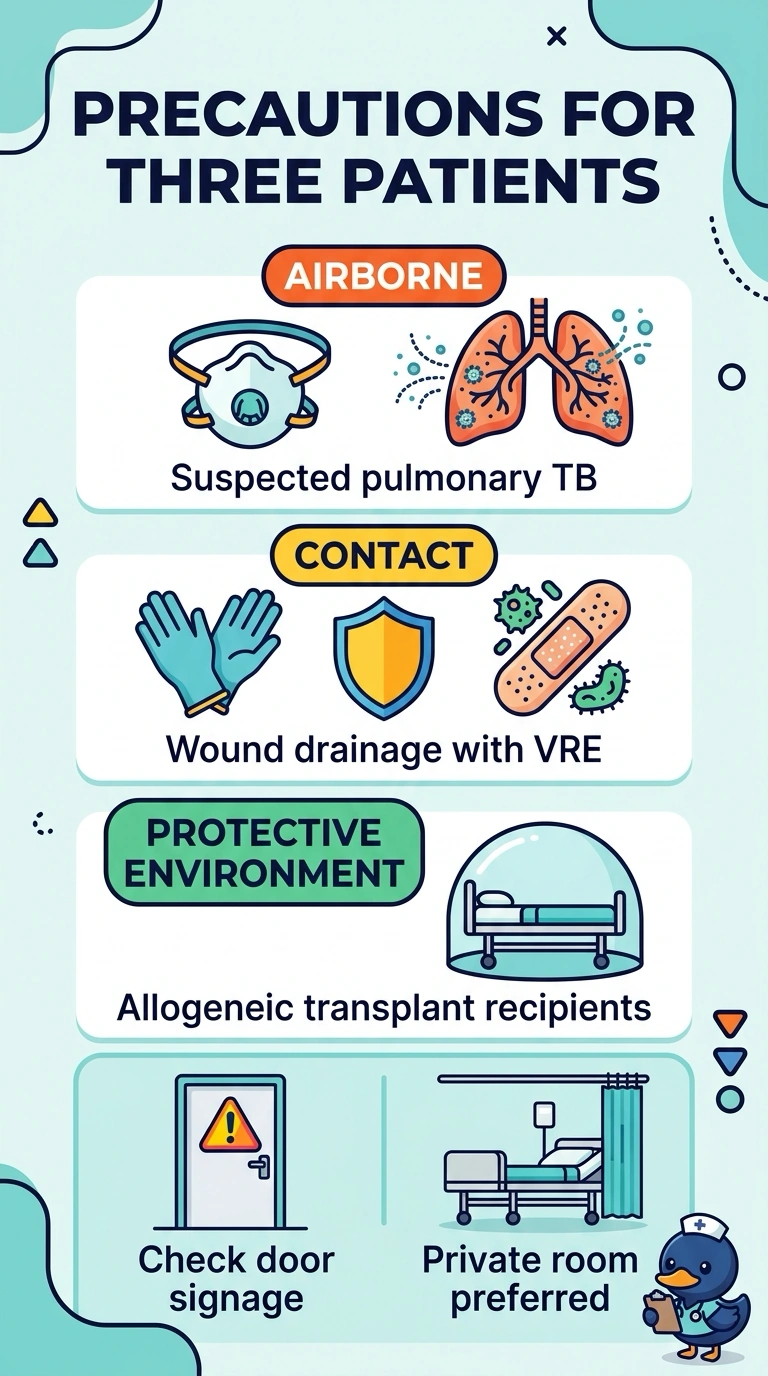
You’ll use airborne precautions for suspected pulmonary TB, contact precautions for the draining VRE wound, and a protective environment for the allogeneic transplant recipient. Each addresses a different exposure risk, and the protective environment helps limit exposure to environmental fungi.
Full Explanation
For suspected pulmonary tuberculosis, airborne precautions are appropriate, including an airborne infection isolation room and respiratory protection for staff. A draining wound colonized with vancomycin-resistant enterococcus calls for contact precautions; use a gown and gloves as indicated and perform hand hygiene. CDC guidance recommends a protective environment for an allogeneic hematopoietic stem-cell transplant recipient, with HEPA-filtered air and positive room air pressure. The combination of airborne precautions for TB, contact precautions for the wound, and a protective environment for the transplant patient matches these distinct risks. Using standard precautions for the transplant patient omits the recommended protective environment. Using standard precautions for the draining VRE wound fails to address the contact transmission risk. Using droplet precautions for suspected pulmonary TB does not provide the airborne controls needed for tuberculosis. An exam caveat is that profound neutropenia after chemotherapy alone does not routinely warrant a protective environment. As a practical check, confirm the room’s airborne isolation requirements for TB and verify the protective environment’s HEPA filtration and positive pressure; discontinue airborne precautions for suspected or confirmed infectious TB only when applicable clinical and public-health criteria are met.