
A patient is referred for parathyroid scintigraphy with Tc-99m sestamibi. The dosimetry summary states that the urinary bladder wall receives the highest absorbed dose of any organ, while the parathyroid tissue supplies the diagnostic image. How should the team classify the target organ and the critical organ for this study?
Select an answer to reveal the explanation.
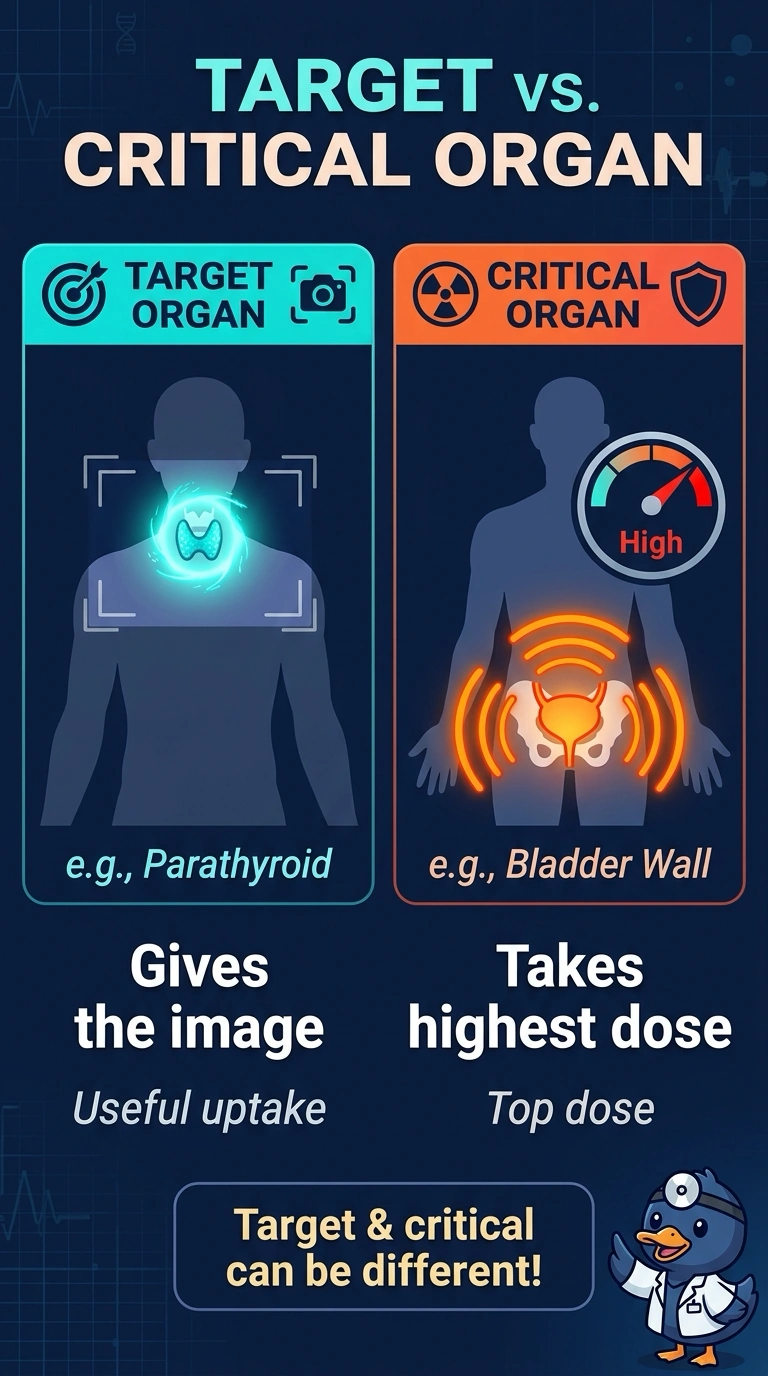
Short Explanation
These labels come from two different rulers, and mixing them up is the classic trap. Your target organ feeds the picture, but it's absorbed dose that earns the critical organ label. Your kitchen is the room you designed for, while the utility bill names the room that costs the most.
Full Explanation
The two terms are defined by separate criteria, which is what makes this distinction testable. A target organ is the structure whose uptake produces the diagnostic information, so in parathyroid scintigraphy the parathyroid tissue is the target. A critical organ is the organ receiving the highest absorbed radiation dose from the administered radiopharmaceutical, and here the summary assigns that value to the urinary bladder wall. The thyroid is not the target simply because it is included in the neck image; the target is the structure being evaluated for the diagnostic purpose of the study. Naming the thyroid as critical conflicts with the stated dosimetry summary, which gives the highest dose to the bladder wall. Swapping the labels fails because target refers to the structure supplying the diagnostic information, while critical refers to the organ receiving the highest absorbed dose. A practical check is to read the highest-dose line of the dosimetry summary before assigning either label.