
At closing, two freshly drawn Tc-99m vials and a sealed Cs-137 check source must be secured overnight; neither vial has been labeled, the only refrigerator holds staff lunches, and the storage cabinet locks. Which storage plan meets radioactive materials requirements?
Select an answer to reveal the explanation.
Short Explanation
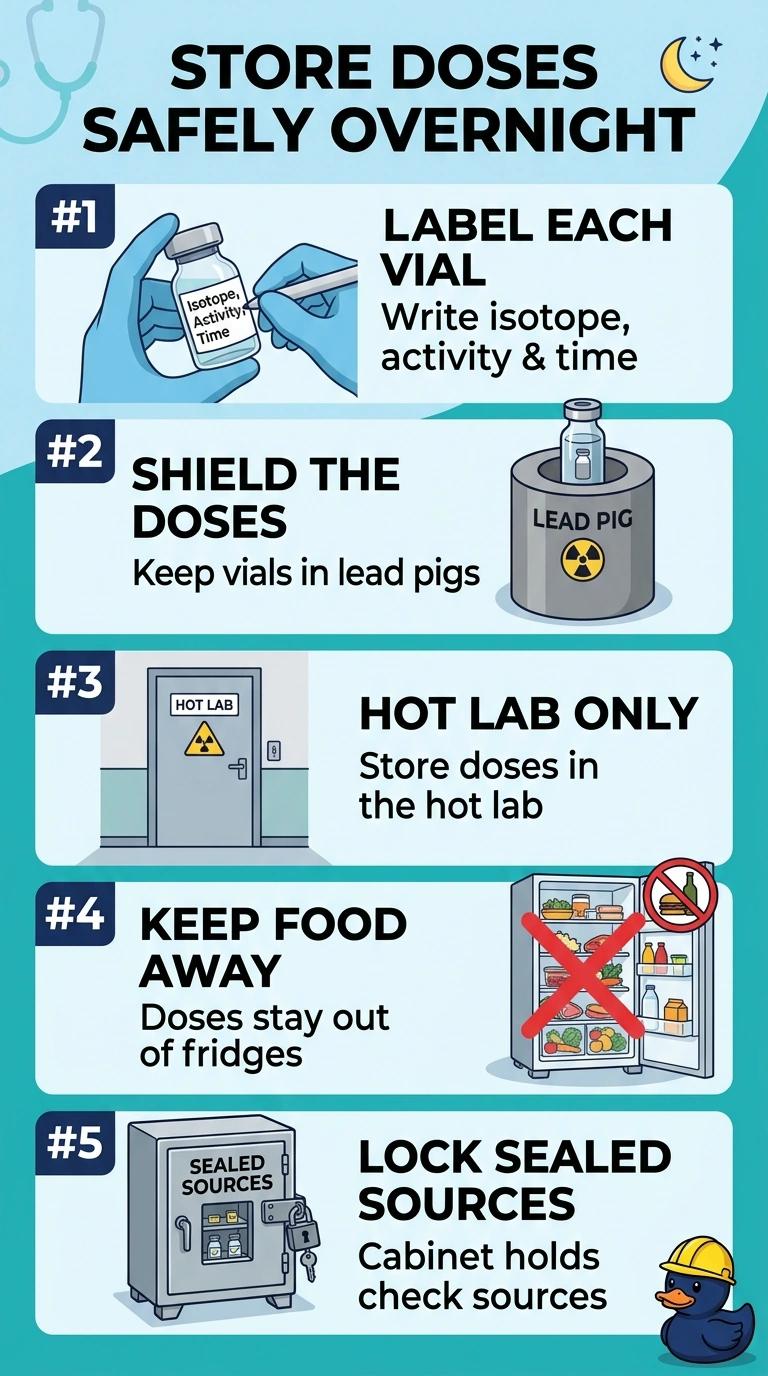
Labeling, shielding, and locking are three separate jobs, and you can't skip any of them before you go home. Identification comes first, because whoever opens that hot lab tomorrow must know what is inside each vial. The shared fridge and the unlocked cart each leave one requirement unmet.
Full Explanation
Unsealed radiopharmaceuticals carry three obligations at closing: contents identified, dose shielded, and material secured when nobody is watching. Labeling each vial with the isotope, activity, and assay time tells the next person what is inside and how strong it is before it is drawn, and lead pigs keep the bench dose rate low. Locking the sealed check source in the cabinet satisfies security for byproduct material not in active use and supports inventory control if the source is later unaccounted for. Leaving the source on a shielded cart protects workers from exposure but still leaves radioactive material unsecured overnight, missing the locked-storage requirement. Storing the shielded vials in the refrigerator protects the doses yet fails the storage rule, because food refrigerators are not permitted for radioactive materials and contamination could reach staff meals. Skipping labels keeps the rest of the plan sound but removes positive identification of contents, the very concept the labeling rule enforces. Exam caveat: label field wording varies among departments, so expect isotope, activity, and time rather than one fixed phrasing. Practical check: before locking up, wipe-test each vial and the bench, then sign the source log.