
A patient with long-standing diabetes is referred for a gastric emptying study, and at the two-hour image more than half of the radiolabeled meal is still in the stomach. The patient is comfortable, the order asks for a quantitative emptying curve, and the camera room is free for another hour. Which acquisition step should the technologist take next?
Select an answer to reveal the explanation.
Short Explanation
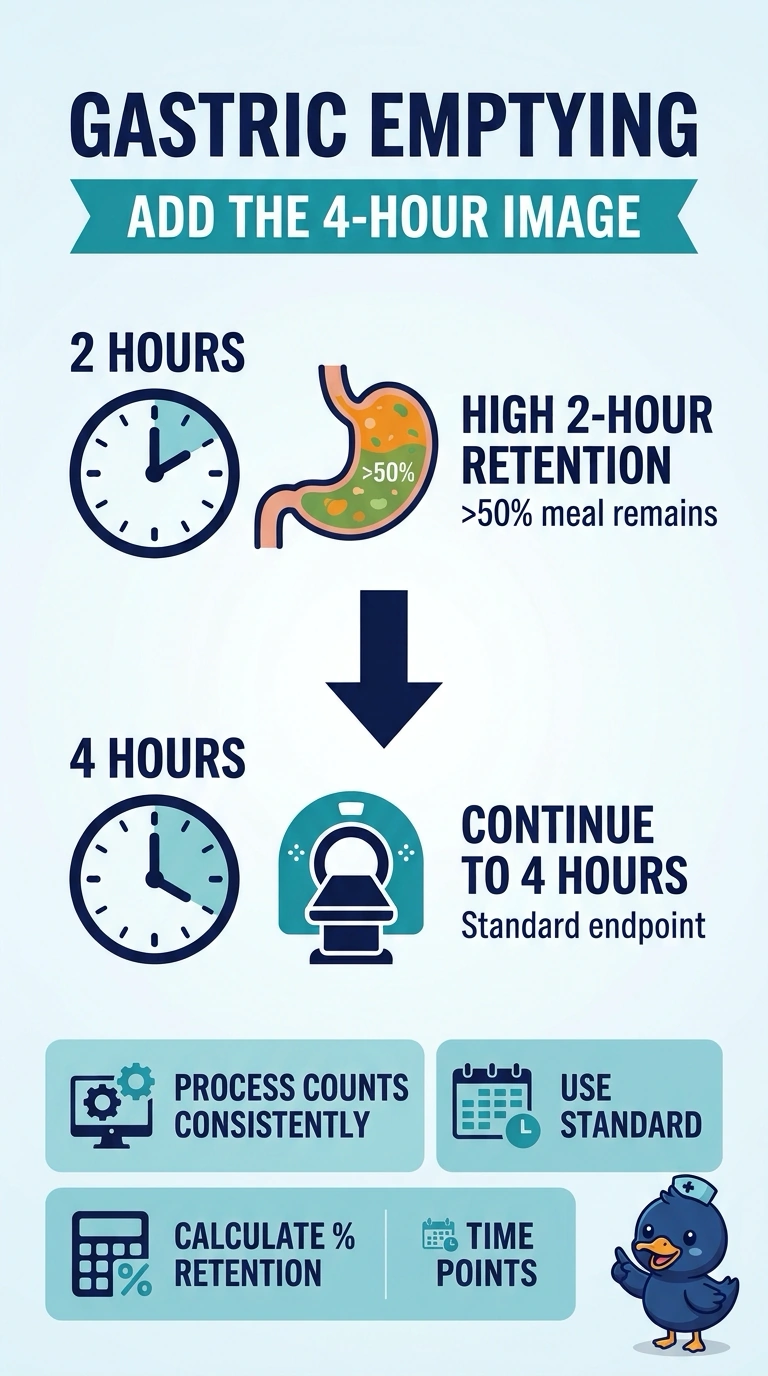
Keep the camera running and obtain the standard four-hour image so you can quantify the delayed emptying at the right endpoint. The two-hour result is a useful checkpoint, like a halfway mark, but it doesn’t replace the standardized final measurement.
Full Explanation
Continue the current acquisition through four hours. More than half of the meal remaining at two hours suggests delayed emptying, but the requested quantitative curve and standard gastric-emptying protocol call for the four-hour endpoint; the available room time and the patient’s comfort make completing it feasible. Serial imaging through three hours can characterize the trend, but it still omits the standard four-hour endpoint, so it cannot provide the requested standard assessment. A four-hour image alone supplies a late retention measurement, not a quantitative emptying curve, because that requires measurements at multiple time points. Using validated two-hour criteria is a recognized way to interpret a two-hour protocol, but it does not meet this order’s request for an extended study to the standard endpoint. Exam caveat: protocol details and reference ranges can vary with the meal and local standards, so do not transfer cutoffs between protocols. Practical check: verify that the meal and earlier time-point images were acquired and that glucose and relevant medications were managed according to the laboratory protocol before final interpretation.