
A technologist draws a Tc-99m sestamibi dose for a resting perfusion study. The vial label lists the drug name, activity, volume, and expiration time, and a tungsten syringe shield sits ready on the cart. Department policy requires the patient's identity and every label field checked against the order while the syringe stays shielded. Which verification and handling step must be completed before the syringe leaves the dosing area?
Select an answer to reveal the explanation.
Short Explanation
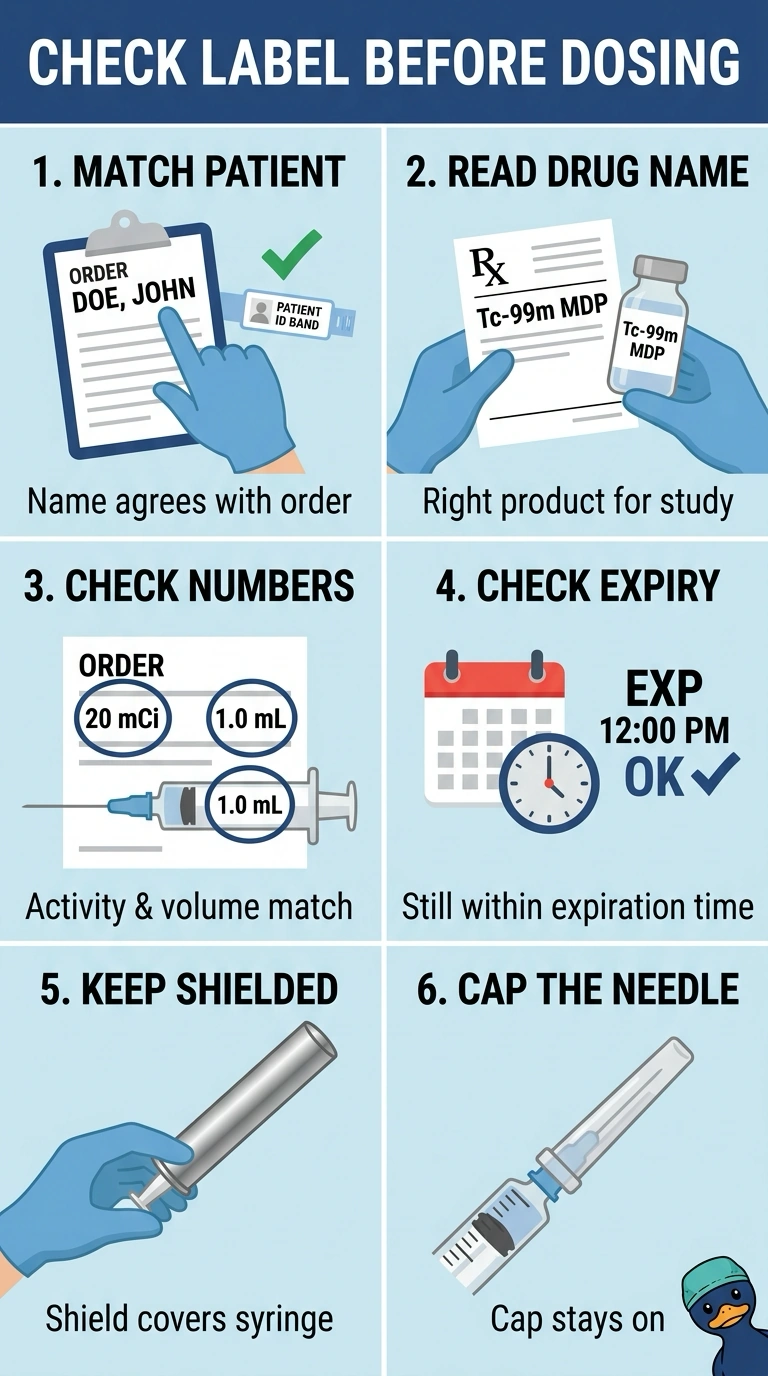
Before your syringe leaves the dosing area, you’ll verify the patient’s identity and every label field against the order while keeping it capped in its shield. Label verification is like checking every item on a packing list before you head out—one missed detail can matter.
Full Explanation
The syringe should leave the dosing area only when the label agrees with the order. Each field addresses a different failure mode: identity ties the dose to the patient, the drug name ties it to the study, activity and volume identify the amount drawn, and expiration indicates whether the preparation is still usable. Shielding reduces external radiation exposure, while capping helps prevent contamination; these are separate handling controls, not alternatives to label verification. The check that omits patient identity leaves a wrong-patient error open. The check that omits expiration treats a potentially expired preparation as valid. The full label check followed by carrying the capped syringe in an unshielded plastic tray fails the shielding requirement. Departments may differ on who performs the check and where it is documented, but this scenario requires all listed fields to be checked against the order. Before administration, verify each label field against the order while keeping the syringe shielded and capped.