
A 52-year-old with a palpable thyroid nodule is referred for evaluation. The physician wants a numeric 24-hour uptake value and images showing whether the nodule functions, and the patient takes levothyroxine every morning. Which thyroid uptake and imaging plan best meets both requirements?
Select an answer to reveal the explanation.
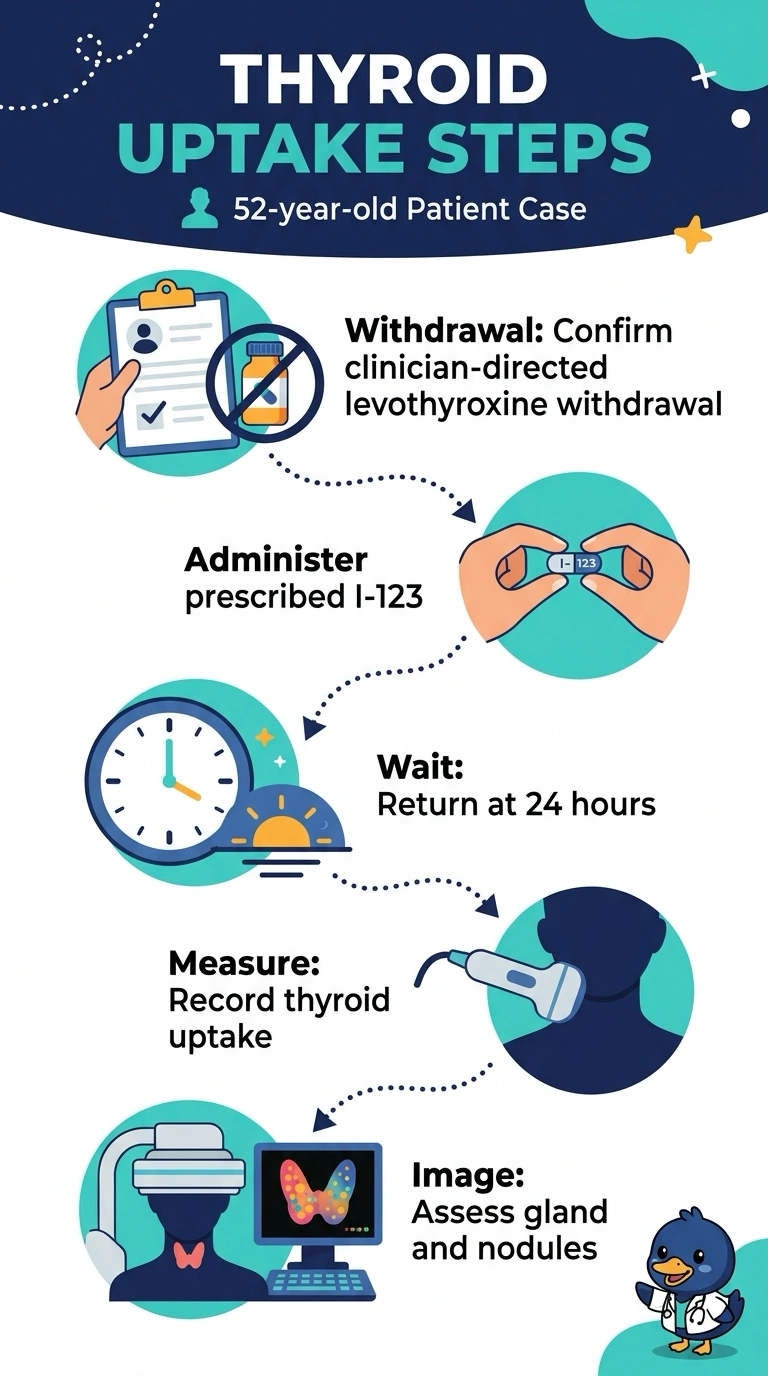
Short Explanation
I-123 is a two-in-one test: it gives you a numeric 24-hour uptake value and images showing whether your nodule is functioning. Because levothyroxine can affect the results, you’ll need to stop it under your clinician’s direction for an adequate interval before the test.
Full Explanation
I-123 can be used for thyroid uptake measurement and imaging, including a requested 24-hour measurement. Levothyroxine can suppress TSH and thereby affect thyroid uptake; if withdrawal is appropriate, it must be clinician-directed and allow an adequate interval for the medication's effects to diminish. The required interval depends on the clinical situation and protocol. Tc-99m pertechnetate is used for thyroid imaging but does not provide the requested 24-hour radioiodine uptake value. Continuing levothyroxine may confound uptake, and a four-hour measurement does not meet the requested 24-hour time point. Recent iodinated contrast, amiodarone, kelp, and iodine-containing products can also affect uptake, so screen for relevant exposures. Confirm the medication plan and iodine-exposure history with the ordering clinician before the study.