
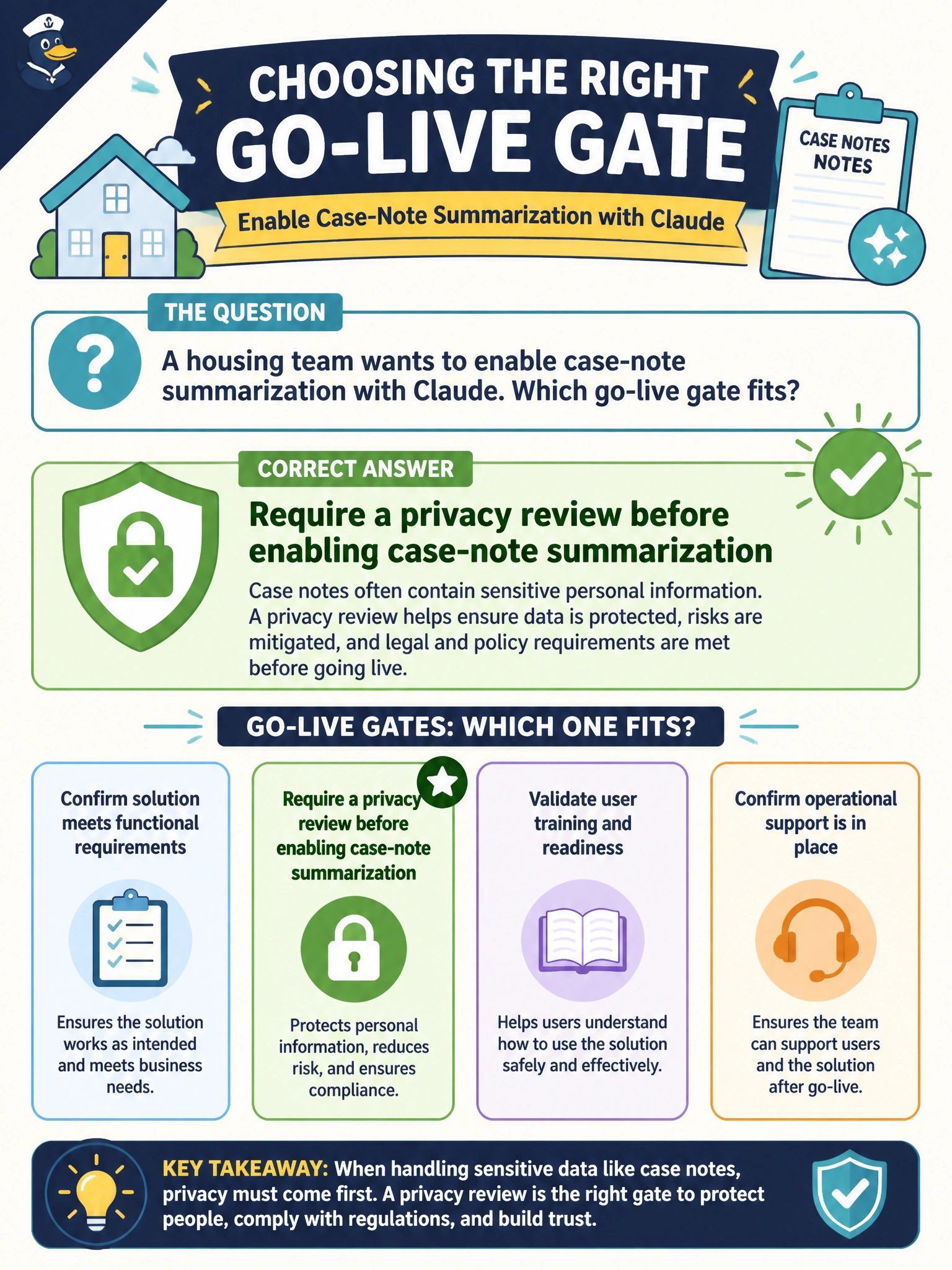
A housing team wants to enable case-note summarization with Claude. Which go-live gate fits?
Select an answer to reveal the explanation.
Short Explanation
Case notes are personal—don't flip on summarization until privacy review signs off.
Full Explanation
Requiring a privacy review before enabling case-note summarization is the go-live gate housing teams should use for Claude features that touch resident case notes. That gate works because case notes contain sensitive personal and household information; summarization can concentrate, leak, or misstate that content at scale. Privacy review forces purpose limitation, retention, access, and redaction decisions before the feature reaches caseworkers or residents.
Requiring a latency benchmark before enabling case-note summarization fails conceptually because latency measures performance speed, not privacy risk; it does not substitute for the mandatory data-protection due diligence that case notes require. Requiring a brand tone approval before enabling case-note summarization fails because brand voice guidelines do not address resident data protection, leaving sensitive personal and household information without the privacy review it requires. Requiring a cost forecast approval before enabling case-note summarization fails because cost considerations cannot override privacy obligations; case notes contain sensitive personal and household information that requires review before any summarization goes live.
Exam caveat: privacy approval is a point-in-time gate; material prompt, model, or retention changes should trigger re-review rather than assuming the original sign-off covers all future edits. Operational check: block production flags for case-note summarization until privacy sign-off is recorded, attach the review ID to the release, monitor for scope creep (new fields summarized), and re-open review when the summarization prompt or data sources change.