
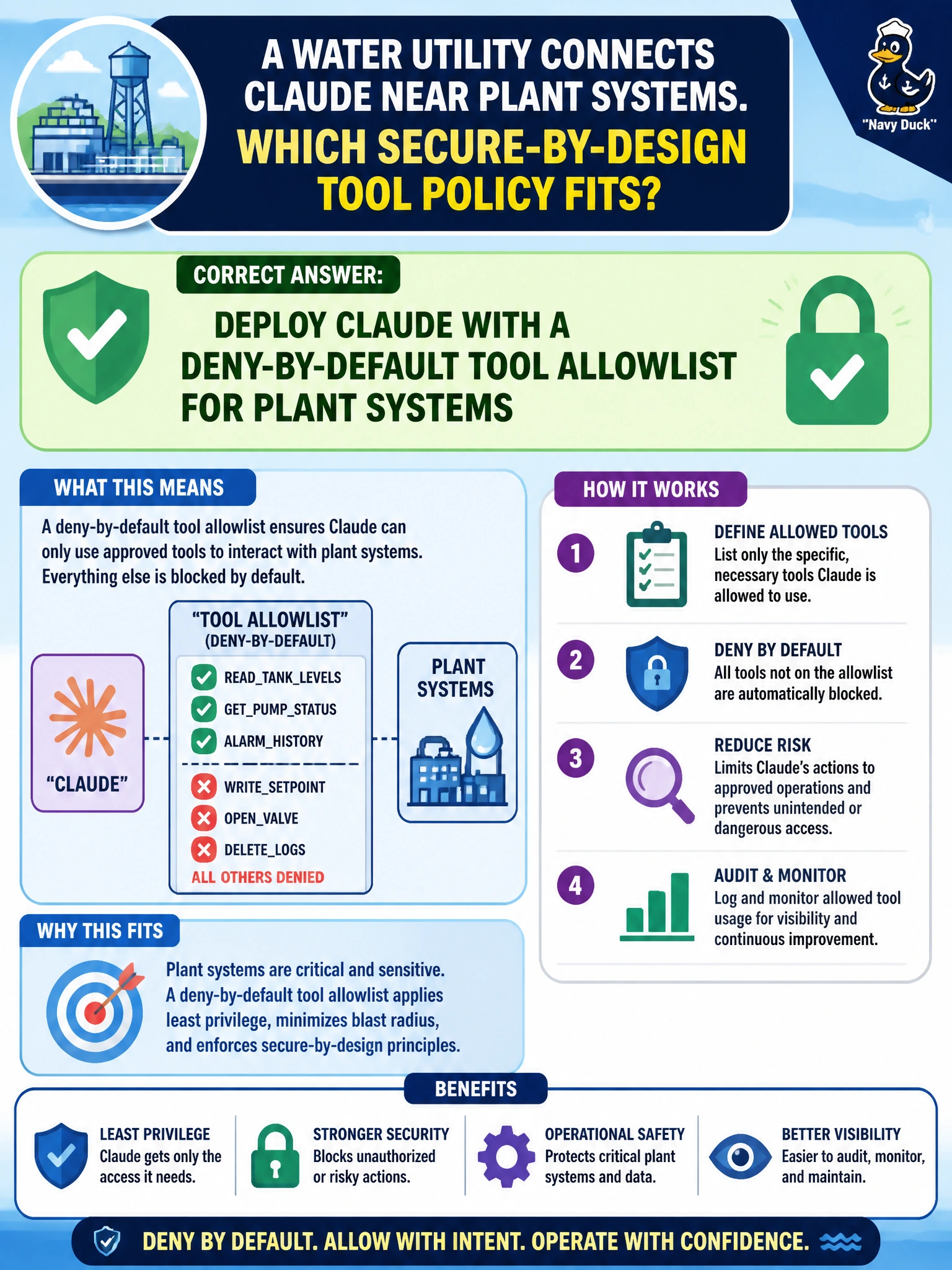
A water utility connects Claude near plant systems. Which secure-by-design tool policy fits?
Select an answer to reveal the explanation.
Short Explanation
Near the plant, start with 'no'—deny-by-default tool allowlists keep Claude from grabbing the wrong levers.
Full Explanation
Deploying Claude with a deny-by-default tool allowlist for plant systems is the secure-by-design policy for water utilities operating near industrial controls. That policy works because plant-adjacent tools can affect treatment, pumping, or monitoring; starting from deny and allowing only explicitly reviewed tools prevents accidental or injected calls into SCADA-adjacent actions. Allowlists make the permitted surface auditable for utility security and operations leadership. Deploying Claude with a denylist blocking known unsafe plant tools is inadequate because it permits every plant tool not explicitly listed as unsafe, leaving industrial controls exposed to unknown or newly introduced tools. Deploying Claude with detailed audit logging for plant system tool use is not a substitute for prevention; it records dangerous calls after they occur but does not block unauthorized access to SCADA-adjacent actions in the first place. Deploying Claude with a shared enterprise allowlist covering office and plant systems is inappropriate because it applies the same trust level to office tools and industrial controls, bypassing the deny-by-default boundary that plant systems require.
Exam caveat: an allowlist is only as good as change control—new tools must be risk-reviewed before addition, not quietly enabled during an outage. Operational check: maintain a signed tool allowlist for the water Claude deployment, deny all other tool names at the gateway, log denied attempts, and require joint OT/IT approval before expanding plant-system tool access.