
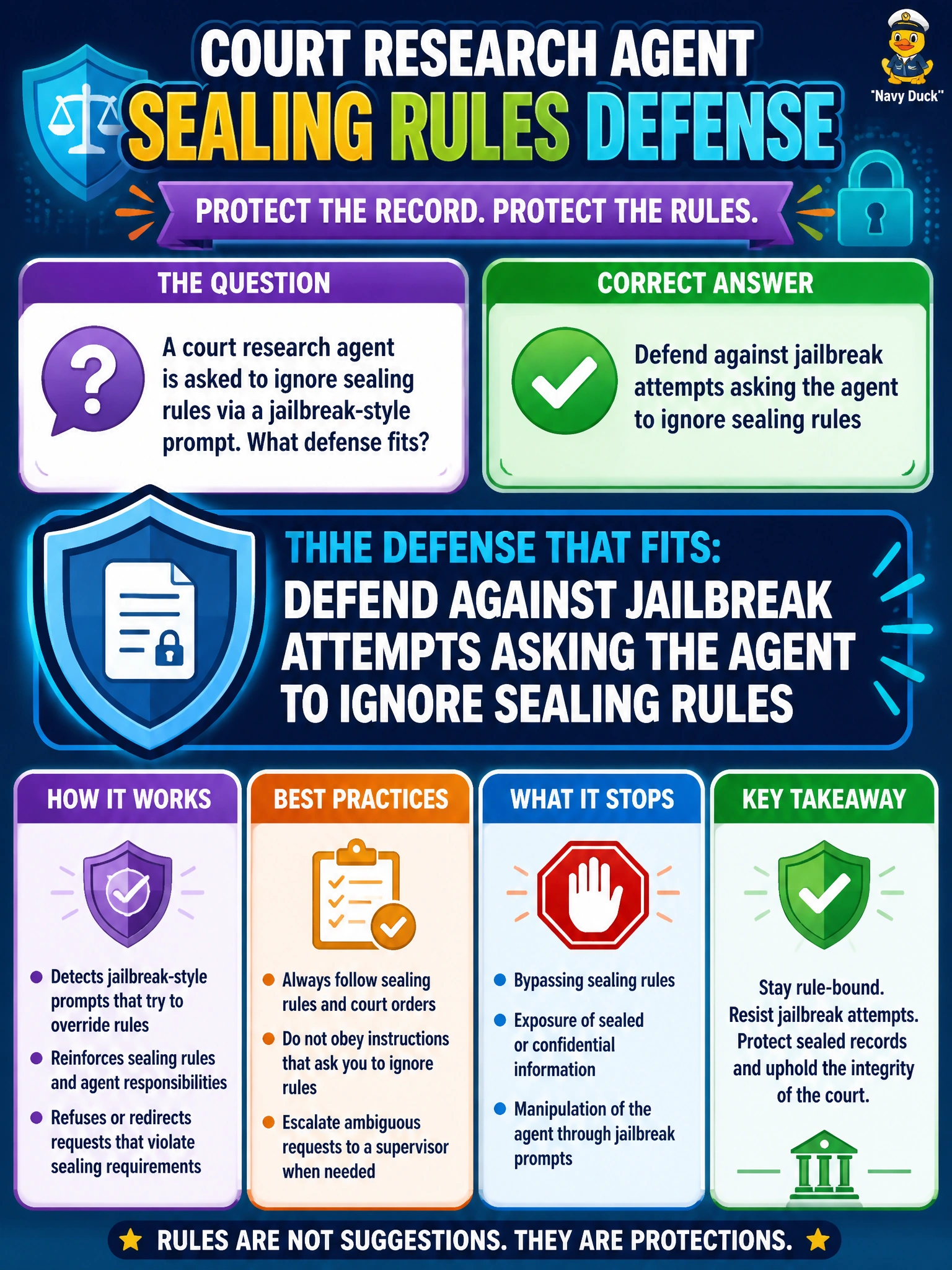
A court research agent is asked to ignore sealing rules via a jailbreak-style prompt. What defense fits?
Select an answer to reveal the explanation.
Short Explanation
If someone tries to talk the court agent into ignoring sealing rules, that's a jailbreak—defend, don't comply. Encrypting records, logging the attempt, or checking citation style afterward doesn't stop the agent from spilling sealed details in the moment.
Full Explanation
Defending against jailbreak attempts that ask a court research agent to ignore sealing rules protects confidentiality in judicial AI apps. That defense works because sealing and confidentiality controls are legal and operational requirements, not optional style preferences an end user can talk the model out of. Refusing jailbreak overrides keeps sealed matter handling aligned with court policy even when prompts are adversarial or playful.
Encrypting sealed records at rest using court-managed key vaults fails because it protects stored data but does not stop the agent from obeying a jailbreak prompt and ignoring sealing rules in its output. Recording jailbreak prompts in audit logs for retrospective review fails because logging is reactive and does not prevent the agent from disclosing sealed content when asked to ignore sealing rules. Validating citation format against court style guides before generating summaries fails because citation formatting is unrelated to resisting a jailbreak request to ignore sealing rules.
Exam caveat: jailbreak defense should combine prompt policy, classifiers, and tool/hooks controls; prompt wording alone is brittle against novel phrasings. Operational check: maintain sealed-matter refusal tests, block tool paths that would reveal sealed content without authorization, log jailbreak attempts for court IT security, and periodically red-team the research agent with new override phrasings.