
A school assistant can call student-record tools. Which access control fits?
Select an answer to reveal the explanation.
Short Explanation
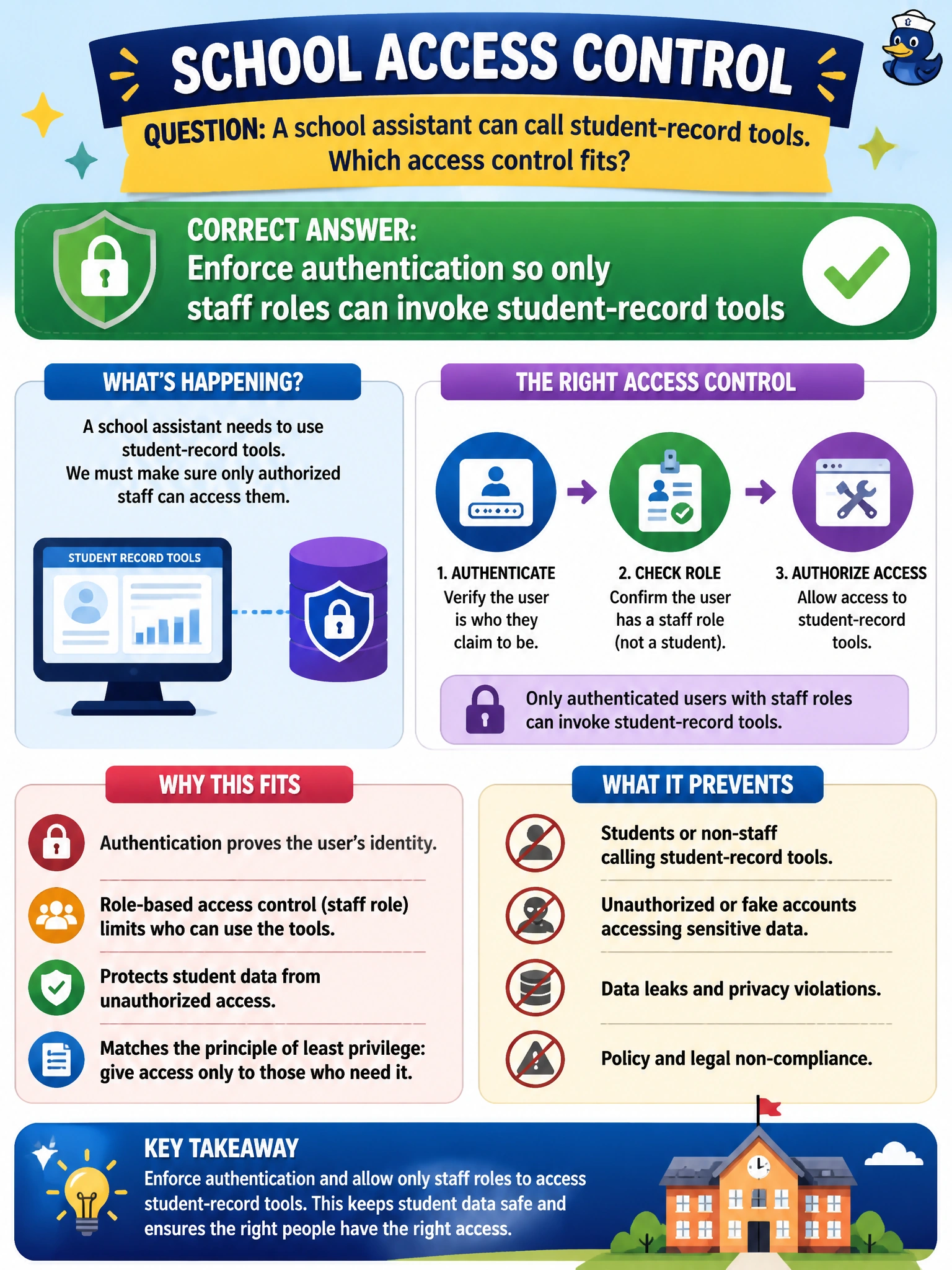
Student records aren't a public sandbox—authenticate and limit those tools to staff roles only.
Full Explanation
Enforcing authentication so only staff roles can invoke student-record tools is the correct access control for school assistants that can call education data. That control works because student records are sensitive; tool invocation must be bound to verified staff identity and role, not to whoever happens to be typing in a chat box. AuthN plus role checks shrink unauthorized disclosure risk when Claude is wired to live student systems. Requiring staff login for the chat UI while leaving tool scope open to enrolled students fails because students can still invoke student-record tools; tool access must be limited to staff roles, not merely gated behind a chat login. Enforcing authentication at chat login but reusing a shared service identity for tool calls fails because a shared identity breaks role-based authorization and individual accountability; you cannot tell which staff member made a call or enforce least privilege. Relying on rate limiting and detailed audit logging to control student-record tool use fails because those are detective controls, not preventive access controls; they do not block unauthorized invocation of sensitive student records.
Exam caveat: staff authentication is necessary but not sufficient—need-to-know, directory sync, and audit logging still matter for FERPA-aligned operations. Operational check: require SSO for student-record tools, map roles to least privilege, deny anonymous and public callers, log every tool invocation with staff ID, and alert on anomalous bulk record access from the school assistant.