
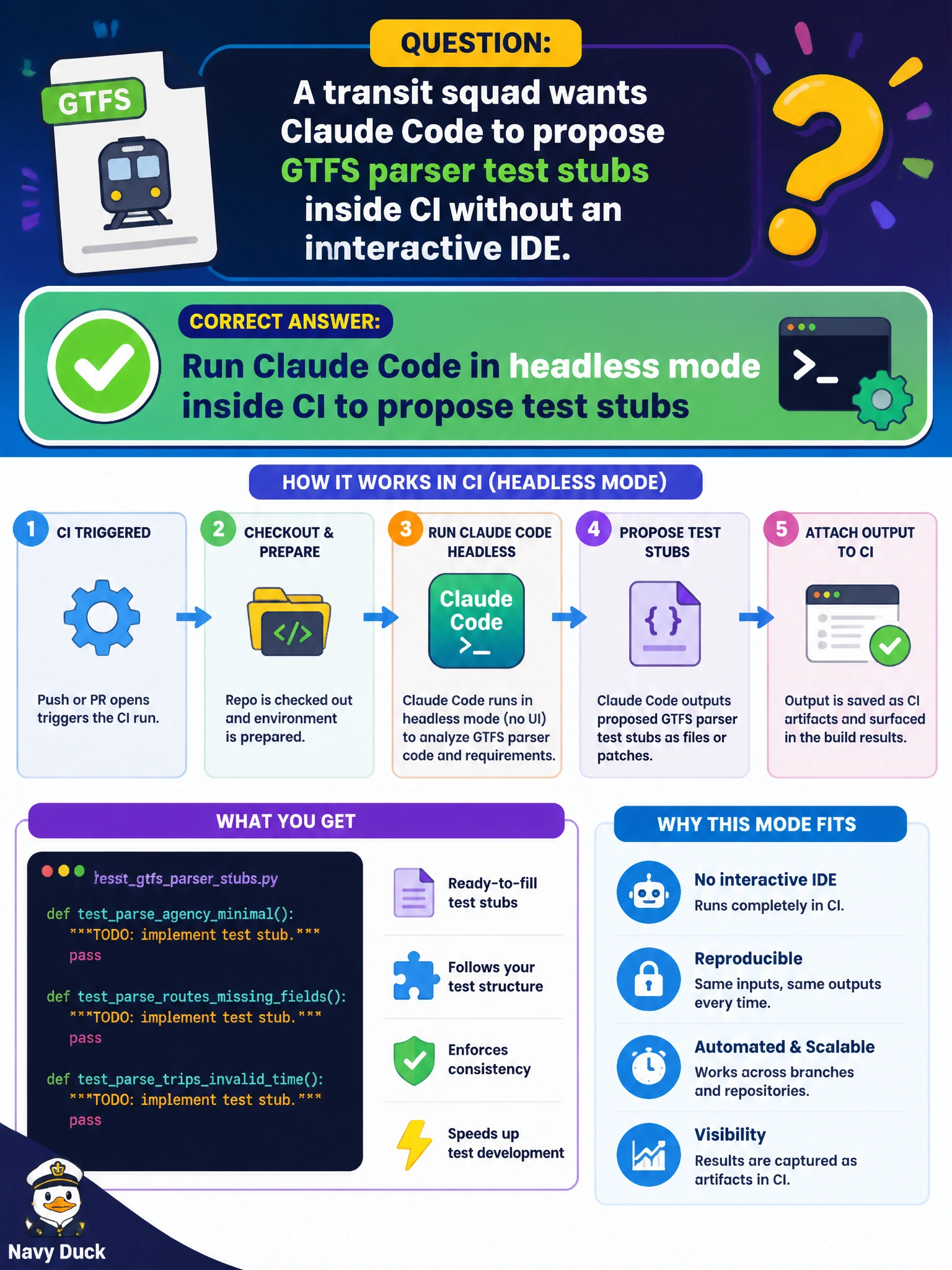
A transit squad wants Claude Code to propose GTFS parser test stubs inside CI without an interactive IDE. What operating mode fits?
Select an answer to reveal the explanation.
Short Explanation
CI doesn't have a keyboard—run Claude Code headless so it can propose GTFS test stubs in the pipeline. An IDE extension, a desktop app, or an approval workflow all assume someone's sitting there, and nobody is on a build agent.
Full Explanation
CI pipelines need Claude Code without an interactive IDE when proposing GTFS parser test stubs automatically. Running Claude Code in headless mode inside CI works because non-interactive execution can analyze parser changes and propose stubs where humans are not sitting at a Desktop session, fitting transit squad automation goals under pipeline identity and time limits. Running Claude Code via IDE extension on the CI runner to propose test stubs fails because CI runners are typically headless and lack the interactive IDE GUI that an extension requires, making it unsuitable for unattended pipeline execution. Running Claude Code in plan approval workflow inside CI to propose test stubs fails because the question asks for an operating mode that automatically proposes stubs, not an approval workflow that inserts manual sign-off before the agent can operate. Running Claude Code Desktop app on the build agent to propose test stubs fails as an operating-mode mismatch because a Desktop app needs a graphical session and user presence, which an unattended CI build agent does not provide. Exam caveat: headless CI use still needs sandboxing, least-privilege tokens, and human review before merging generated stubs—automation proposes, repositories still gate merges. Operational check: add a headless Claude Code job in the transit CI workflow for GTFS parser PRs, capture proposed stubs as artifacts or draft commits, and require review before tests land on the main branch.