
A housing authority needs to roll back bad eligibility-rule prompt deploys. What configuration practice fits?
Select an answer to reveal the explanation.
Short Explanation
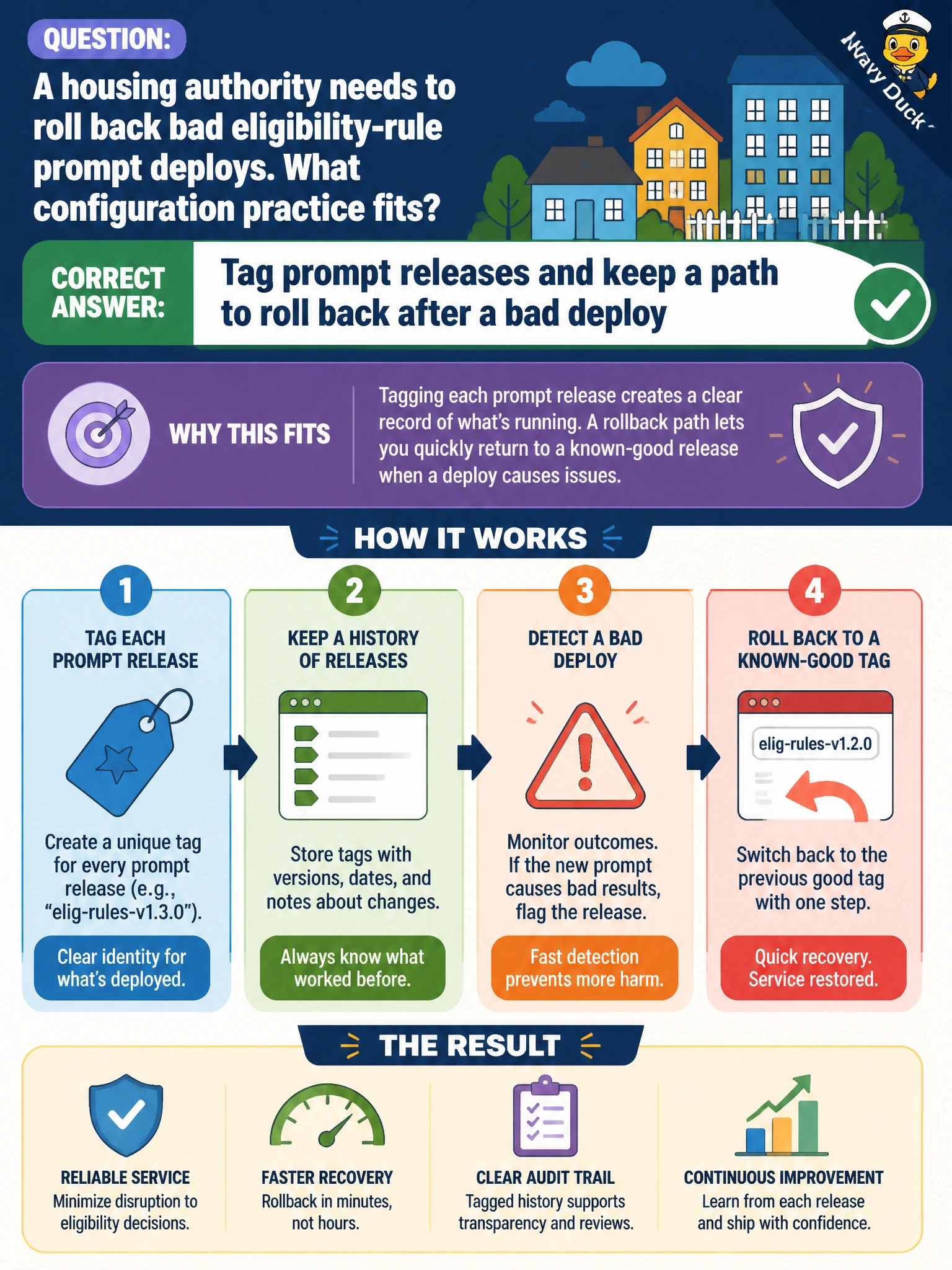
Eligibility rules change—and sometimes you need yesterday's version back. Tag prompt releases so a bad deploy can roll back cleanly.
Full Explanation
Housing eligibility prompts change often and sometimes need yesterday’s version restored quickly. Tagging prompt releases and keeping a rollback path after a bad deploy works because release identifiers tie what residents saw to a known prompt artifact, and rollback procedures restore a last-known-good eligibility rule set without forensic guesswork. Authorities can move fast on rule updates without making mistakes irreversible. Archiving prompt output samples for audit review after eligibility runs fails because it preserves results, not the prompt configuration itself, so a bad deploy still has no prior prompt version to revert to and broken eligibility guidance can persist while staff search for the wording that caused it. Staging new eligibility prompts in a test space before production release fails as a rollback strategy because it is a pre-release control, not a recovery path; once a bad deploy reaches production, staging records do not restore the previous prompt version. Restricting prompt edit access to eligibility leads during business hours fails because access limits do not version or store prior prompt artifacts, so after a bad deploy there is still no tagged release to restore and no rehearsed rollback path. Exam caveat: tags help only if production actually deploys the tagged artifact and rollback is rehearsed—ornamental tags without a restore path do not meet the need. Operational check: version eligibility prompts, tag each production release, store artifacts in the housing authority’s release system, and run a rollback drill that restores the previous tag within an agreed recovery time.