
A city IT PMO is placing a Claude 311 bot under the municipal SDLC. Which life-cycle thinking is appropriate?
Select an answer to reveal the explanation.
Short Explanation
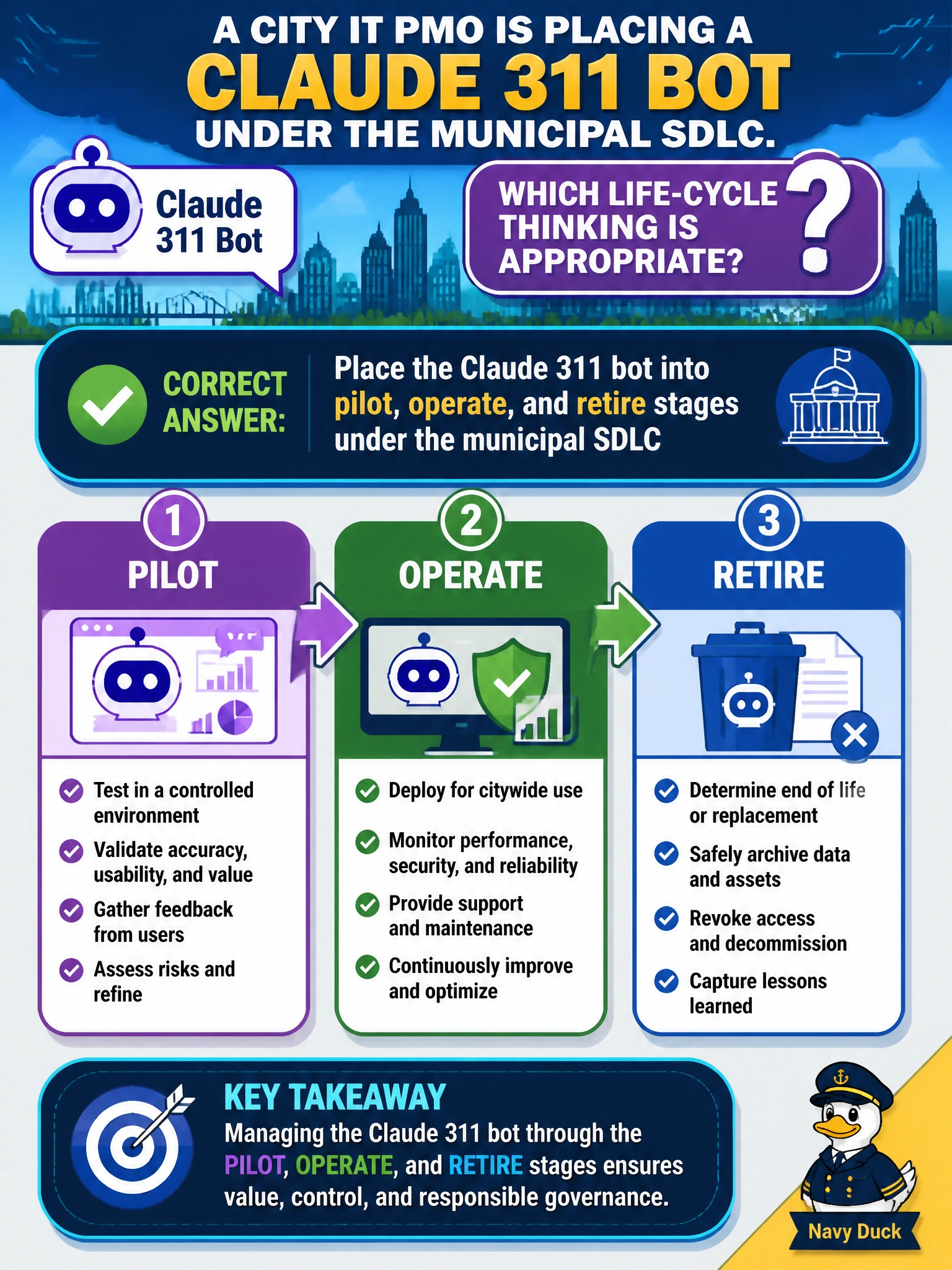
Even a shiny 311 bot gets a birth, a work life, and a retirement party. Stick it in the same SDLC stages the city already uses.
Full Explanation
A city IT PMO placing a Claude 311 bot under the municipal SDLC should treat it like other systems: pilot, operate, and retire stages with entry/exit criteria, not a design-and-build handoff to the service desk. Placing the bot into those stages is correct because life-cycle thinking creates governance hooks—pilot evidence before scale, operational SLOs and ownership while live, and planned retirement when replaced or decommissioned. Municipal 311 services affect residents daily; stopping at design and build and handing ownership to the service desk leaves accountability, budget, and risk unclear.
Assigning the bot to design and build and handing ownership to the service desk fails by concept: it denies life-cycle closure and leaves operation and retirement ungoverned. Freezing the bot prompt and knowledge cutoff at pilot launch fails as life-cycle thinking: it substitutes a configuration lock for the pilot→operate→retire governance the municipal SDLC requires. Managing the bot in discovery sprints and deferring operate and retire planning until future funding fails sequencing: it keeps the bot in pre-production limbo and postpones the accountability and exit criteria the municipal SDLC requires.
Exam caveat: SDLC questions expect pilot→operate→retire thinking for Claude apps, not 'special exception because it's AI.' Avoid design-build handoffs, pilot prompt freezes, and discovery-sprint deferrals. Keep municipal 311 framing. Operational check: register the 311 bot in the PMO life-cycle, define pilot success metrics, name operate owners/SLOs, and schedule retire/exit criteria before citywide permanence is assumed.