
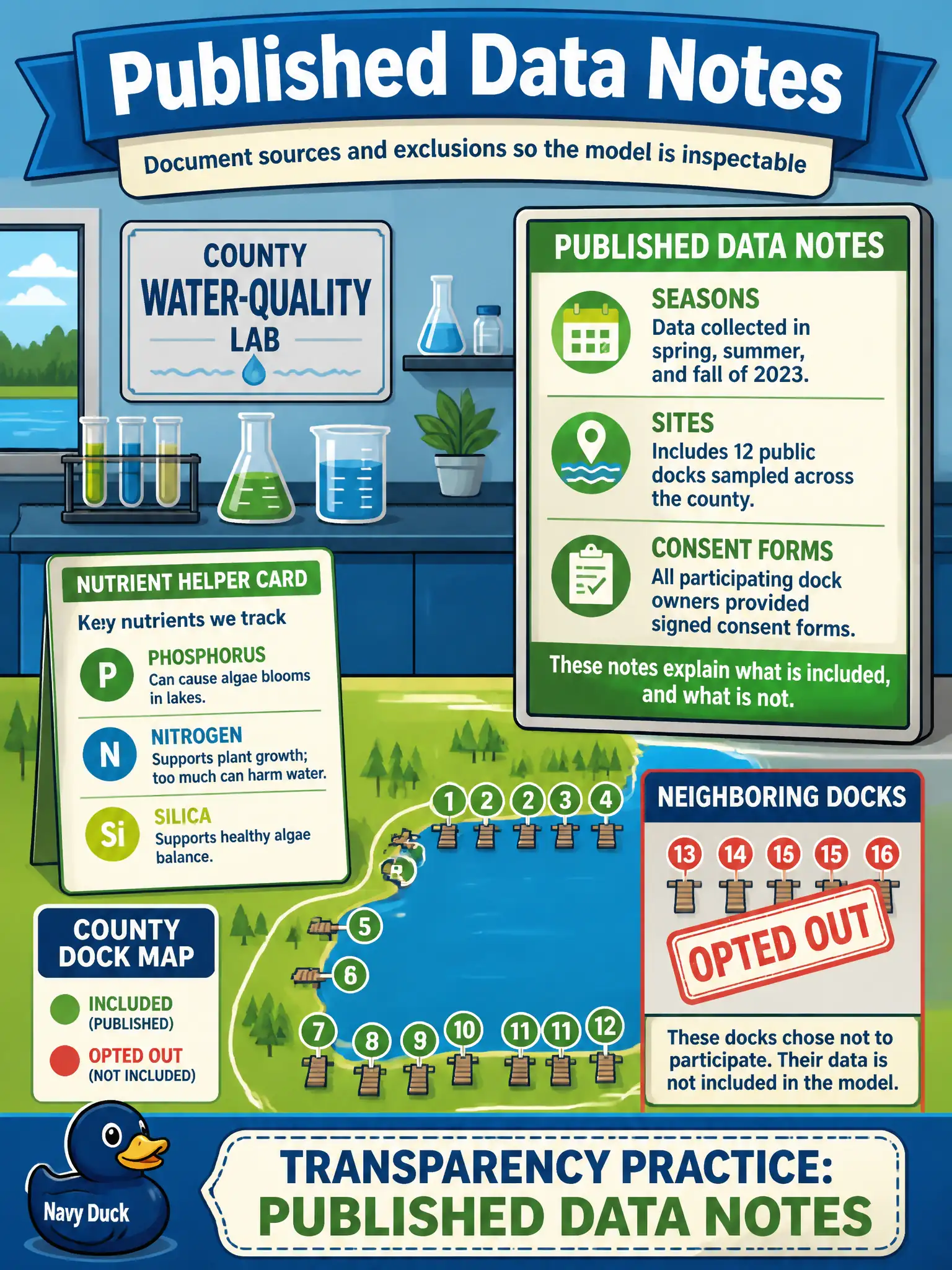
A county water-quality lab publishes which seasons, sites, and consent forms went into a nutrient helper, and which neighboring docks opted out. Which transparency practice is that?
Select an answer to reveal the explanation.
Short Explanation
Think of publishing which seasons, sites, and consent forms went in, and which docks opted out. Those data notes make the model inspectable. A mystery file named final_v7 does not.
Full Explanation
The county water-quality lab's practice—publishing which seasons, sites, and consent forms went into a nutrient helper, and which neighboring docks opted out—is published data notes. Documenting sources and exclusions makes the model inspectable: stakeholders can see geographic coverage, time windows, consent boundaries, and deliberate omissions. That transparency supports trust, audit, and later debugging when a prediction looks skewed toward one basin or season.
Calling this a new training job fails because listing consent and opt-outs is documentation, not a weight update. Calling it prompt caching fails because caching reuses inference prefixes for speed and cost; it does not record which docks opted out of the training corpus. Shipping a mystery file named final_v7 with no source list fails because an unlabeled artifact provides no inspectable trail of provenance or exclusions.
Exam caveat: data notes improve transparency; they do not by themselves prove statistical representativeness or fairness across every dock and season. Operational check: publish a short data note alongside the nutrient helper that names seasons, sites, consent instruments, and opt-out docks, version the note with the model release, and require reviewers to confirm the note matches the actual training manifest before go-live.