
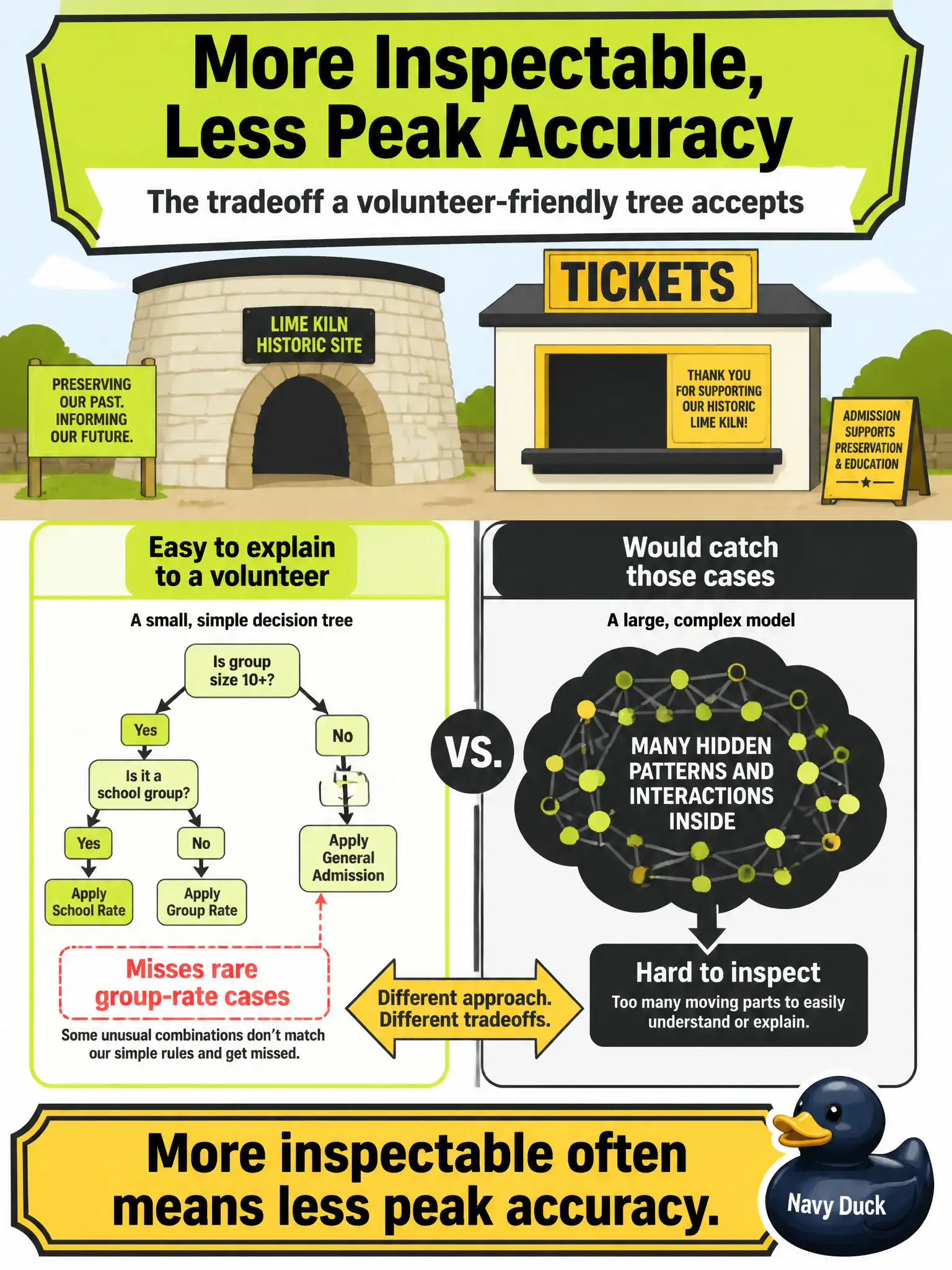
A historic lime-kiln museum ticket helper’s small tree is easy to explain to a volunteer but misses a few rare group-rate cases that a large opaque model would catch. Which tradeoff should the team recognize?
Select an answer to reveal the explanation.
Short Explanation
Think of a small tree a volunteer can explain that still misses a few rare group-rate cases. More inspectable often means less peak accuracy. They do not always rise together.
Full Explanation
The historic lime-kiln museum ticket helper illustrates a classic responsible-AI tradeoff: a small decision tree that a volunteer can explain will often miss rare group-rate edge cases that a large opaque model might catch. More inspectable often means less peak accuracy. Teams should choose the operating point deliberately—favoring volunteer-facing explainability for ticket decisions that need a human-readable path, or accepting opacity only where accuracy gains are measured and residual errors are operationally tolerable.
Claiming interpretability and peak accuracy always rise together fails because highly flexible opaque models frequently outperform simple inspectable ones on rare patterns while becoming harder to explain. Claiming an opaque model is always easier to explain to a volunteer fails because opacity is the opposite of volunteer-ready rationale. Claiming there is no tradeoff and you can pick both maximum opacity and maximum explanation fails because those goals pull in opposite directions for the same artifact.
Exam caveat: the right side of the tradeoff depends on stakes—a mispriced rare group rate may be acceptable if volunteers can defend everyday decisions, but high-stakes denials may demand different controls. Operational check: measure accuracy on a rare-case holdout, record how often volunteers can correctly restate the tree's reason, and document the chosen tradeoff in the model card before the museum relies on the helper at the desk.