
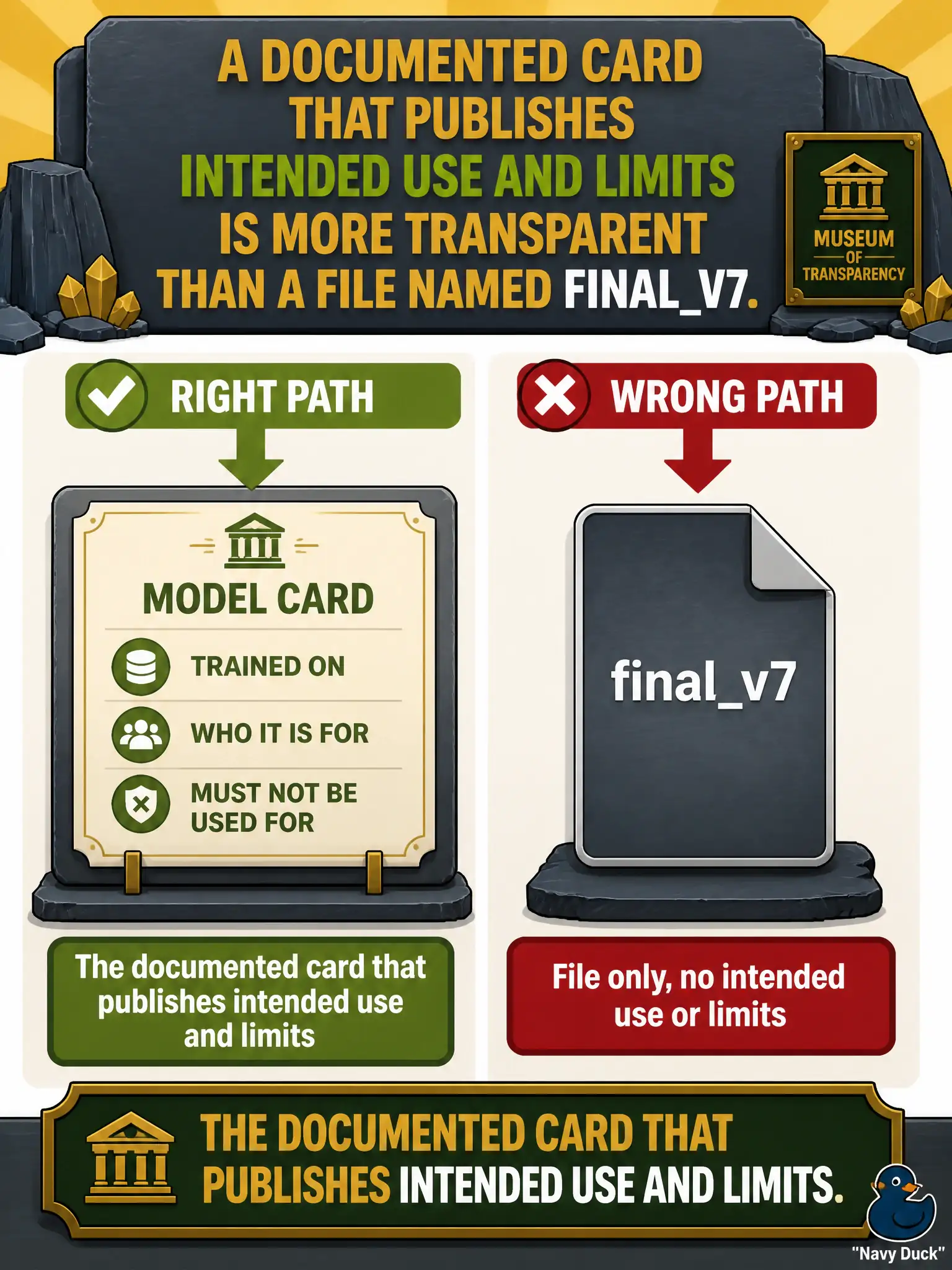
A historic slate-quarry museum can read a one-page card that states what a classifier was trained on, who it is for, and what it must not be used for. A second vendor only ships a file named final_v7. Which artifact is the more transparent choice?
Select an answer to reveal the explanation.
Short Explanation
Think of a one-page card that says what it was trained on, who it is for, and what it must not do. That is the transparent artifact. A file named final_v7 is not published intended use.
Full Explanation
A one-page card that states what a classifier was trained on, who it is for, and what it must not be used for is the transparent artifact: it publishes intended use and limits stakeholders can actually read. A second vendor’s mystery file named final_v7 provides weights or code without disclosed purpose, data scope, or prohibited uses, so operators cannot govern deployment responsibly. Transparency in responsible AI is documentation of intended use and limitations, not filename cleverness.
Treating the mystery file as published intended use fails because a filename conveys no training data, audience, or out-of-scope warnings. Claiming neither matters because transparency is only architecture trivia fails: intended use and limits are operational and ethical disclosures, not optional trivia. Preferring the mystery file because fewer words are always more transparent fails—omission hides risk; brevity without content is not transparency.
Exam caveat: a card that is outdated or marketing-only is weak evidence—transparency requires accurate, maintained disclosures aligned with the deployed version. Operational check: before accepting either vendor, demand a current model card covering data snapshot, intended users, metrics, and known limits; reject final_v7-only delivery; and file the approved card with the slate-quarry museum’s model inventory.