
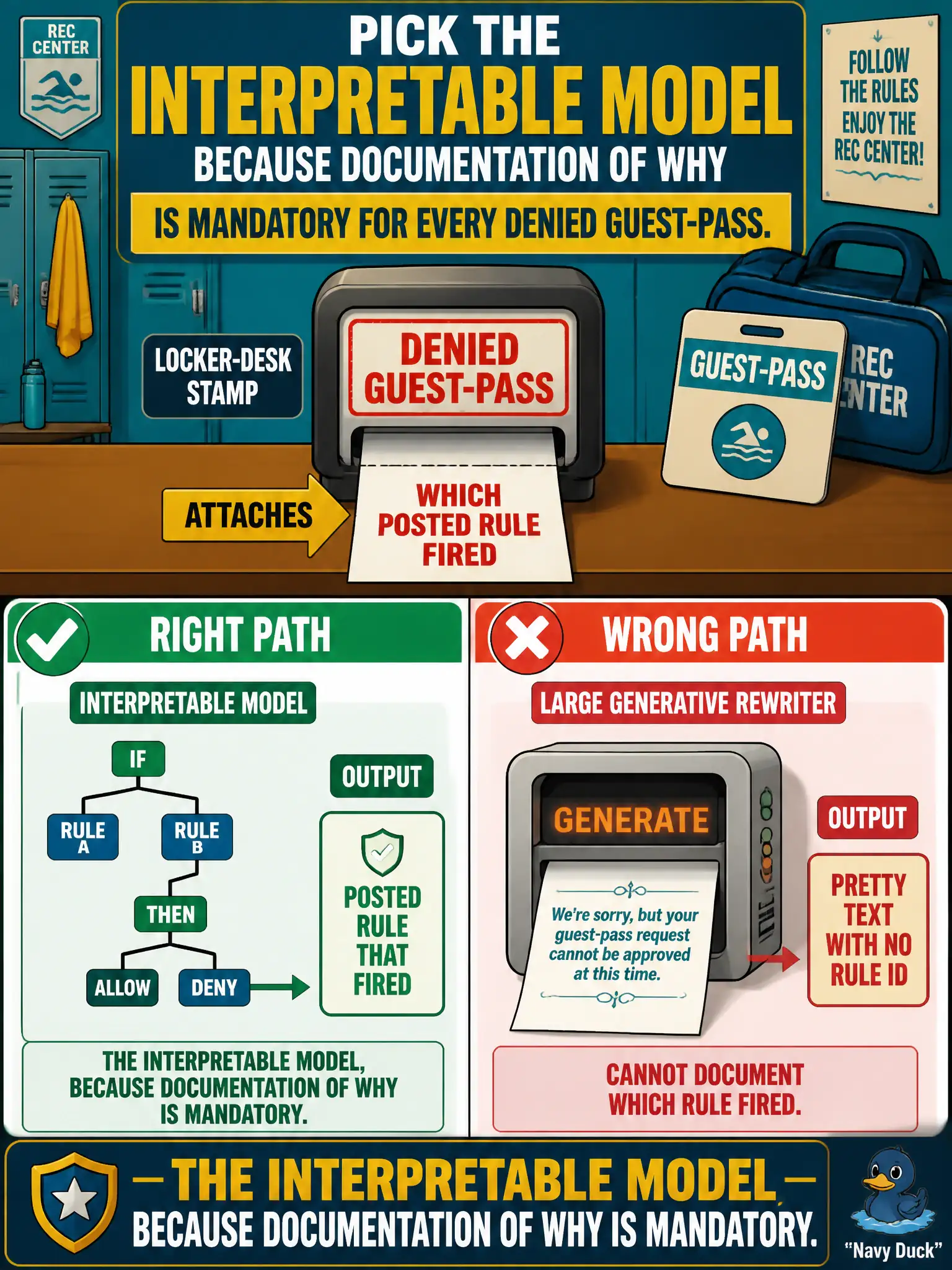
A municipal rec-center locker desk must write, for every denied guest-pass, which posted rule fired. A small rules or tree model can do that; a large generative rewriter cannot. Which option should they pick, and why?
Select an answer to reveal the explanation.
Short Explanation
Think of a denied guest-pass that must name the posted rule that fired. Pick the interpretable model. A prettier black-box sentence does not replace an auditable reason code.
Full Explanation
A municipal rec-center locker desk that must document, for every denied guest-pass, which posted rule fired should pick the interpretable rules or tree model because documentation of why is mandatory. Auditable reason codes map denials to posted policy; a large generative rewriter may produce a prettier sentence without a faithful, stable link to the rule that actually applied. When policy transparency is required, choose the system that can emit the rule identifier by construction.
Choosing the fluent black box because prettier prose replaces an auditable reason code fails compliance: aesthetics do not satisfy mandatory why-documentation. From-scratch pre-training fails because a weekend crawl does not create rule-level reason codes for guest-pass denials. A dashboard only fails because charts are not posted rules and do not record which rule fired on a specific denial.
Exam caveat: interpretable models still need correct rule encodings—if the tree is wrong, explanations will faithfully expose the wrong logic—so policy review of the rule set remains essential. Operational check: on a sample of denials, verify each emitted reason code against the posted guest-pass policy, ensure staff and guests can see the same code, and reject any generative path that cannot return a stable rule ID for the denial file.