
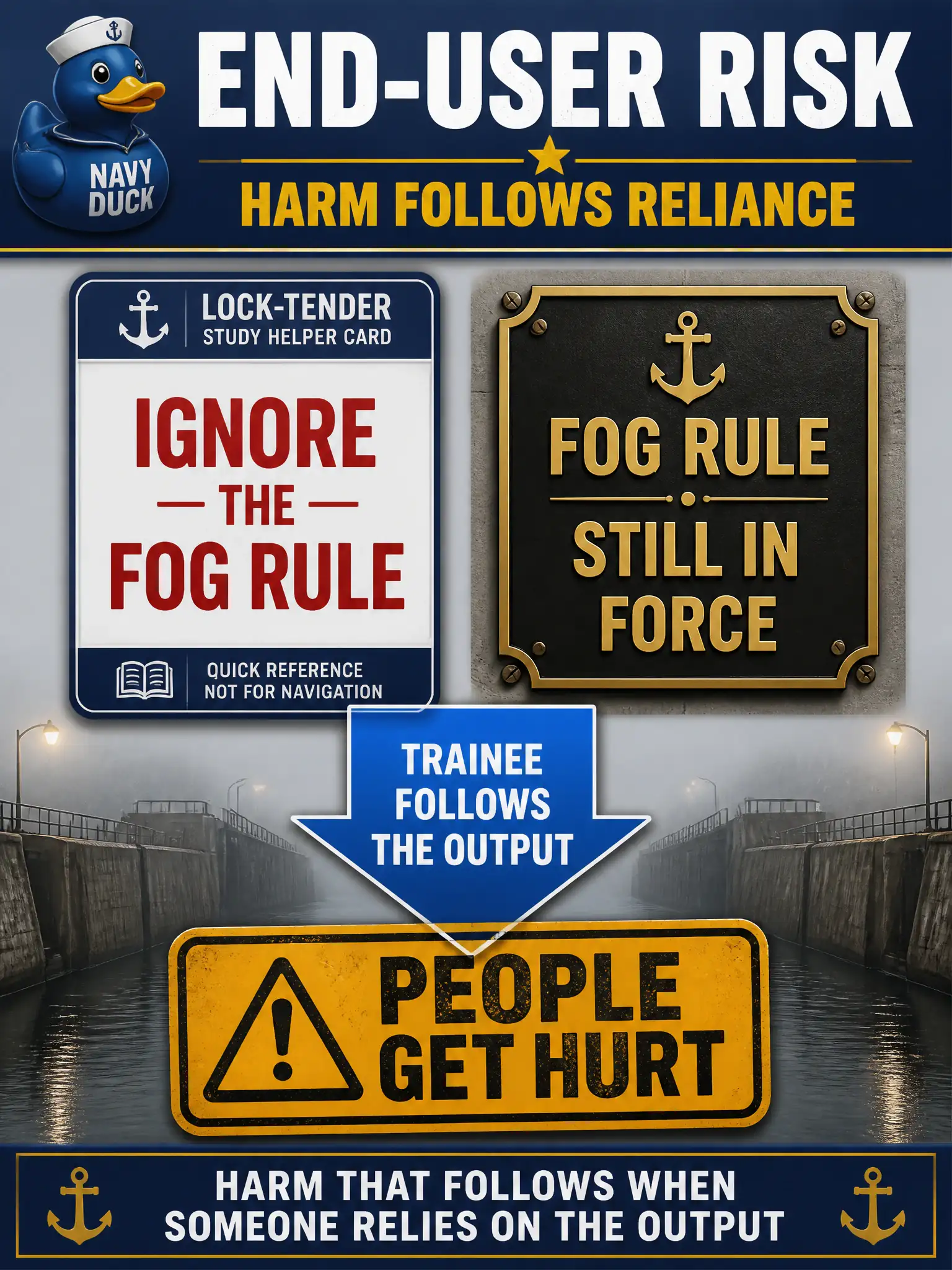
A lock-tender study helper tells a trainee to ignore a fog rule that is still in force. If the trainee follows it, people get hurt. Which responsible concern is that?
Select an answer to reveal the explanation.
Short Explanation
Think of a lock-tender helper telling a trainee to ignore a fog rule that is still in force. If they follow it, people get hurt. That is end-user risk, not a logo problem.
Full Explanation
A lock-tender study helper that tells a trainee to ignore a fog rule still in force creates end-user risk: harm follows when a person relies on the output and acts unsafely on the waterway. Responsible AI prioritizes safety-critical advice differently from stylistic polish—wrong guidance about in-force rules can injure people, so the system needs authoritative grounding, conservative refusals, and human confirmation for operational procedures. The concern is not branding; it is downstream physical harm from reliance.
Framing the miss as a slightly off-brand sentence fails because a logo or tone issue does not capture injury risk from ignored fog procedures. Calling it latency fails because rule correctness is independent of response time; a fast wrong answer is still dangerous. Treating it as a dashboard title fails because charts and UI labels are not the harm vector—the trainee’s action based on bad instruction is.
Exam caveat: even a generally accurate helper is unacceptable on safety rules if it cannot distinguish superseded versus in-force guidance; partial knowledge without currency checks is still end-user risk. Operational check: bind procedure answers to a versioned rules library with effective dates, refuse when the fog-rule status is unknown, require a lock-office reviewer for any “ignore” or exception language, and red-team prompts that ask trainees to bypass weather or visibility constraints.