
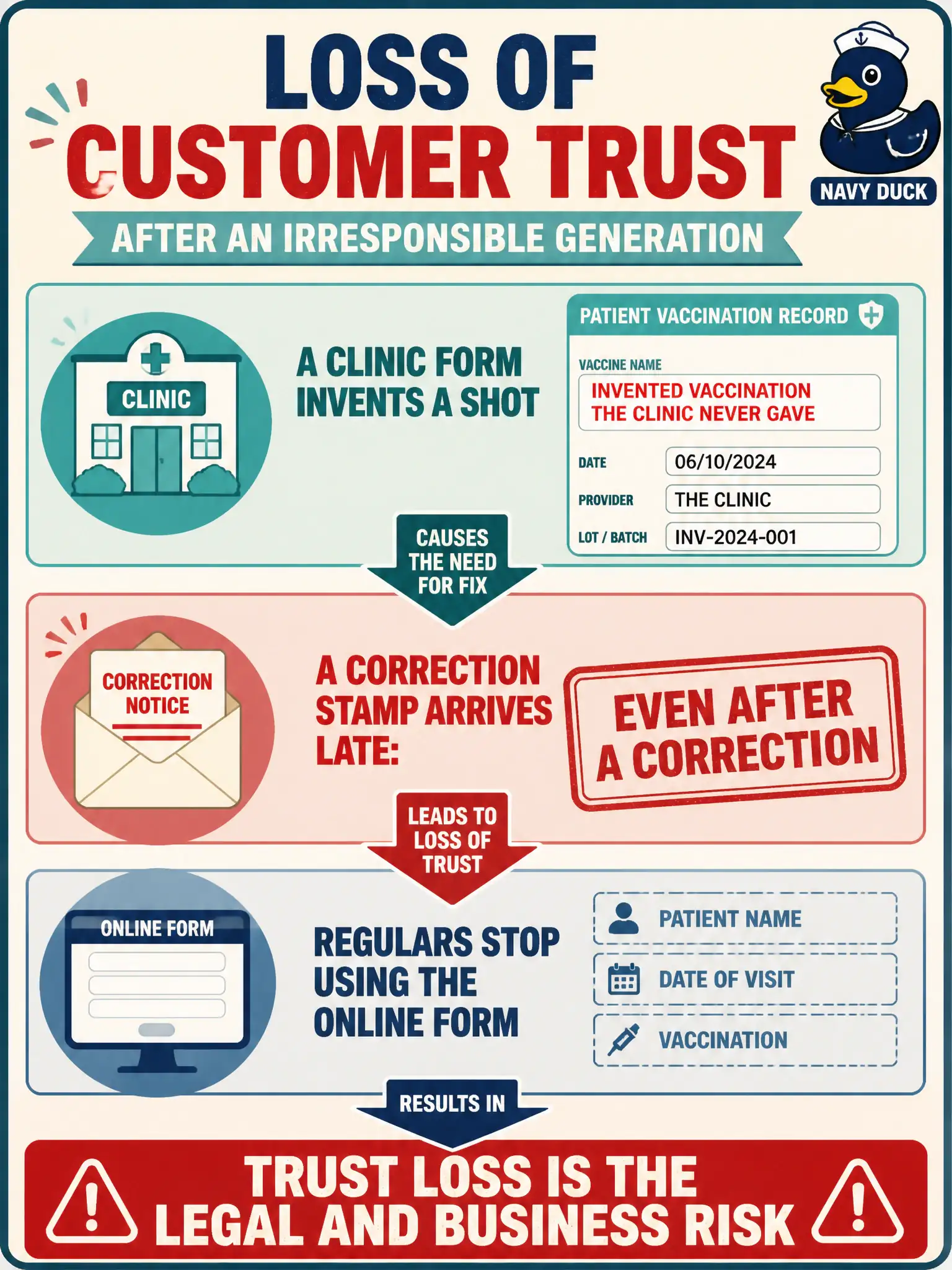
A community cattery intake helper invents a vaccination the clinic never gave. Even after a correction, several regulars stop using the online form. Which legal or business risk is that?
Select an answer to reveal the explanation.
Short Explanation
Think of a cattery helper inventing a vaccination the clinic never gave. Regulars leave the form even after a correction. That is lost customer trust, not just a technical definition.
Full Explanation
When a community cattery intake helper invents a vaccination the clinic never gave, the immediate technical label is hallucination, but the business and legal risk highlighted here is loss of customer trust: regulars abandon the online form even after a correction. Responsible AI connects inaccurate clinical claims to trust erosion, potential liability for false care records, and operational friction for staff who must rebuild confidence. Governing generation for medical-adjacent intake means refusing unverifiable clinical facts, requiring retrieval from clinic records, and escalating uncertain items to humans.
Treating the incident as only a technical definition with no business consequence fails because patrons vote with their feet; the form’s abandonment is the measurable impact. Calling invented vaccines a branding win fails because false clinical detail destroys—not increases—trust and can create regulatory and malpractice exposure. Prompt caching fails because caching a static prefix does not verify vaccines against clinic data and does not restore trust after a fabricated immunization appears in intake.
Exam caveat: a polite correction email is necessary but insufficient; without changing grounding and refusal behavior, the same invention can recur on the next intake. Operational check: force vaccine fields to come from clinic-sourced records or explicit human entry, add automated checks that block free-text immunization claims not in the record store, and track form completion and complaint rates for several weeks after the incident to confirm trust recovery.