
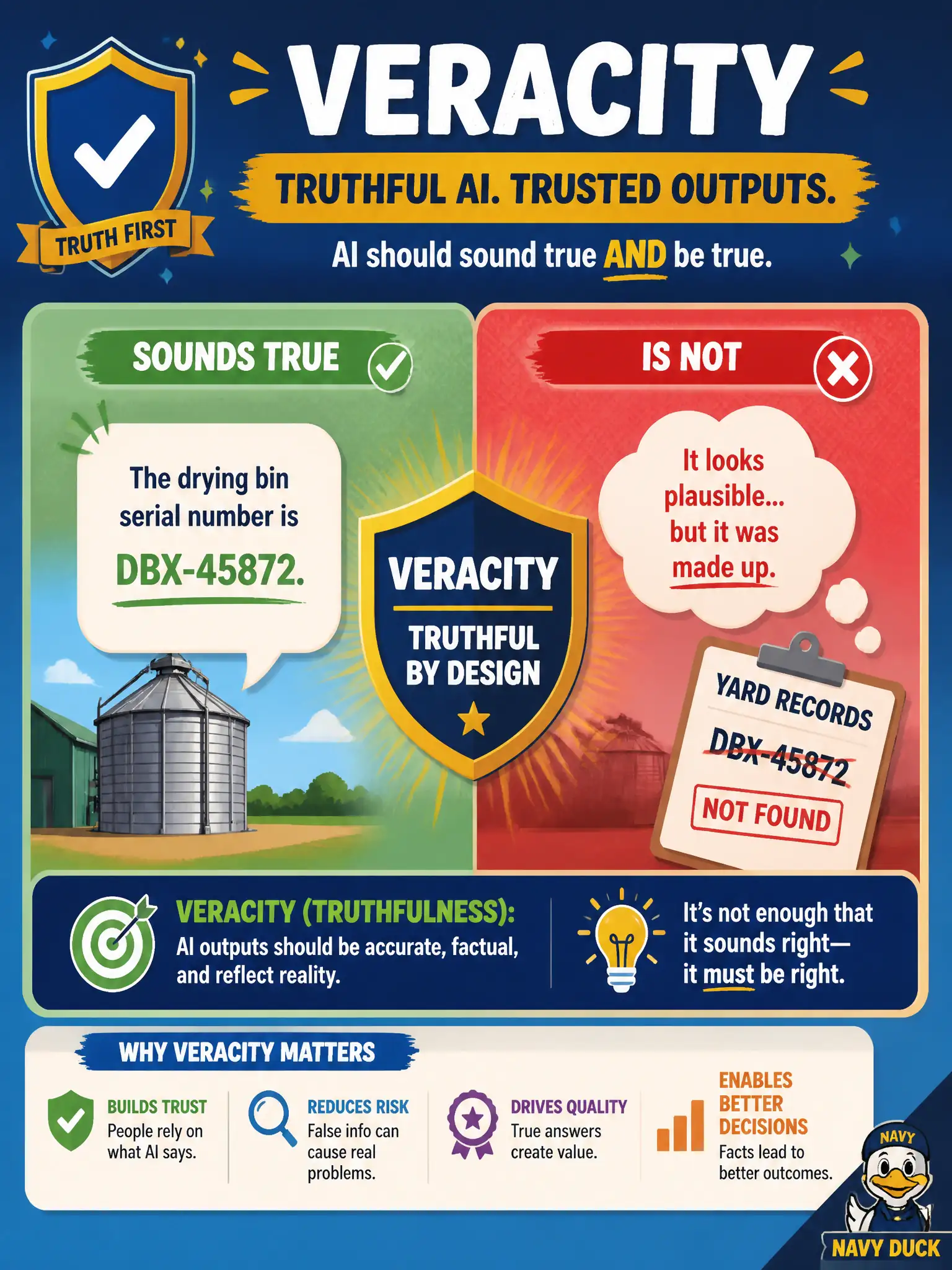
A municipal silo moisture helper writes a confident paragraph that invents a drying-bin serial number the yard never had. Leadership wants the responsible-AI name for “sounds true, is not.” Which feature is that?
Select an answer to reveal the explanation.
Short Explanation
Think of a moisture helper that invents a drying-bin serial the yard never had. Veracity means the output should be true. Temperature, fairness, and inclusivity are different names.
Full Explanation
Veracity, or truthfulness, means outputs should be true. A silo moisture helper that invents a drying-bin serial the yard never had fails veracity: the paragraph sounds confident but the identifier is false. Leadership’s phrase “sounds true, is not” maps directly to this responsible-AI feature for municipal yard operations, grain facilities, and maintenance tickets that must match the asset register.
Raising temperature increases randomness; it is not the name of the truthfulness principle and does not label fabricated serials on moisture reports. Fairness concerns comparable treatment across groups, not an invented equipment identifier. Inclusivity concerns who can use the system, not whether a serial number is real in the yard inventory system of record that crews rely on for drying-bin work.
Exam caveat: veracity failures include fluent fabrication. Do not relabel invented identifiers as creativity or as a fairness issue unless the stem shows unequal group treatment across residents or crews.
Operational check: constrain serials to a verified yard inventory list, flag any generated identifier not in the asset register, and require human confirmation before maintenance tickets accept model-suggested bin IDs from the moisture helper.