
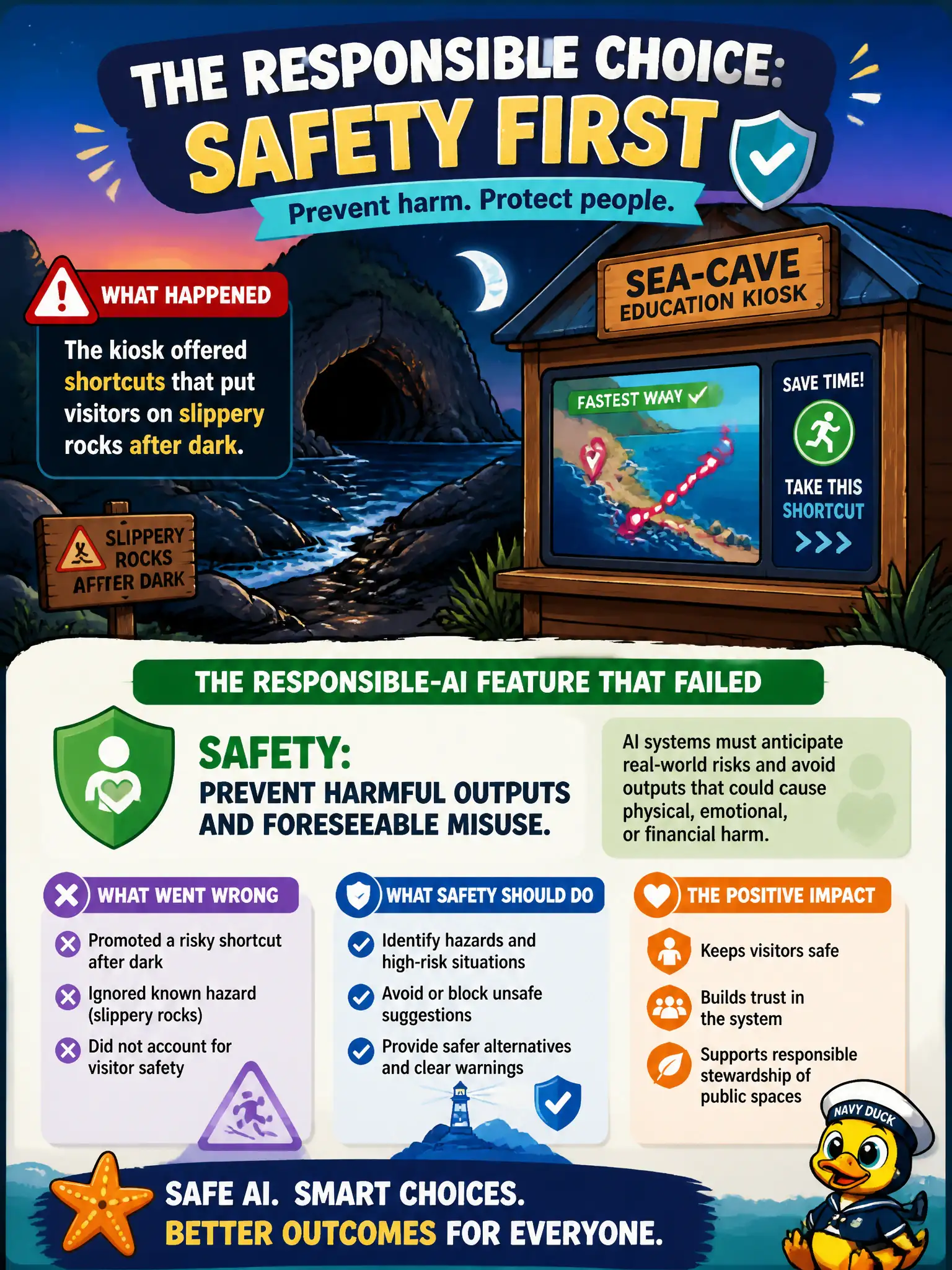
A municipal sea-cave education kiosk starts offering shortcuts that would put visitors on slippery rocks after dark. Which responsible-AI feature failed?
Select an answer to reveal the explanation.
Short Explanation
Think of a sea-cave kiosk offering after-dark shortcuts onto slippery rocks. That is a safety miss. A logo, a few milliseconds, and a happy tap do not make the shortcut safe.
Full Explanation
Safety means preventing harmful outputs and foreseeable misuse. A sea-cave education kiosk that suggests after-dark shortcuts onto slippery rocks failed safety: the guidance creates a foreseeable injury risk for visitors exploring municipal or park-managed coastal sites. Responsible civic deployments must refuse or rewrite advice that puts the public in harm’s way, even when the tone sounds helpful and adventurous for tourists seeking “secret” routes.
Branding and logos do not make after-dark rock paths safe for cave visitors and are the wrong responsible-AI feature for this failure. Latency is unrelated to harmful guidance about cave access after park hours. A high user-satisfaction tap rate does not certify that a shortcut is safe; people may enjoy risky suggestions that still violate park duty of care and posted trail rules.
Exam caveat: safety covers both obviously toxic text and situationally dangerous advice in otherwise polite educational content. Civic tourism helpers are a common setting for this distinction on the exam.
Operational check: red-team the kiosk for after-hours and hazard routes, add policy checks that block unsafe path suggestions, and require park-staff review of any new outdoor guidance before it goes live for visitors at the sea-cave site.