
A fire-grant office wants generation to run on infrastructure that already supports access control, audit, and safety practices. A vendor offers an unmanaged laptop demo instead. Which infrastructure benefit should win?
Select an answer to reveal the explanation.
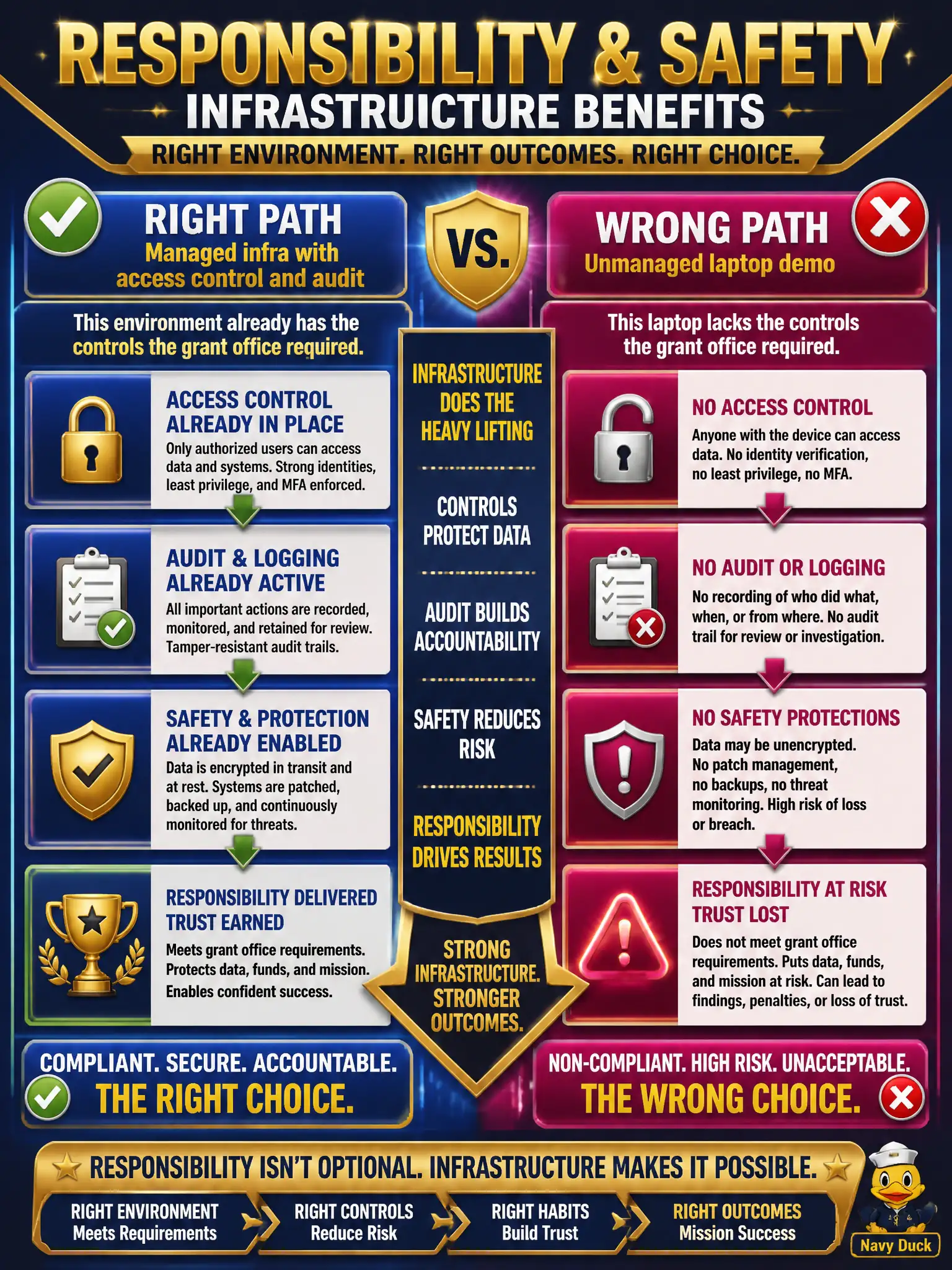
Short Explanation
Think of running grant letters on infrastructure that already does access control, audit, and safety. That beats an unmanaged laptop demo. Turning audit off, or writing a Guardrails how-to, is not what this item asks.
Full Explanation
Responsibility and safety controls on managed infrastructure should win over an unmanaged laptop demo when a fire-grant office needs generation with access control, audit, and safety practices already supported by the platform. Where generation runs is part of the control story, not a footnote to prompt wording. Domain 2 emphasizes that managed platforms can carry those operational practices.
Choosing the laptop demo because safety is supposedly only a prompt-wording trick ignores access control and audit of who generated what. A full Guardrails configuration how-to is more detail than this item asks for; the point is infrastructure posture, not a filter cookbook. Turning off audit so letters send faster removes evidence and weakens accountability on grant decisions.
Exam caveat: managed infrastructure enables controls; it does not replace human review for high-harm letter content such as legal cites. Operational check: require generation in the approved environment with audit on, block laptop-origin production sends, keep reviewer sign-off on denial letters, and verify access logs show only authorized staff initiating generation.
When a vendor glamorizes an unmanaged demo, ask where access logs live, who can exfiltrate prompts, and how denial-letter drafts are retained. If those answers are empty, the laptop path has already failed the fire-grant office’s responsibility and safety requirement.