
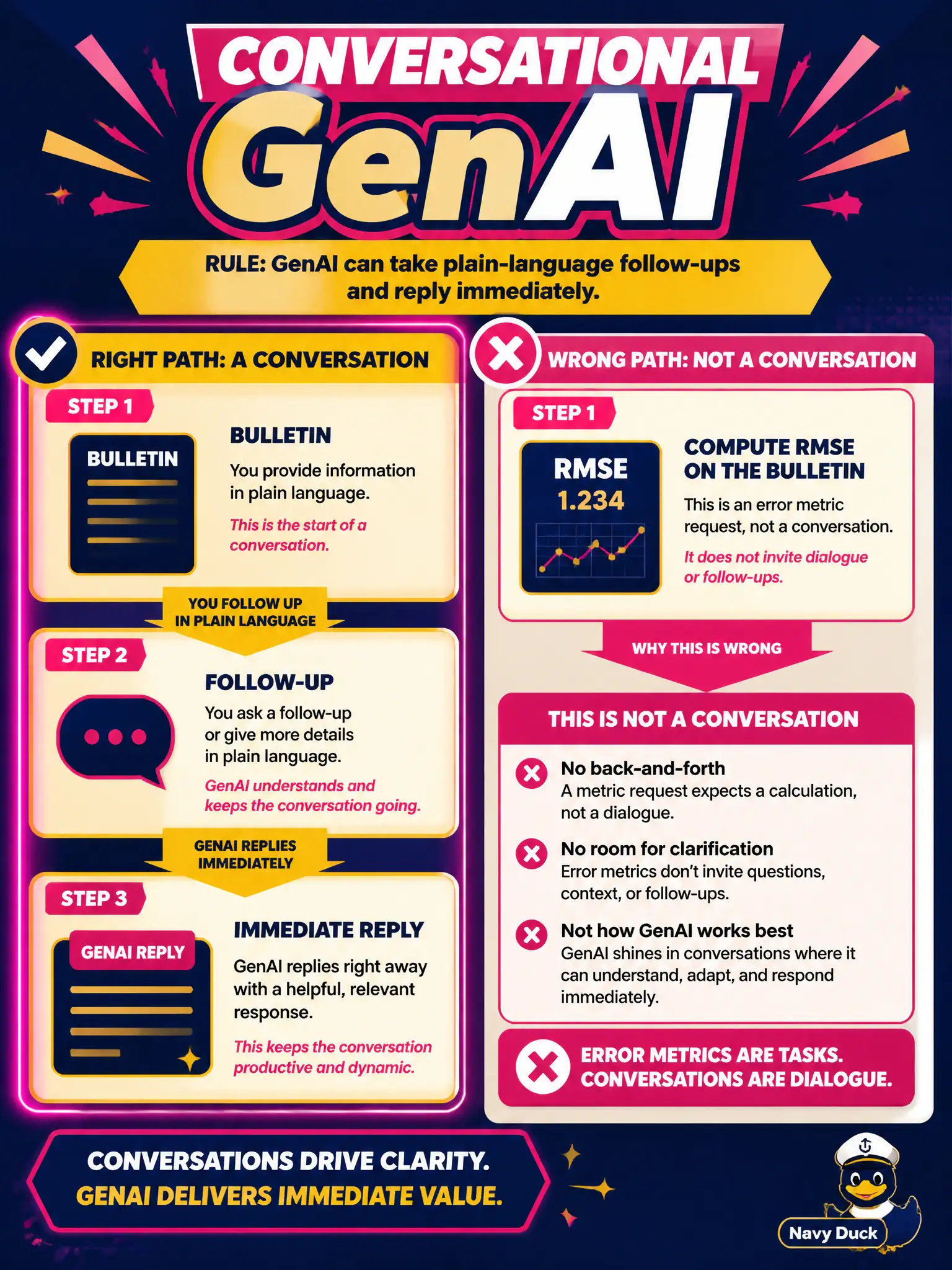
Swim-club members read a lane-closure bulletin and then ask follow-up questions in plain language. They get an immediate reply each time. Which GenAI strength is this?
Select an answer to reveal the explanation.
Short Explanation
Think of members reading the lane-closure bulletin and asking a follow-up in plain English. Immediate back-and-forth is conversational responsiveness. RMSE, locker piles, and a locked poster do not answer.
Full Explanation
Conversational, responsive interaction is the GenAI strength where users ask follow-ups in plain language and receive immediate replies in a dialog, not a one-shot static artifact. Swim-club members read a lane-closure bulletin and then ask follow-up questions with an immediate reply each time; that is conversational responsiveness rather than a passive notice board.
Computing RMSE on the bulletin applies a regression error metric to text that is not being scored as a numeric forecast, so it does not describe the dialog strength members experience. Clustering unused locker numbers groups identifiers and does not answer member questions about lane closures. A locked one-way poster that cannot take a follow-up is the static opposite of conversational interaction and cannot continue the exchange.
Exam caveat: conversational strength is about turn-taking and responsiveness. Metrics like RMSE and unsupervised clustering are classical ML distractors that do not name interaction style.
Operational check: measure median reply latency and conversation completion for lane-closure follow-ups, and ensure the bot can refuse or escalate when a follow-up asks for unsafe pool guidance outside the bulletin policy.