
A swim club wants a short original lane-briefing audio clip from a text description. They already have last meet's recordings and do not want those files turned into a transcript. Which use case is this?
Select an answer to reveal the explanation.
Short Explanation
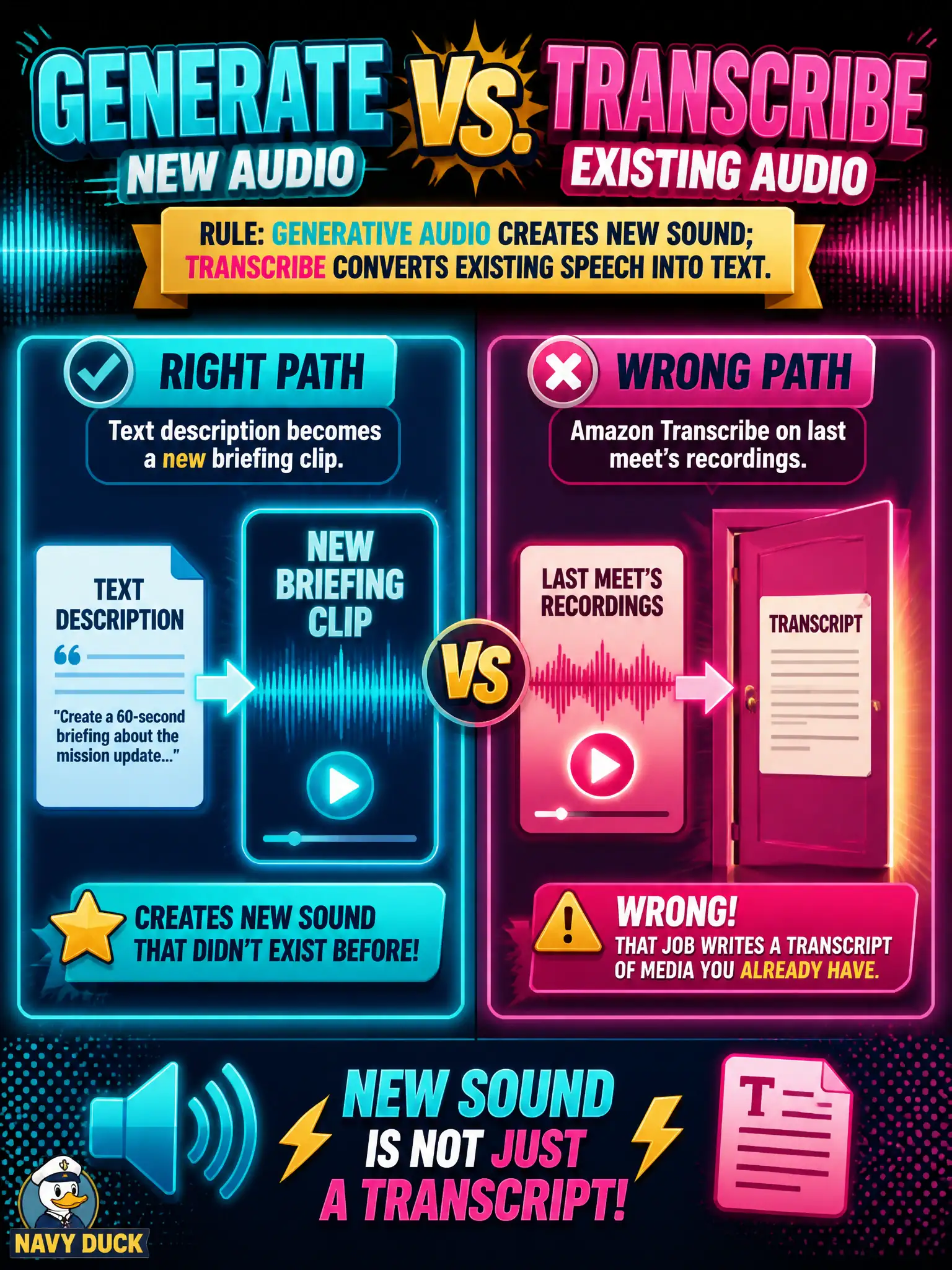
Think of a new lane-briefing clip from a written description, not a transcript of last meet. That is generative audio. Transcribe types what was already said, and a fee forecast is just a number.
Full Explanation
A short original lane-briefing audio clip from a text description is generative audio: create new spoken or musical media. The swim club wants synthesized media that did not previously exist as a recording, and they already have last meet's files without wanting those turned into a transcript. Generation goes text-to-new-audio, which is the opposite direction of transcription.
Amazon Transcribe converting existing recordings into text is speech recognition on audio you already have. That produces a transcript, which the club explicitly does not want as the outcome of this job.
Computer vision on the pool camera analyzes visual frames. It does not create a lane-briefing audio clip from a written description.
A regression forecast of next month's lane fees predicts a number. It is a classical ML business forecast, not media generation.
Exam caveat: generative audio for safety briefings still needs accuracy review—wrong lane rules spoken fluently are worse than a slightly awkward human recording.
Operational check: generate the clip from the approved text, have a coach listen for rule correctness and pacing, and publish only after the spoken content matches the written lane briefing word-for-intent.