
A quilting guild needs five original block drawings from a short brief and has no photo-shoot budget. They are not asking anyone to label the photos of last year's quilt. Which use case is this?
Select an answer to reveal the explanation.
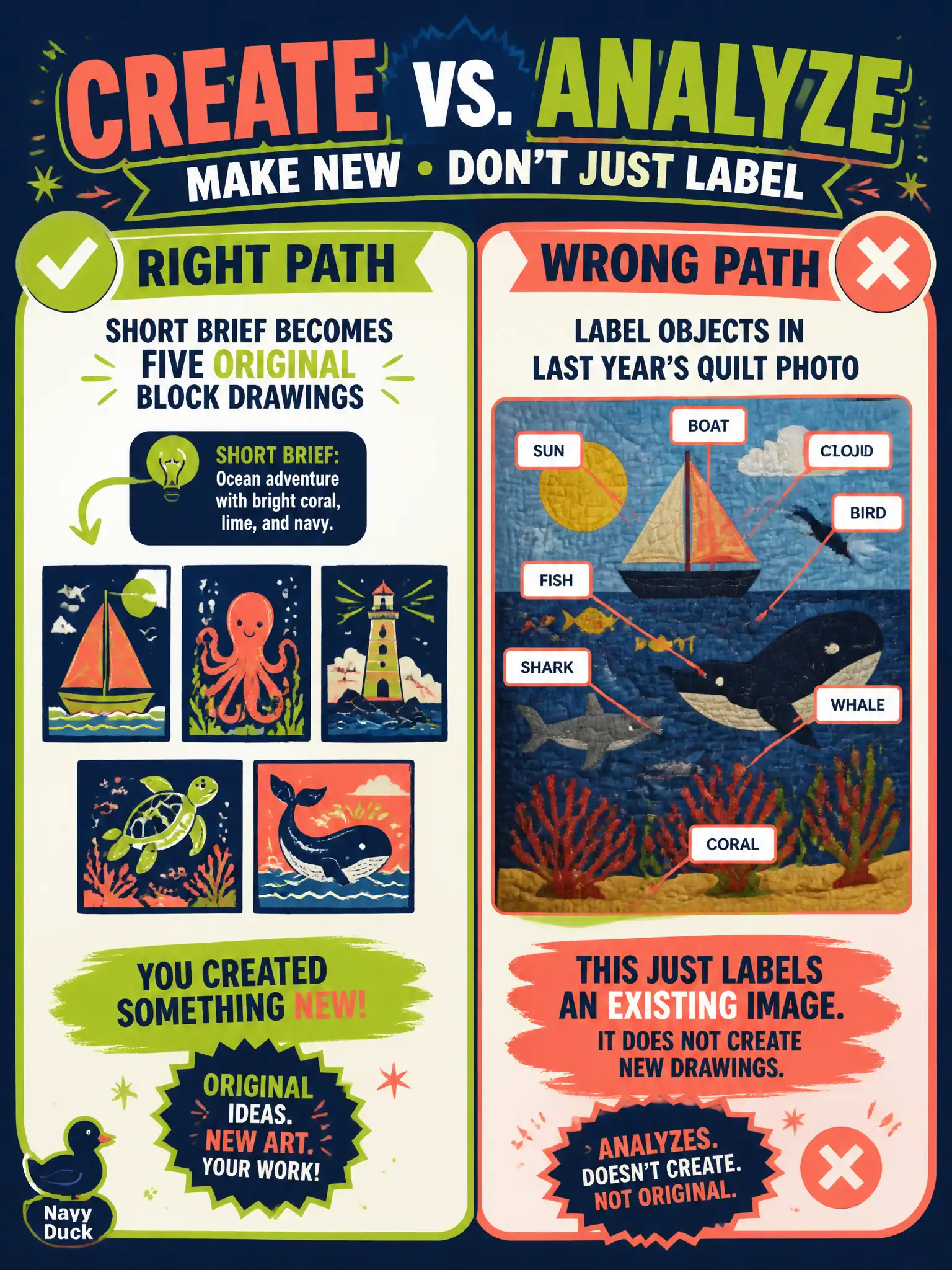
Short Explanation
Think of five original quilt-block drawings from a brief, with no photo-shoot budget. That is image generation. Image analysis would label last year's quilt, and clustering filenames does not draw a block.
Full Explanation
Five original quilt-block drawings from a short brief with no photo-shoot budget is image generation: create a new picture. The quilting guild needs novel visual designs produced from instructions, not analysis of photos they already shot. Generation invents pixels (or vector-like drawings) that did not previously exist as camera captures.
Image analysis labels objects in a picture they already have. The guild is not asking anyone to label last year's quilt photos; analysis would describe existing images rather than draw new blocks.
Speech recognition of the guild meeting converts audio to text. It does not produce block drawings from a design brief.
Clustering quilt file names groups existing files by similarity of names or features. It organizes a library; it does not create five original drawings.
Exam caveat: image generation solves the blank-page problem but may need human pattern makers to validate sewability, seam allowances, and fabric constraints the model does not understand.
Operational check: have an experienced quilter review generated blocks for piece count and construction feasibility before the guild commits fabric, and keep the brief text versioned with each accepted drawing.