
A bakery runs a gluten-free versus not model on packaged rolls. It keeps calling wheat rolls gluten-free, so the gluten-free tray is getting contaminated. Leadership wants fewer of those wrong gluten-free flags. Which statement is correct?
Select an answer to reveal the explanation.
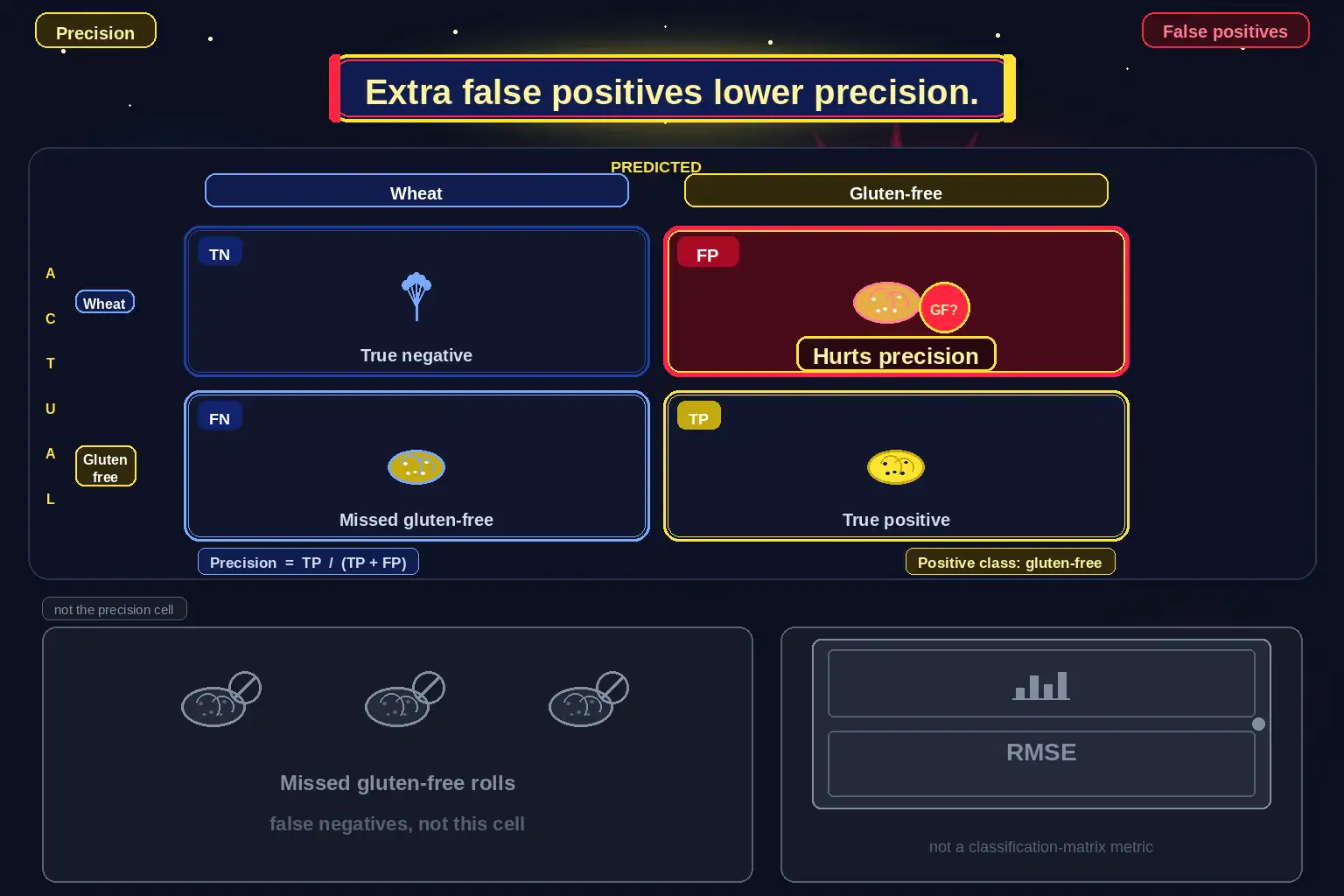
Short Explanation
Think of a gluten-free tray that keeps getting wheat rolls. Those wrong gluten-free flags are false positives, and false positives drag precision down. They are not missed gluten-free rolls, and RMSE is a measuring tape for numbers, not bins.
Full Explanation
Wheat rolls wrongly flagged gluten-free are false positives for the gluten-free class, and those extra false positives lower precision for that class. That reading is correct because precision is the share of gluten-free predictions that are truly gluten-free; each wheat roll placed on the gluten-free tray is a false positive that contaminates the tray and hurts precision. Calling them false negatives is wrong: a false negative would be a true gluten-free roll missed and left unmarked, which is a different failure mode tied more directly to recall. Calling them true positives is false because wheat is not gluten-free; true positives would be correctly flagged gluten-free rolls. Switching the metric to RMSE is inappropriate because RMSE measures numeric regression error, not confusion-matrix mistakes on a binary food-safety label. Leadership asked specifically to reduce wrong gluten-free flags, which is a precision-oriented false-positive problem. Exam caveat: map the business harm to the confusion-matrix cell—wrong gluten-free flags are false positives that drag precision—before picking a metric story. Operational check: build the confusion matrix for the gluten-free class, compute precision, count wheat-on-gluten-free-tray incidents, and tune the decision threshold to reduce those false positives without ignoring true gluten-free items.