
A boarding kennel desk gets the note kennel 4 has a fever. Staff want software that looks up the animal chart, opens an isolation order, pages the on-call vet, and reserves a recovery cage, in that sequence. They do not want a single generated paragraph of advice. Which approach fits?
Select an answer to reveal the explanation.
Short Explanation
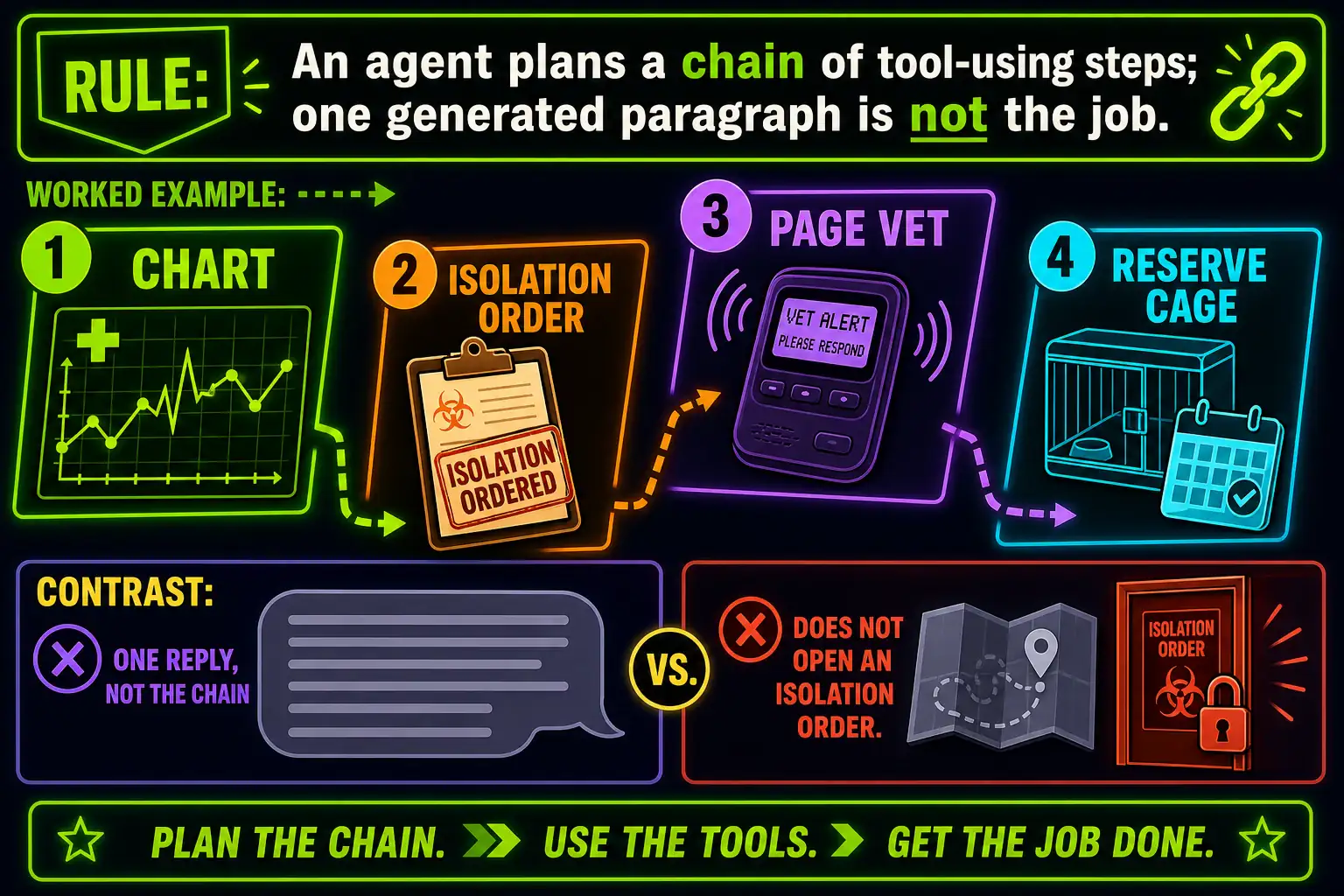
Think of a night nurse working a checklist: pull the chart, open isolation, page the vet, reserve the cage. That is an agent planning steps and using tools. One paragraph of advice, clustering maps, or last year's invoices do not do those four things.
Full Explanation
The boarding kennel desk needs a planned sequence after a fever note: look up the animal chart, open an isolation order, page the on-call vet, and reserve a recovery cage. Agentic AI that plans a multi-step, tool-using chain fits because the work is orchestrated actions across systems in order, not a one-shot paragraph of advice. A single-turn generative reply with no follow-on actions may sound caring but leaves isolation, paging, and cage reservation undone, which is exactly what staff said they do not want. Unsupervised clustering of kennel maps groups spatial layouts and does not execute clinical workflow steps or call tools. Batch inference over last year's boarding invoices scores historical records offline and never performs the live, ordered interventions the desk needs when kennel 4 reports a fever. The rejection of a single generated paragraph is the exam signal that distinguishes agents from plain generative text. Exam caveat: when the stem lists a sequence of tool calls and rejects a single generated paragraph, the intended pattern is agentic or tool-using automation. Operational check: write the four steps as an explicit plan with the tools each step calls, run a dry-run on a fever note, and verify each side effect—order, page, and reservation—actually commits before trusting the agent in production.