
A customs broker must compute duty on a shipment from a published Harmonized System tariff table. The entry is rejected if the dollar amount is not the exact statutory figure. A data scientist offers a model that forecasts duty from last year's invoices. Which action should the broker take?
Select an answer to reveal the explanation.
Short Explanation
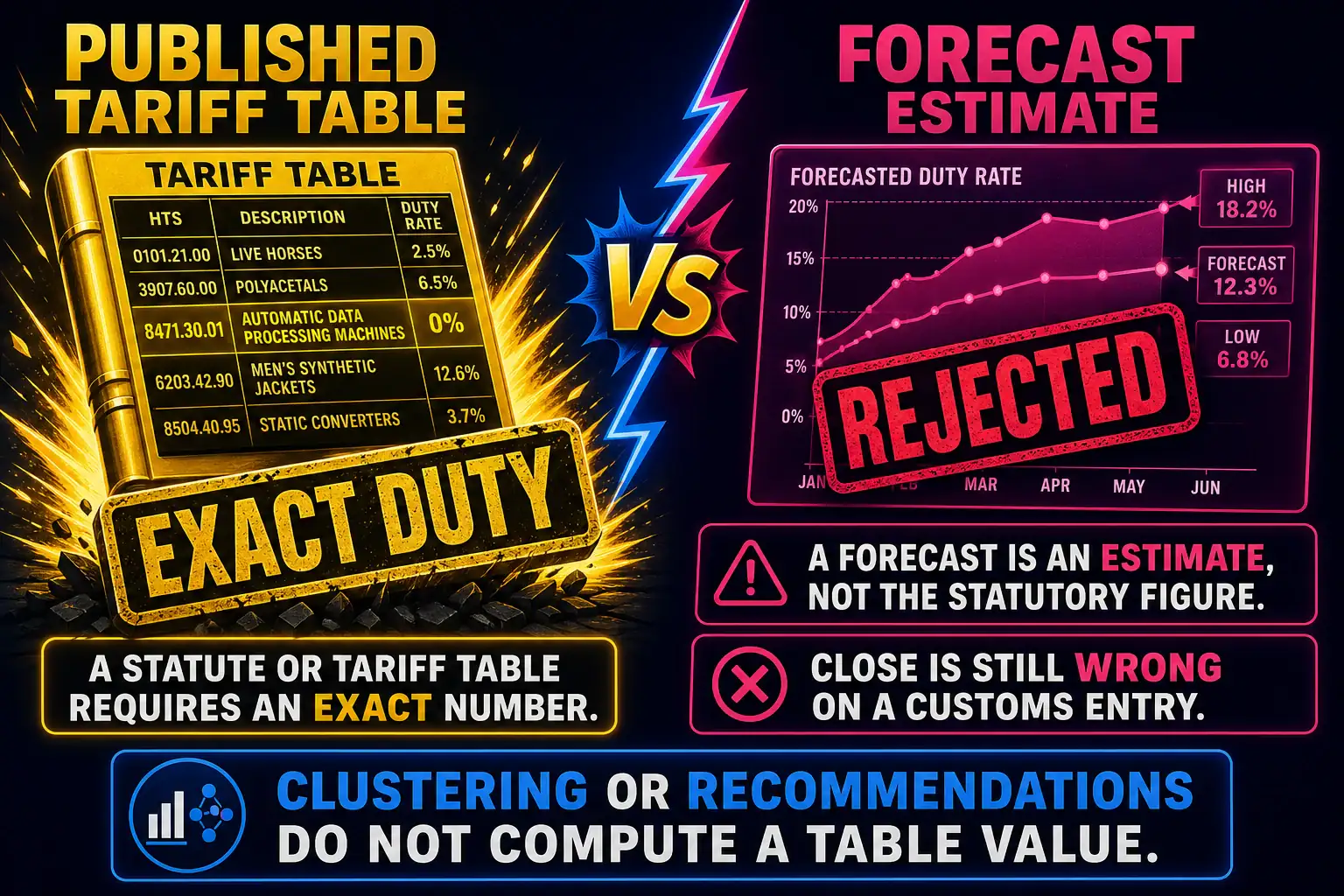
Think of it like looking up the posted speed limit instead of guessing from last year's tickets. Customs duty has to be the exact number on the published table. A forecast, a cluster average, or a "what importers might like" pick can be close and still bounce the entry.
Full Explanation
When a customs entry must match a published Harmonized System figure to the dollar, the work is a deterministic statutory lookup, not a prediction problem. Declining the forecast and computing from the table is correct because the broker's acceptance criterion is exact equality with the published rate, not a statistically close estimate. Last year's invoices describe historical patterns that can drift with tariff updates, preferential programs, or valuation changes, so a trained forecast can be near the right number and still fail the entry. Clustering past invoices and charging a cluster average replaces the statutory cell with a sample mean, which has no legal standing on the entry. A recommendation-style pick that optimizes importer preference invents a liked amount instead of the required duty and cannot satisfy the exact-figure rule. Exam caveat: machine learning is the wrong first tool whenever a regulation or published table already defines a single correct numeric answer. Operational check: before any modeling discussion, open the current tariff schedule for the shipment's classification, compute the statutory amount by hand or with an approved calculator, and confirm the entry rejects any non-matching figure.