
A municipal soil-test lab needs answers that are under 80 words, make no medical claims, and cite the lab sheet. Which prompting practice gives that control?
Select an answer to reveal the explanation.
Short Explanation
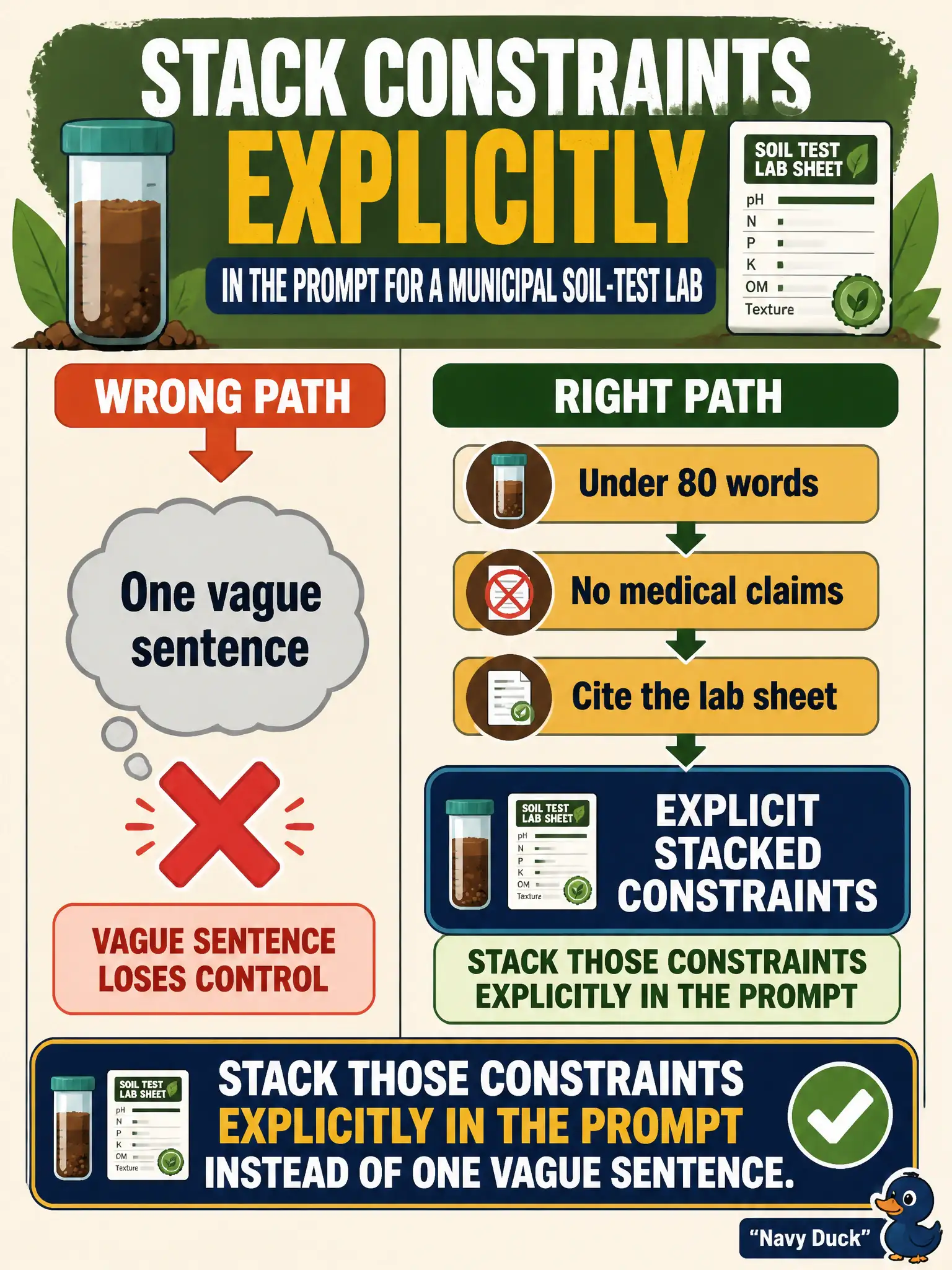
Think of stacking three rules in the prompt: under 80 words, no medical claims, cite the lab sheet. One vague sentence does not cover all three, and temperature is not a rulebook.
Full Explanation
The municipal soil-test lab needs three enforceable output rules at once: a hard length cap under eighty words, a ban on medical claims, and a citation back to the lab sheet. Stacking those constraints as explicit prompt instructions works because the model only follows what you state with enough specificity to check against a rubric. Vague hope that one soft sentence covers length, medical safety, and sourcing leaves each rule underspecified, so answers drift on word count, invent clinical advice, or skip the sheet reference. Dropping the lab sheet to avoid citations removes the evidence path the public needs and does not improve control over the remaining rules. Raising temperature increases sampling randomness; it does not encode policy, length, or citation requirements and can make medical claim slips more likely. Exam caveat: prompt constraints improve behavior but are not a substitute for application-level safety filters when medical or sensitive advice risks remain high. Operational check: sample twenty generated answers against a written rubric that scores word count, medical-claim flags, and presence of a lab-sheet citation before publishing the helper for public use. Keep the three rules visible in the production template so later editors cannot accidentally collapse them into one vague line.