
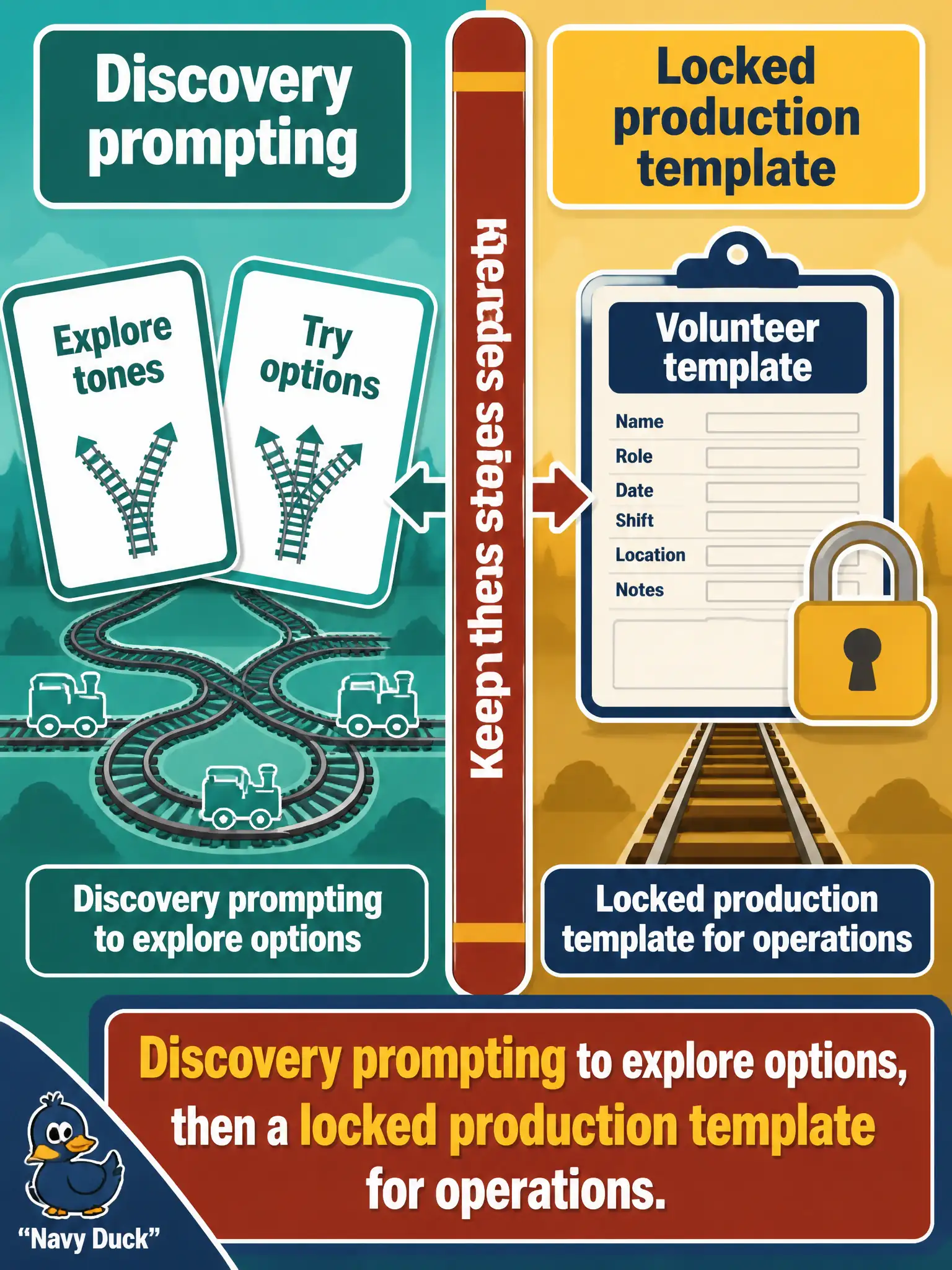
A community model-railroad guild intern first uses open prompts to discover useful tones, then freezes a tight template for volunteers. Which two stages should stay separate?
Select an answer to reveal the explanation.
Short Explanation
Think of exploring tones first, then freezing a tight template for volunteers. Discovery and production stay separate. An untested slogan is neither.
Full Explanation
The model-railroad guild should keep discovery prompting and production templates as separate stages. Open-ended discovery helps the intern explore useful tones and phrasings with low risk; once a tone works for visitors, freeze a tight template so volunteers operate with consistency. Mixing the stages either freezes too early—no exploration of what lands with guests—or leaves production on unbounded prompts that yield unstable volunteer outputs.
Locking the production template first and never exploring tones skips learning which voice visitors actually understand. Keeping production on open-ended prompts denies volunteers the frozen template they need for reliable announcements week after week. Treating discovery and production as the same untested slogan collapses both stages into guesswork and provides neither learning nor control.
Exam caveat: discovery artifacts such as loose prompts and tone sketches must not silently become production; promote explicitly after review, then restrict edit rights on the locked template.
Operational check: run a short discovery sprint with open prompts, select one tone with stakeholder sign-off, encode it in a variable template, and verify three different volunteers produce on-brand output from the same locked template before retiring free-form production use.