
The same clerk then needs notices in a very specific three-line format. One labeled example in the prompt is enough. Which technique should they use instead of a fine-tune?
Select an answer to reveal the explanation.
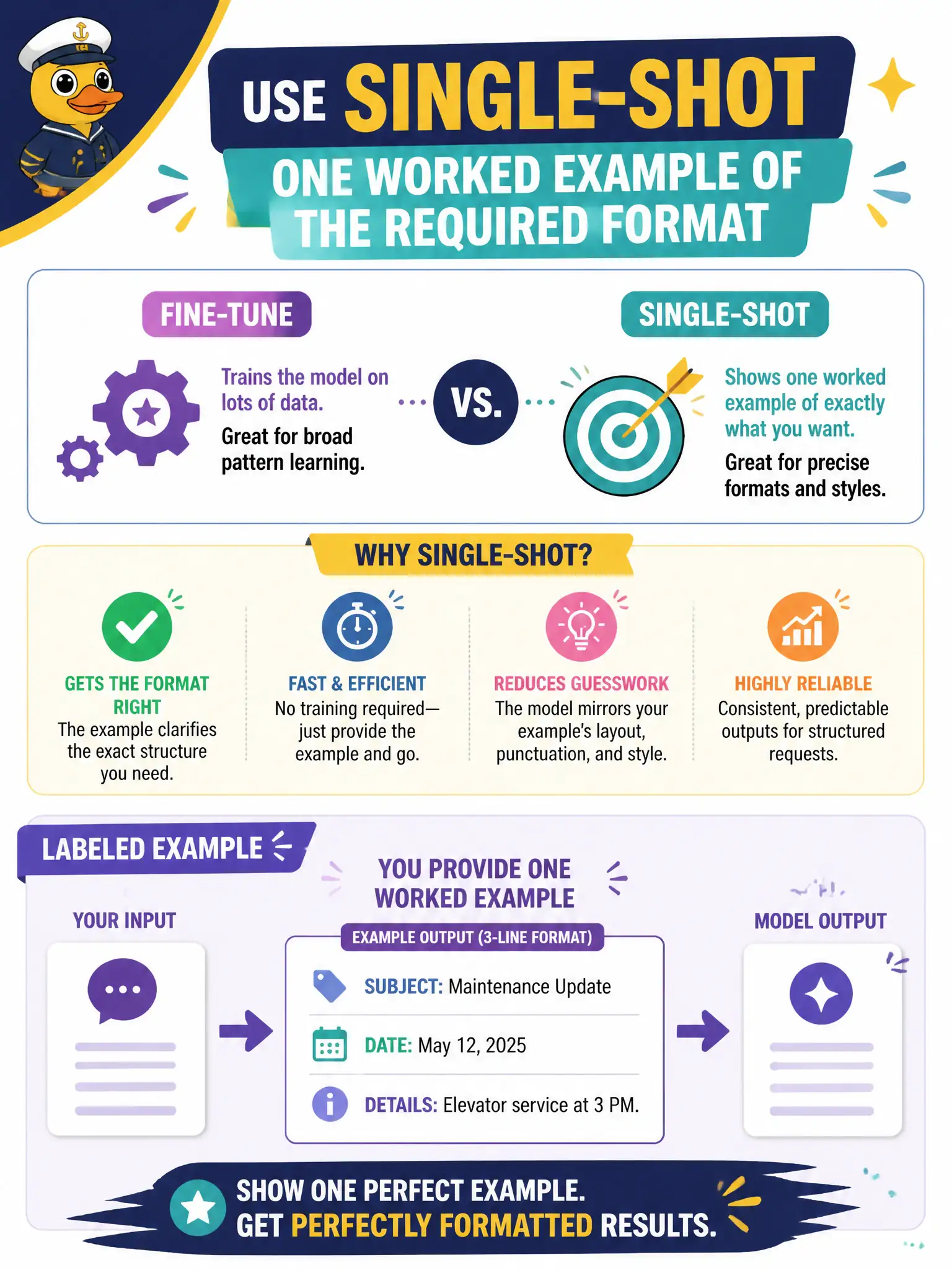
Short Explanation
Think of a very specific three-line notice. One labeled example in the prompt is single-shot. A fine-tune is overkill, and zero-shot leaves the format unspecified.
Full Explanation
When notices must follow a very specific three-line format and one labeled example is enough, the technique is single-shot (one-shot) prompting: include one worked example of the required format in the prompt. The example teaches structure that a bare instruction may leave ambiguous, without the cost of collecting many pairs or launching a fine-tune. For a bocce clerk locking a short format, single-shot is the proportional next step after zero-shot.
Zero-shot is the wrong claim here because a locked three-line format often does need at least one demonstration. A full fine-tune before any example can be placed in the prompt reverses the customization spectrum—prompt examples come before weight training for this kind of format lock-in. Model distillation shrinks a teacher into a student for serving efficiency; it is not the technique that teaches a three-line notice format from one example.
Exam caveat: single-shot quality depends entirely on that one example—if it is messy, the model will copy the mess. Prefer a clean, canonical notice as the exemplar.
Operational check: place one gold-standard three-line example in the prompt, generate ten new notices from varied inputs, and measure format compliance line-by-line before deciding whether few-shot or fine-tuning is warranted.