
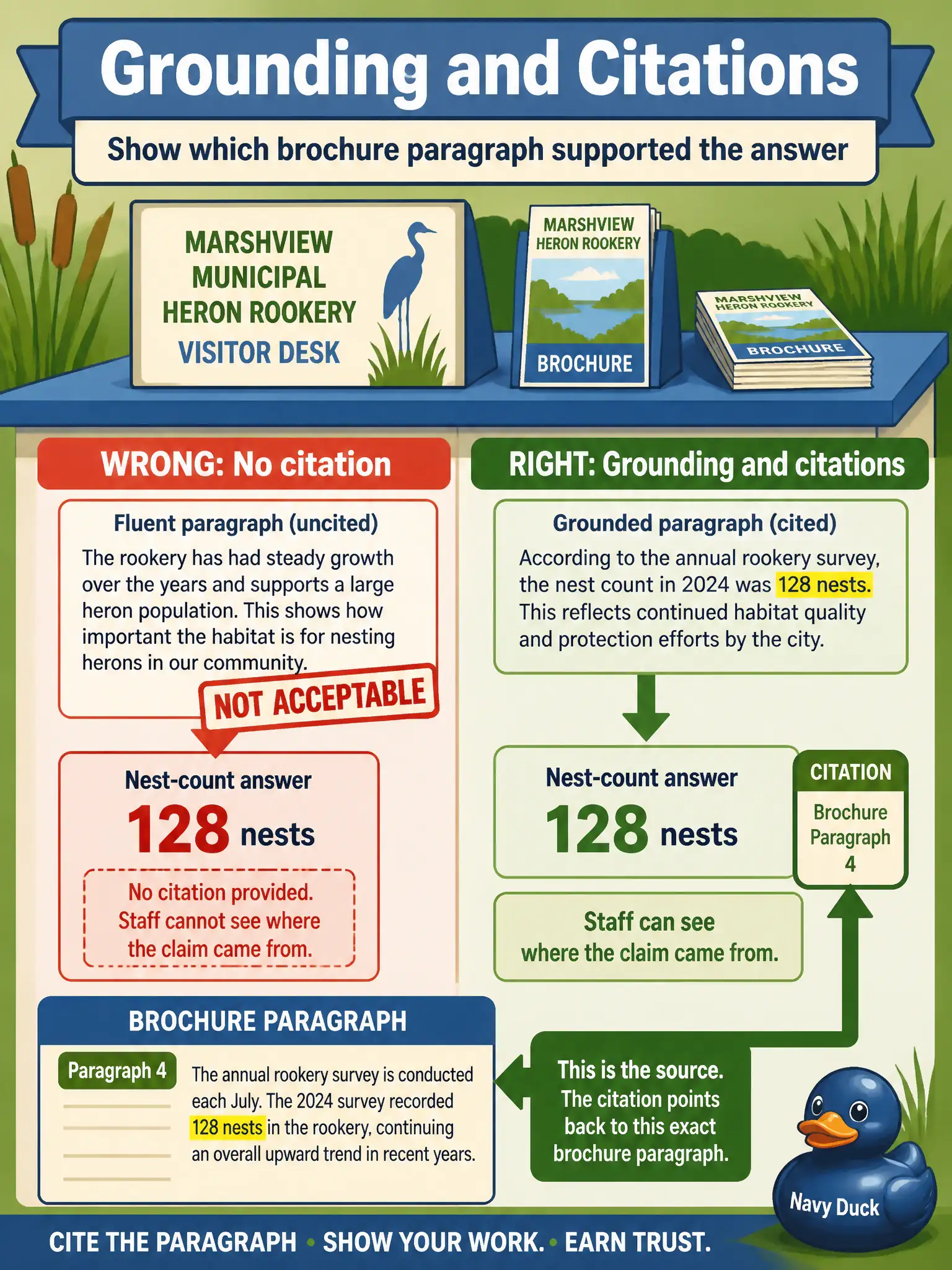
A municipal heron-rookery visitor desk must show which brochure paragraph supported the nest-count answer. An uncited fluent paragraph is not acceptable. Which application control is that?
Select an answer to reveal the explanation.
Short Explanation
Think of a visitor desk that has to show which brochure paragraph backed the nest count. That is grounding and citations. A fluent tone is not a footnote, and hiding the brochure makes it worse.
Full Explanation
The municipal heron-rookery visitor desk must show which brochure paragraph supported the nest-count answer; an uncited fluent paragraph is not acceptable. Grounding and citations are the application control that attaches claims to source passages so staff can see where the nest count came from. Fluency alone is insufficient when public-desk answers need inspectable evidence from the brochure corpus, especially for wildlife counts visitors may repeat.
Relying on a confident tone fails because fluency and confidence are not citations; a smooth paragraph can still be ungrounded. Hiding the brochure fails because concealing the source makes verification impossible and is the opposite of citation discipline. Raising temperature fails because more randomness encourages inventive nest counts rather than tighter adherence to a cited brochure paragraph.
Exam caveat: grounding and citations are a distinct application requirement from answer quality or style; exams often contrast fluent hallucination with cited retrieval. Operational check: require every nest-count answer to display the supporting brochure excerpt, spot-check that the cited paragraph actually contains the number, and reject responses that arrive fluent but uncited.