
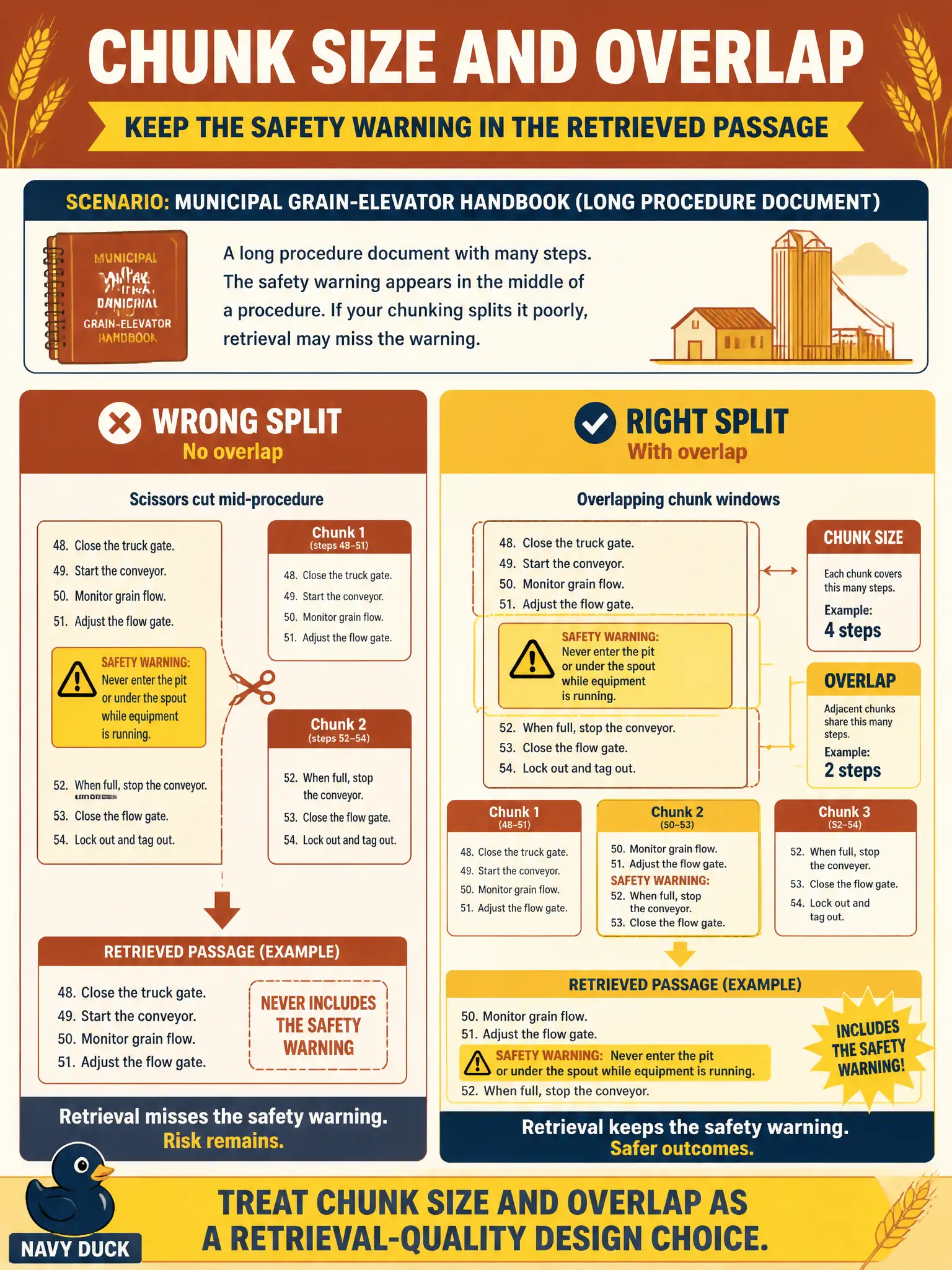
A municipal grain-elevator handbook is split mid-procedure, so the retrieved snippet never includes the safety warning. What should the team treat as a retrieval-quality design choice?
Select an answer to reveal the explanation.
Short Explanation
Think of a handbook split mid-procedure so the safety warning falls off the snippet. Chunk size and overlap are how you keep the warning in the retrieved piece. Defining the word, turning retrieval off, or raising temperature does not glue it back.
Full Explanation
When a municipal grain-elevator handbook is split mid-procedure, the retrieved snippet can omit the safety warning that belonged with the steps. Chunk size and overlap are the retrieval-quality design choices that determine whether a retrieved passage can still hold the warning with its procedure. Better chunking keeps semantically related sentences together so generation is grounded in a complete safety-critical unit rather than a severed fragment.
Only defining the word chunking fails because vocabulary recall does not change how the handbook is split or what the retriever returns. Turning retrieval off fails because missing warnings then never surface from the handbook at all; disabling retrieval abandons grounding instead of repairing it. Raising temperature fails because randomness does not glue a cut warning back into a snippet; it only changes how freely the model phrases whatever incomplete context it received.
Exam caveat: chunking parameters are RAG design controls with safety consequences—especially in procedural municipal handbooks—not mere preprocessing trivia. Operational check: adjust chunk size and overlap, re-index the handbook, query the mid-procedure topic, and confirm the retrieved passage includes the safety warning before regenerating answers.