
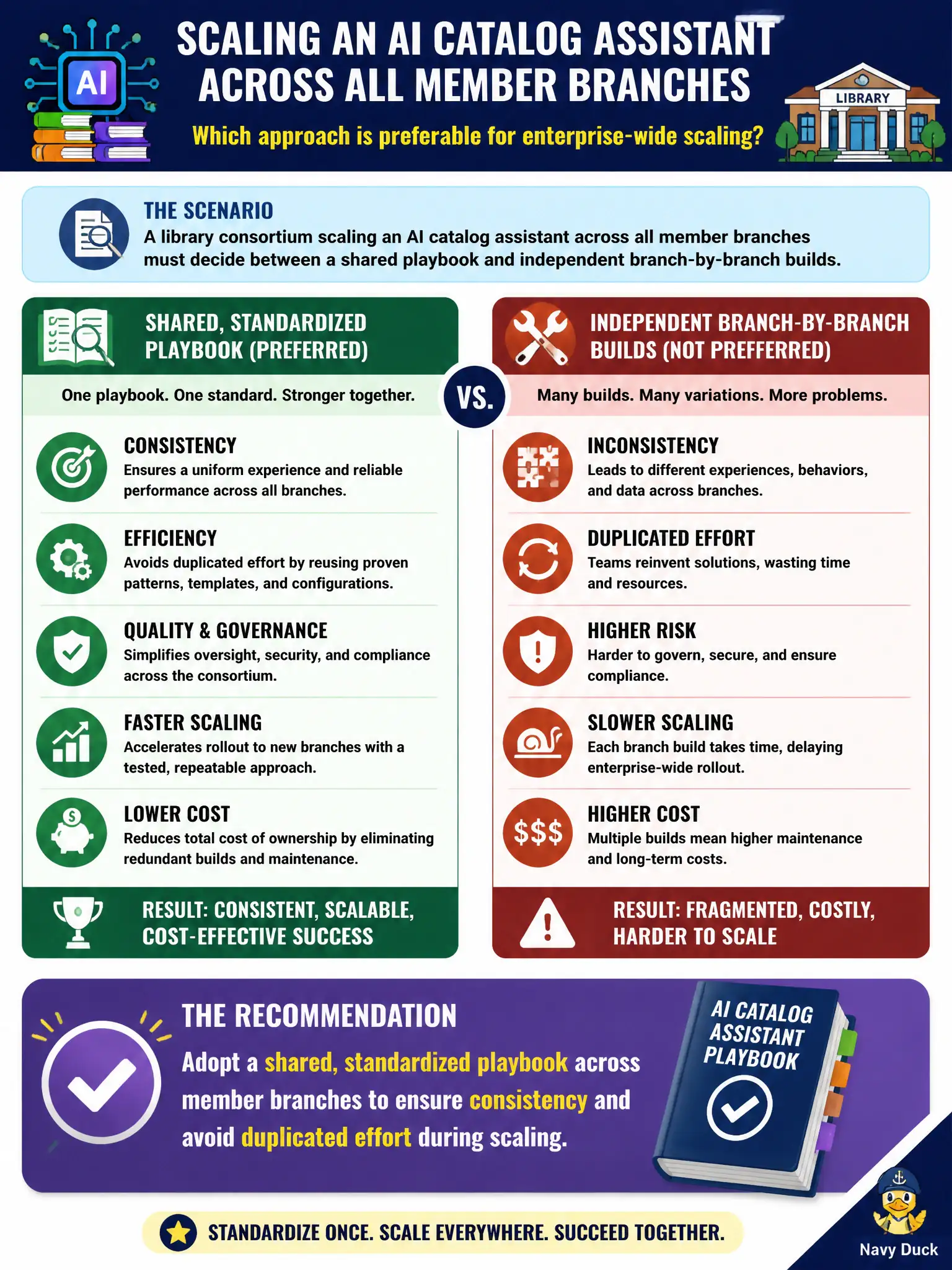
A library consortium scaling an AI catalog assistant across all member branches must decide between a shared playbook and independent branch-by-branch builds. Which approach is preferable for enterprise-wide scaling?
Select an answer to reveal the explanation.
Short Explanation
Twenty branches solving the same problem twenty different ways is a lot of wasted reinvention. A shared playbook keeps everyone rowing the same direction, so lessons learned in one branch actually help the next.
Full Explanation
A shared, standardized playbook captures lessons from the pilot and applies them consistently, reducing duplicated effort and uneven quality across branches, reflecting a proven standardized-scaling methodology. Independent branch-by-branch builds sound locally responsive but multiply implementation risk, inconsistent resident experience, and redundant effort across the consortium. Standardizing only for well-funded branches first creates a two-tier rollout that leaves smaller branches without the support structure the initiative is meant to provide. Delaying the methodology decision until after branches have already launched independently locks in the very inconsistency a shared playbook is meant to prevent, making standardization far more costly after the fact. Scope caveat: a shared playbook should still allow reasonable local configuration where genuine differences in branch needs exist. Operational check: confirm a documented playbook exists and has been distributed to every branch before their individual rollouts begin.