
A transit authority runs an internal hackathon inviting frontline staff to propose GenAI use cases for daily operations. What is the correct way for leadership to interpret the hackathon's strategic purpose?
Select an answer to reveal the explanation.
Short Explanation
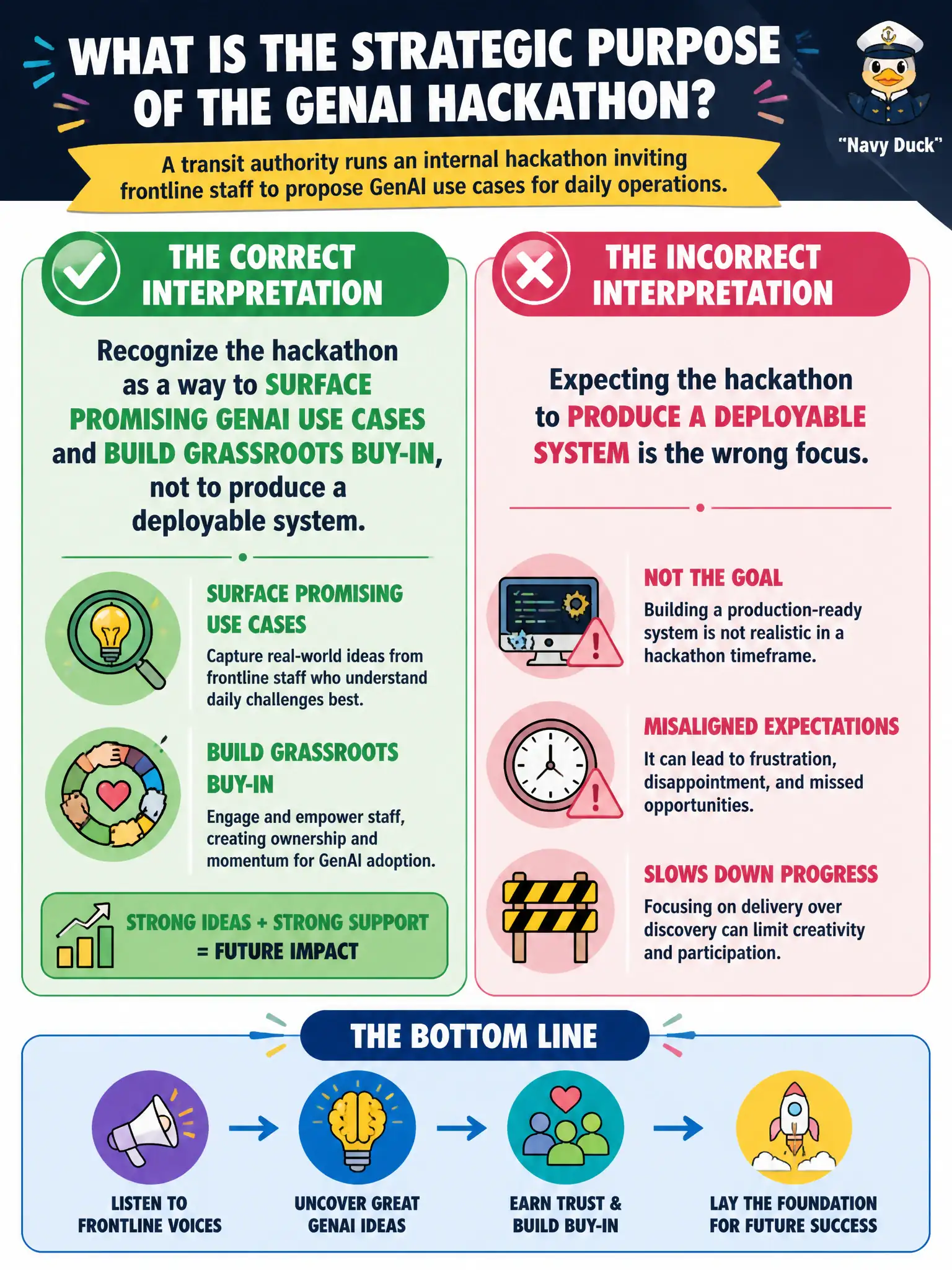
A hackathon is a brainstorm with pizza, not a product launch. Its job is turning frontline experience into fresh ideas and getting people excited about what's possible, polish and production-readiness come later, through proper governance.
Full Explanation
Hackathons surface use cases and build cultural buy-in early in a transformation effort, turning frontline operational knowledge into candidate ideas leadership can evaluate, which is the strategic value of the exercise. Treating a winning prototype as deployment-ready skips the governance, risk, and technical hardening steps that separate a demo built in a day from a system trusted with daily operations. Framing the event mainly as recruiting misses its actual value: eliciting ideas and engagement from staff who already know the operational problems firsthand. Grading success by how finished submissions look rewards polish over insight, when the real goal is creative problem identification, not shipped software. Scope caveat: promising hackathon ideas still need a formal evaluation and governance gate before scaling. Operational check: track how many hackathon ideas get formally triaged into the pilot pipeline afterward.