
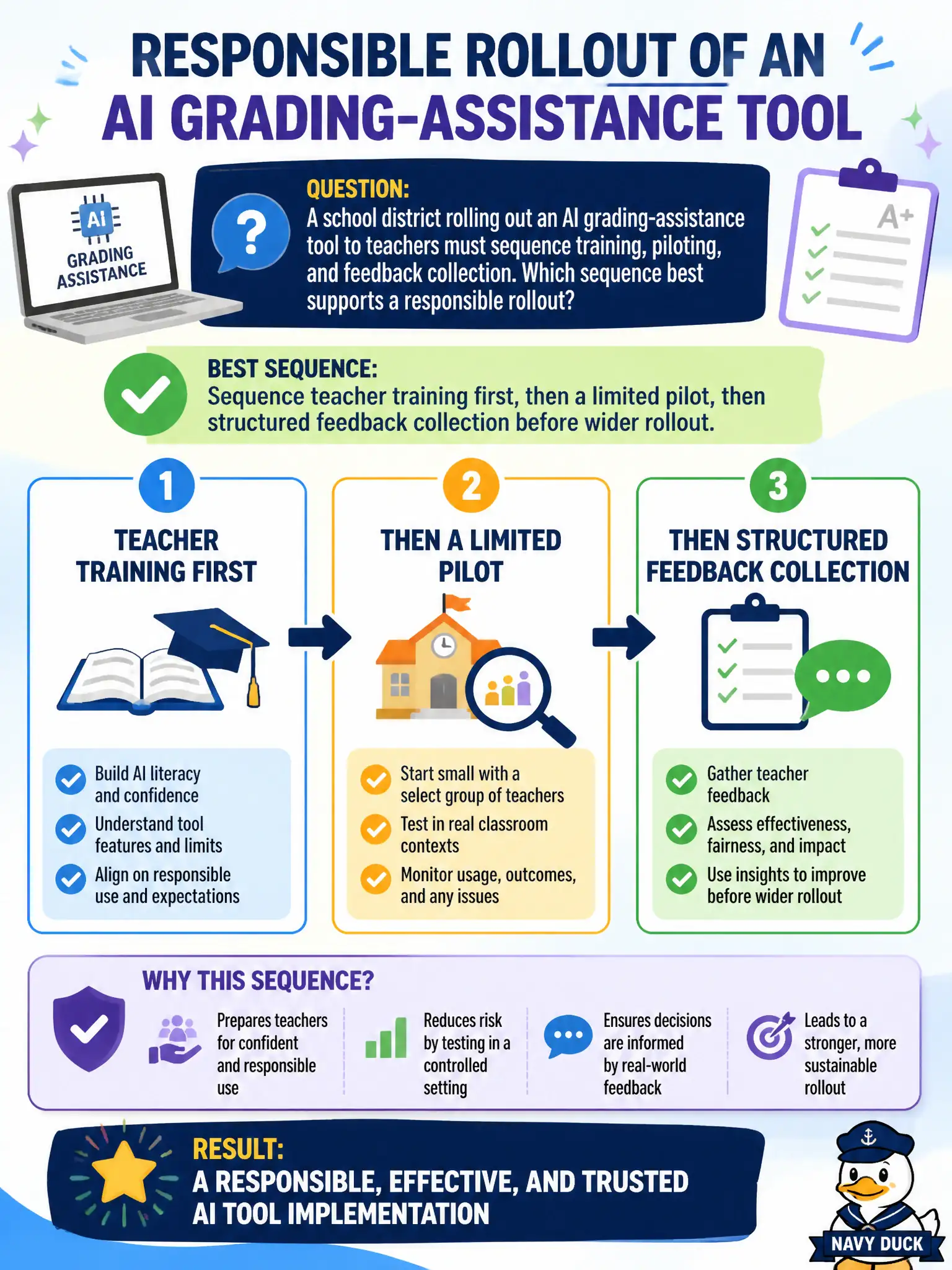
A school district rolling out an AI grading-assistance tool to teachers must sequence training, piloting, and feedback collection. Which sequence best supports a responsible rollout?
Select an answer to reveal the explanation.
Short Explanation
Think of it like teaching someone to drive before handing them the keys to the whole fleet. Train first, test with a small group, then listen to what they learned, only then does it make sense to scale district-wide.
Full Explanation
A phased training, then pilot, then feedback sequence reduces risk and builds real evidence before a broad rollout, letting the district catch problems while the blast radius is still small. A mandate-only rollout skips foundational training, producing inconsistent and risky use from day one because teachers are learning the tool live on real student work. Collecting feedback before any exposure to the tool yields uninformed impressions rather than usable signal, since teachers can't meaningfully evaluate something they haven't used. Running training and piloting at every school simultaneously removes the small-scale safety net a pilot exists to provide, multiplying the impact of any issue instead of containing it. Scope caveat: pilot scope should be small enough to contain problems but broad enough to yield real feedback. Operational check: confirm a feedback mechanism, survey or office hours, is scheduled before the pilot ends, not improvised after complaints arise.