
A county housing authority wants to deploy an AI-assisted eligibility-screening tool that would draw on income and benefits data held by a state agency. What must the county establish before the technical build of the screening tool proceeds?
Select an answer to reveal the explanation.
Short Explanation
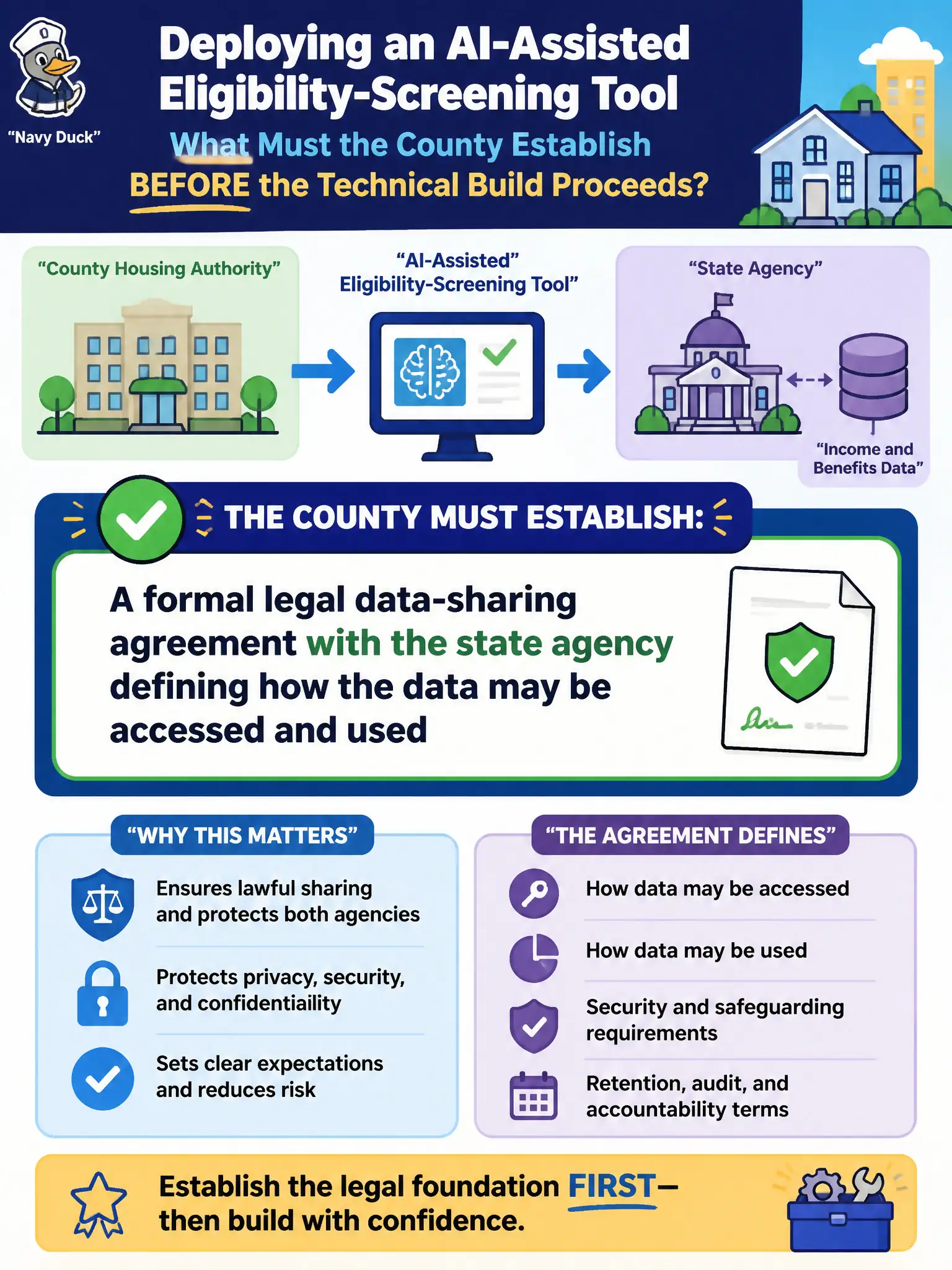
Think of the state's income and benefits data like a neighbor's toolshed, you can't just start borrowing tools because you have a project in mind, you need an agreement about what you can take and when. The county needs that same kind of formal understanding with the state before a single line of the screening tool gets built. Skip that step and the whole build sits on data access no one actually authorized.
Full Explanation
Cross-agency data access is a legal and governance question before it's a technical one, so a formal data-sharing agreement with the state must be in place first, spelling out what data may be accessed, for what purpose, under what security controls, and for how long. Building against another agency's data without that agreement risks unauthorized access to protected benefits information and can force a costly rebuild if the state later imposes different terms. A caseworker-approved interface design is valuable, but it's a downstream usability decision that only matters once the tool can legitimately access the data it needs to display. A hosting budget sized to volume assumes the data pipeline exists to generate that volume, which is premature before access is even authorized. A public communications plan addresses applicant-facing messaging, useful before launch but not a blocker to starting the technical build once data access is properly authorized. This scope applies specifically to shared data crossing an organizational or jurisdictional boundary; data the county already owns outright wouldn't need this step. A concrete check for the county is confirming a signed agreement names specific data elements, access limits, and an expiration or renewal date before any integration work begins.