
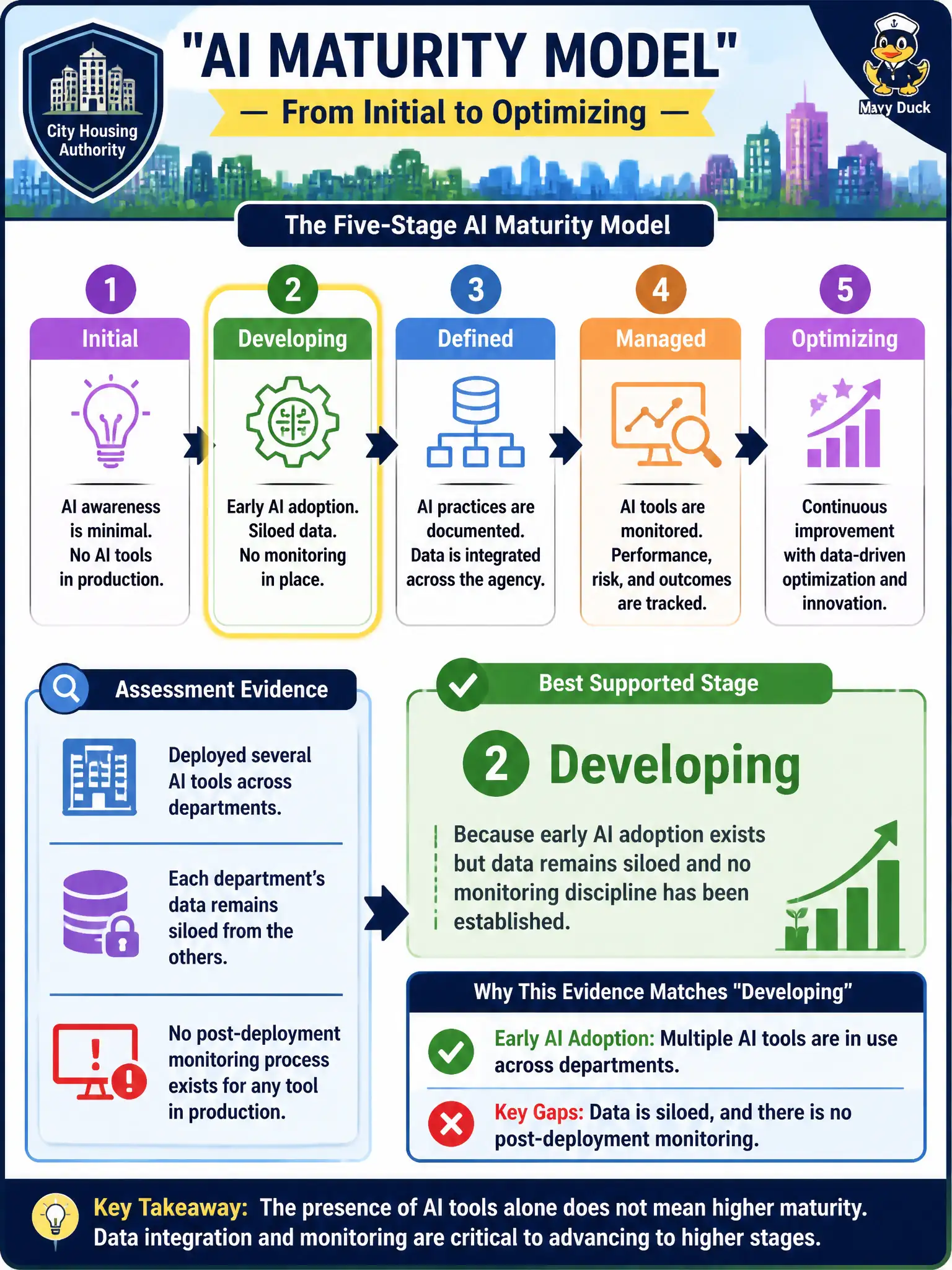
A city housing authority evaluates itself against a five-stage AI maturity model: initial, developing, defined, managed, optimizing. The assessment evidence shows the agency has deployed several AI tools across departments, but each department's data remains siloed from the others and no post-deployment monitoring process exists for any tool in production. Which maturity stage does this evidence best support?
Select an answer to reveal the explanation.
Short Explanation
A maturity model isn't graded on how many tools you've launched, it's graded on the discipline wrapped around them. Deployed-but-siloed-and-unmonitored is a classic developing-stage fingerprint: real activity underway, but the connective tissue between departments and the safety net after go-live aren't there yet.
Full Explanation
AI maturity models measure the strength of underlying practices, such as data integration and oversight, not just the count of tools in production. This agency has already moved past the initial stage, since initial describes an agency with no structured AI activity, and here multiple departments have deployed tools. But siloed data across departments and the absence of post-deployment monitoring are exactly the gaps that separate developing from defined: a defined stage requires standardized, cross-department practices and documented processes, neither of which exists here. Calling this managed overstates the picture, since managed implies monitored, measured performance against defined metrics, and there is no monitoring process at all. Optimizing is further out of reach still, since it describes continuous improvement built on mature measurement practices this agency has not established. Labeling the agency initial ignores the deployed tools already in production, which represent real, if uncoordinated, adoption activity. Scope note: maturity assessments should be evidence-based rather than self-reported, since agencies commonly overstate their own stage. Operational check: verify whether a deployed tool has a documented monitoring cadence and whether departments share a common data standard before finalizing the rating.