
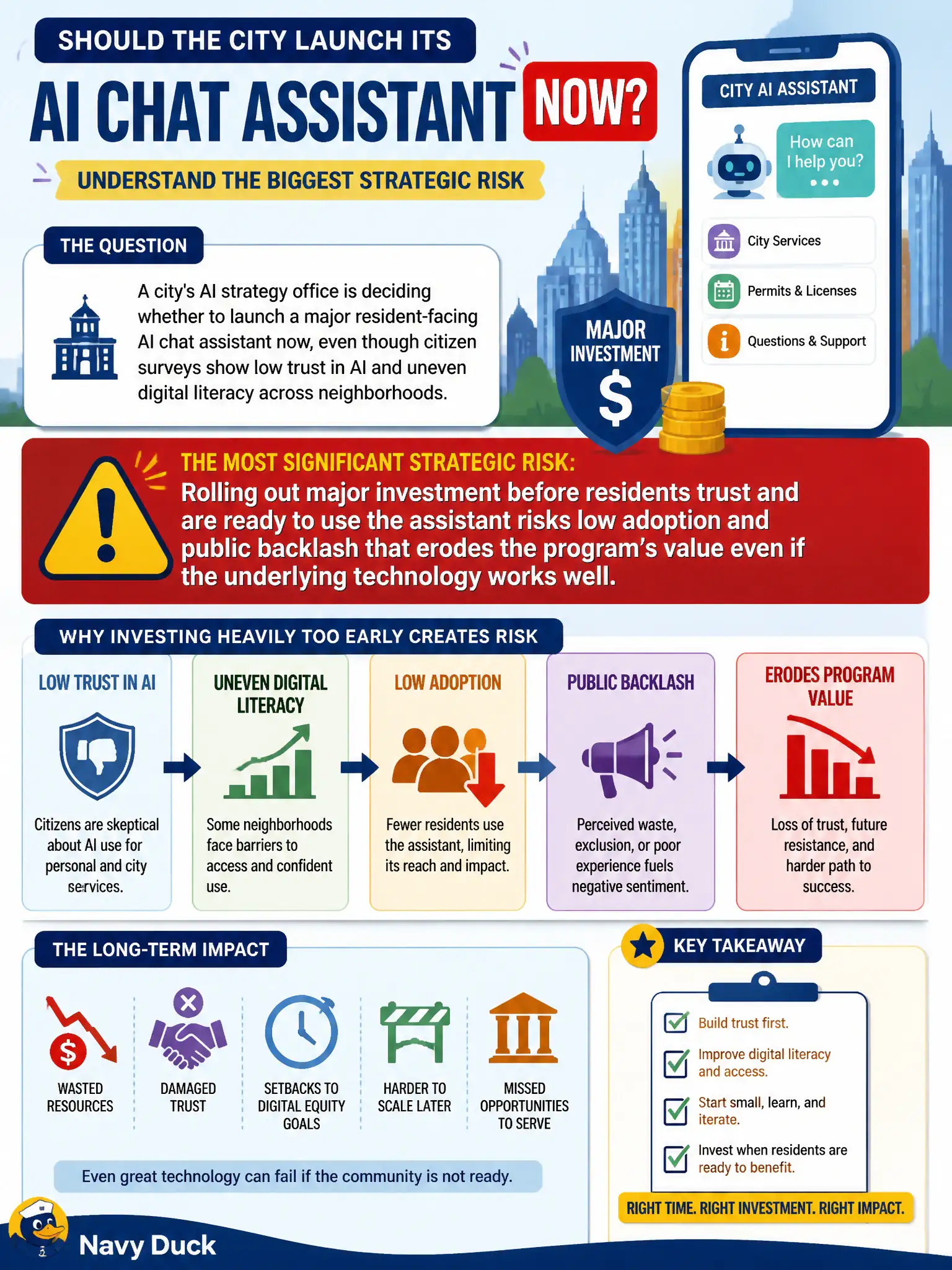
A city's AI strategy office is deciding whether to launch a major resident-facing AI chat assistant now, even though citizen surveys show low trust in AI and uneven digital literacy across neighborhoods. What is the most significant strategic risk in proceeding with heavy investment immediately?
Select an answer to reveal the explanation.
Short Explanation
Think of it like opening a new restaurant before anyone in the neighborhood knows what it serves or trusts the chef. Even a flawless resident-facing assistant falls flat if people don't trust it or can't figure out how to use it, and that gap turns into wasted budget and bad headlines fast. The real risk here isn't the tech breaking, it's adoption never happening.
Full Explanation
Launching a major AI initiative ahead of citizen readiness creates a mismatch between capability and uptake. Even a technically excellent assistant delivers little public value if residents don't trust it enough to use it or lack the digital skills to navigate it, so usage stays low while the sunk investment and ongoing maintenance costs keep accruing. This is a sequencing problem more than a technology problem: readiness work like public trust-building, plain-language onboarding, and staged rollouts to willing early-adopter neighborhoods typically needs to happen alongside or before a full-scale launch, not after. The claim that literacy gaps make the assistant technically infeasible confuses resident readiness with engineering readiness; the software can function perfectly while adoption still lags. The idea that low trust only affects marketing spend misses that trust directly shapes whether residents engage with the service at all, which is the outcome that justifies the investment. Assuming repeated exposure will build trust automatically ignores that a bad first experience with an unfamiliar tool often drives residents away rather than building familiarity. One scope caveat: pilot testing in a receptive neighborhood is different from full-scale investment, and a strategist should check whether a phased rollout plan exists before approving full funding.