
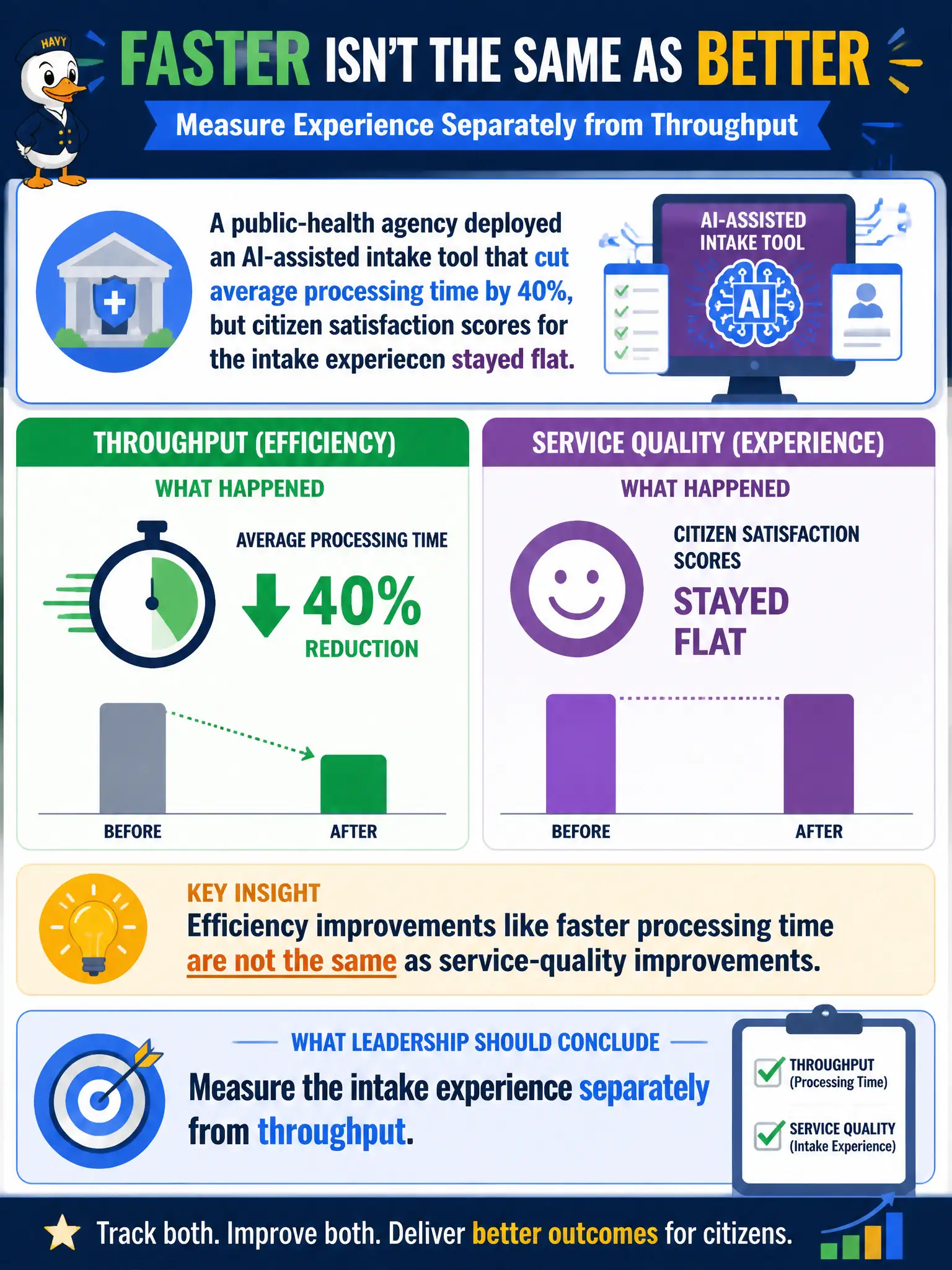
A public-health agency deployed an AI-assisted intake tool that cut average processing time by 40%, but citizen satisfaction scores for the intake experience stayed flat. What should this outcome prompt leadership to conclude?
Select an answer to reveal the explanation.
Short Explanation
Think of it like a faster checkout line that still leaves shoppers annoyed: speed and satisfaction are two different scorecards. Cutting processing time is an efficiency win, but you still need to check whether the actual experience got better before you call it a service-quality win.
Full Explanation
Efficiency metrics like processing time measure how cheaply or quickly a process runs, while service-quality metrics like satisfaction capture whether the people using the service actually experienced it as better. These two categories can move independently: a faster intake process might still feel confusing, impersonal, or error-prone to the citizens going through it, which keeps satisfaction flat even as throughput improves. Treating a flat satisfaction score as outright failure ignores the real efficiency gain the tool did produce, so decommissioning on that basis alone overcorrects. Dropping satisfaction surveys in favor of processing time collapses two distinct value dimensions into one, which hides exactly the gap leadership needs to see. Assuming satisfaction will rise on its own confuses familiarity with quality and skips the root-cause work needed to find out what's actually falling short in the experience. The operational check here is to pair the throughput metric with a targeted follow-up, such as exit surveys or friction-point analysis on the new intake flow, to see whether the tool is creating new pain points even as it saves time. A useful scope limit: this distinction matters most in citizen-facing services, where perceived quality often depends on factors speed alone can't fix, like clarity, trust, and human backup options.