
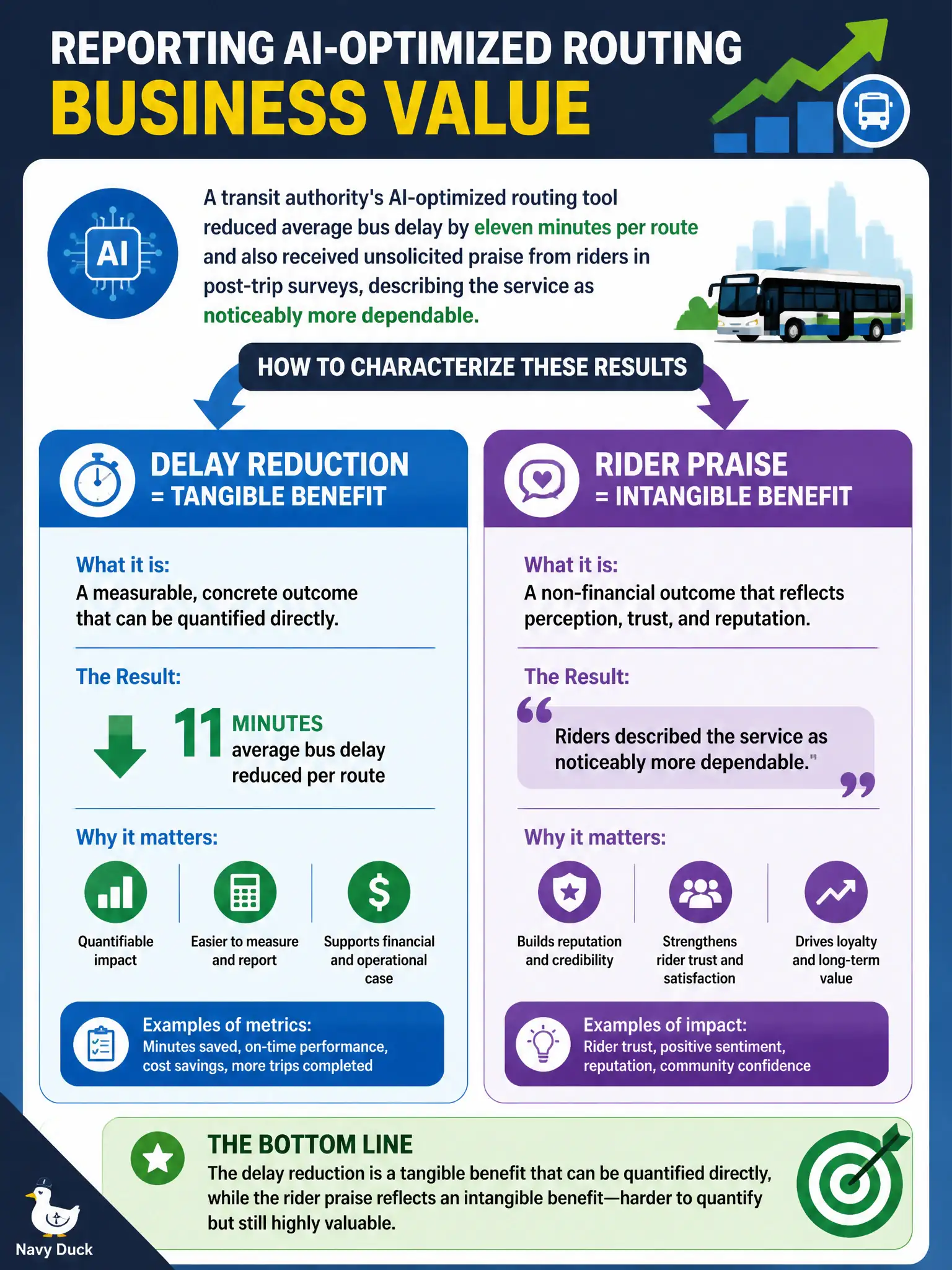
A transit authority's AI-optimized routing tool reduced average bus delay by eleven minutes per route and also received unsolicited praise from riders in post-trip surveys, describing the service as noticeably more dependable. When reporting the tool's business value to the board, how should the strategy team characterize these two results?
Select an answer to reveal the explanation.
Short Explanation
Think about a home renovation that both shaves ten minutes off your morning commute and makes guests say the place just feels more welcoming — one you can put a number on, the other you can only describe. The eleven-minute delay reduction is the number: a tangible, measurable benefit. The unsolicited rider praise is the feeling: a real intangible benefit, like trust and reputation, that still belongs in the value story even without a clean metric.
Full Explanation
Business value reporting typically distinguishes tangible benefits, results that can be directly measured and quantified, from intangible benefits, results that are real and valuable but resist precise measurement. The eleven-minute average delay reduction is tangible because it's a direct, quantifiable operational metric, while the unsolicited rider praise about dependability reflects an intangible benefit such as improved reputation or rider trust that matters to the transit authority's mission even though it can't be reduced to a single clean figure. Reporting both results only as tangible benefits overlooks that rider sentiment, even when gathered through the authority's own survey system, is a qualitative signal rather than a directly quantifiable metric like delay time. Reporting both only as intangible benefits ignores that delay reduction is a concrete, already-quantified number that doesn't need translation into a feeling to be meaningful. Excluding the delay reduction from the report entirely because it isn't expressed as a cost savings figure narrows the definition of business value too far — operational improvements are legitimate value on their own, separate from a dollar conversion. Caveat: intangible benefits still deserve inclusion in a value report even without precise figures, since board members weigh reputation and trust alongside hard numbers. Operational check: confirm the report separates tangible and intangible benefits into distinct sections rather than blending them into one undifferentiated value claim.