
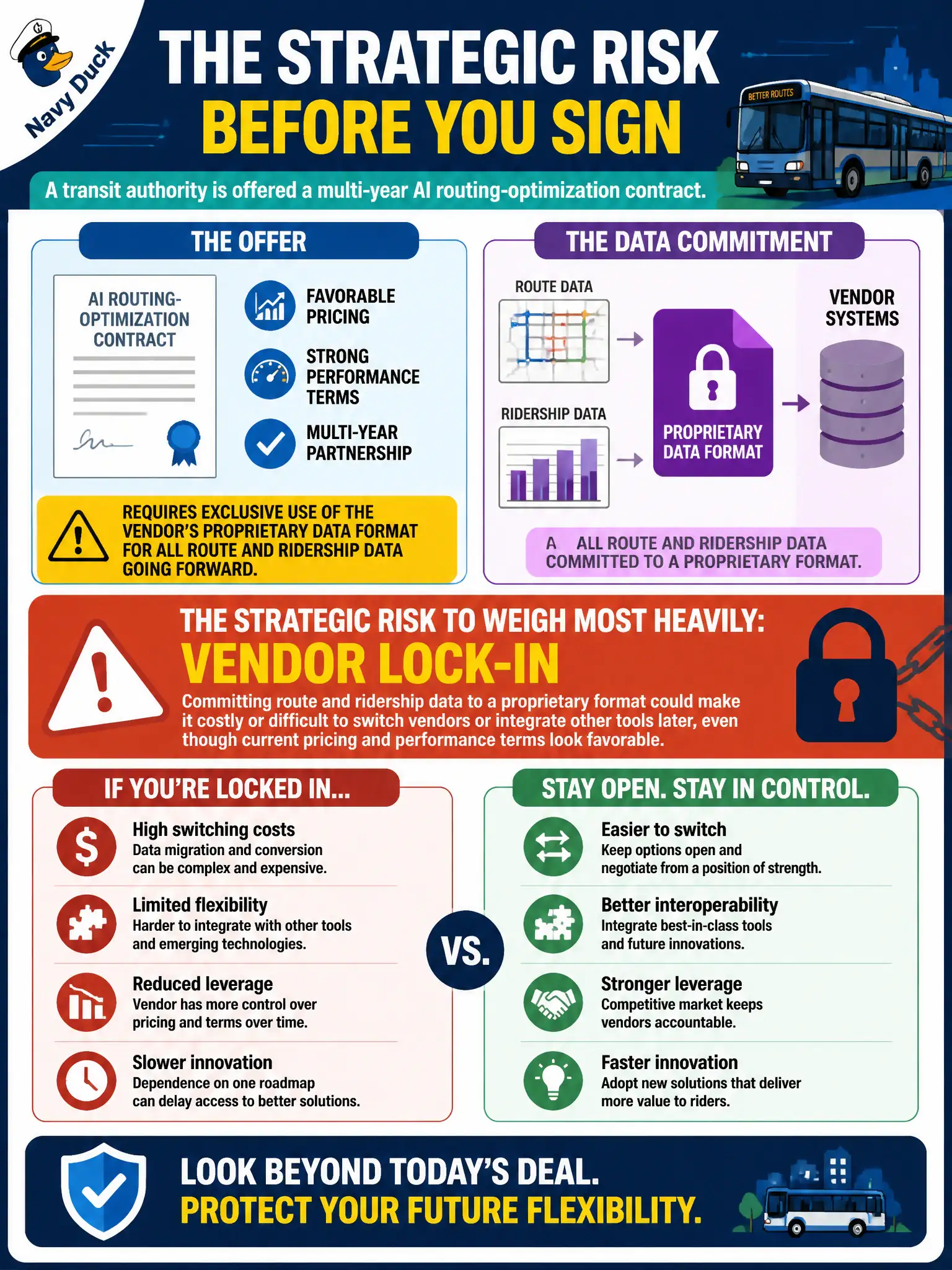
A transit authority is offered a multi-year AI routing-optimization contract that requires exclusive use of the vendor's proprietary data format for all route and ridership data going forward. The contract's pricing and performance terms are otherwise favorable. What strategic risk should the transit authority weigh most heavily before signing?
Select an answer to reveal the explanation.
Short Explanation
Think about signing a phone contract that only works with one charger cable ever made — the deal might look great on price, but you've quietly traded away your flexibility. Locking route and ridership data into one vendor's proprietary format works the same way: switching later gets expensive or technically painful, no matter how good this year's price is. Strategic risk isn't just about the number on the contract — it's about what you can't undo.
Full Explanation
Vendor lock-in is a strategic risk that operates independently of a contract's price and performance terms: once route and ridership data live in a proprietary format, converting that data to work with a future vendor or a new internal tool can become expensive, slow, or technically constrained, limiting the transit authority's negotiating leverage for years after signing. Weighing this risk before signing, not after, preserves the authority's ability to change course later. Focusing on whether the algorithm accounts for seasonal ridership variation raises a legitimate technical accuracy question, but it belongs to implementation evaluation, not the contracting decision at hand. Assuming a multi-year contract term automatically violates procurement rules overstates a general concern into a certainty; such contracts are common and typically lawful when properly competed. Speculating that favorable pricing signals vendor subsidization raises a plausible-sounding tangent, but the actual exposure here is data portability, not vendor motive. Caveat: lock-in risk doesn't mean the contract should be rejected outright — it means negotiating data-export rights first. Operational check: confirm the contract includes a data-portability clause specifying the authority's rights to its own data in a non-proprietary format.