
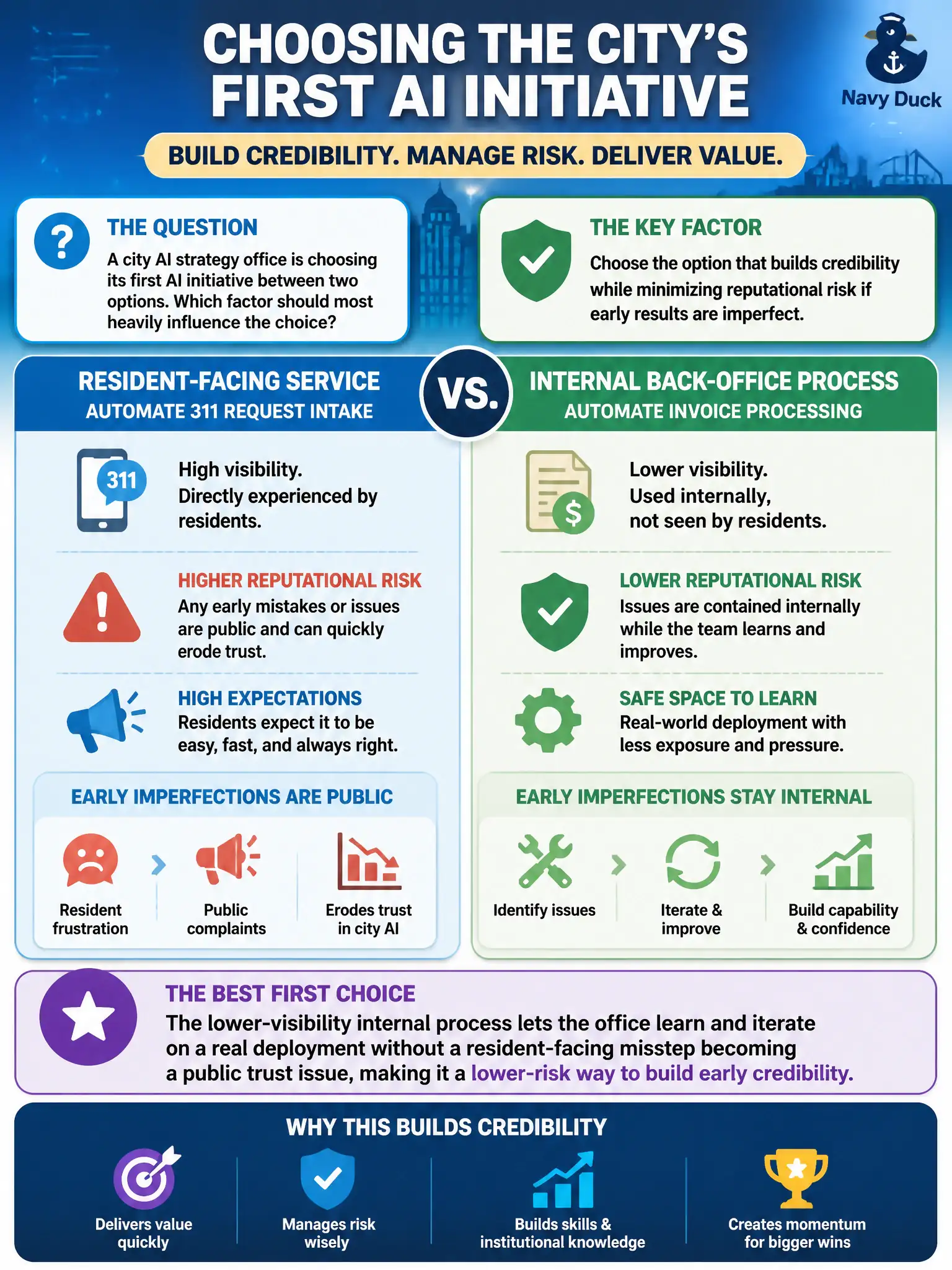
A city AI strategy office is choosing its first AI initiative between a highly visible resident-facing service, automating 311 request intake, and a lower-visibility internal back-office process, automating invoice processing. The office wants a first initiative that builds credibility without exposing the city to major reputational risk if early results are imperfect. Which factor should most heavily influence the choice?
Select an answer to reveal the explanation.
Short Explanation
Think about learning to parallel park in an empty lot before you try it on a crowded street — you want your first mistakes to happen somewhere they don't cost you an audience. Starting with a lower-visibility internal process lets the AI office work out the kinks where a stumble doesn't become a headline. That credibility, built quietly first, is what makes the next, more visible initiative land well.
Full Explanation
Sequencing an AI program's first initiative is a risk-management decision as much as a technical one: choosing the lower-visibility internal process first means any early missteps stay contained to an internal workflow rather than becoming a resident-facing failure that undermines public trust in the whole program. That contained learning environment is what a young AI office needs before taking on something residents will judge directly. Choosing the resident-facing initiative first for political visibility inverts the risk profile, maximizing exposure exactly when the program has the least operating experience to prevent a misstep. Treating deployment cost as the primary selection criterion ignores that a first initiative's real value is organizational learning and risk containment, which can make a low-cost but high-visibility option a poor first choice. Assuming 311 systems are technically simpler than back-office systems is an unverified claim about integration complexity that shouldn't drive strategic sequencing. Caveat: this logic assumes internal buy-in for a 'quiet first win' exists — a culture that only values visible wins may resist starting internally. Operational check: confirm executive sponsors agree an internal-first initiative counts as program progress before locking in the sequence.