
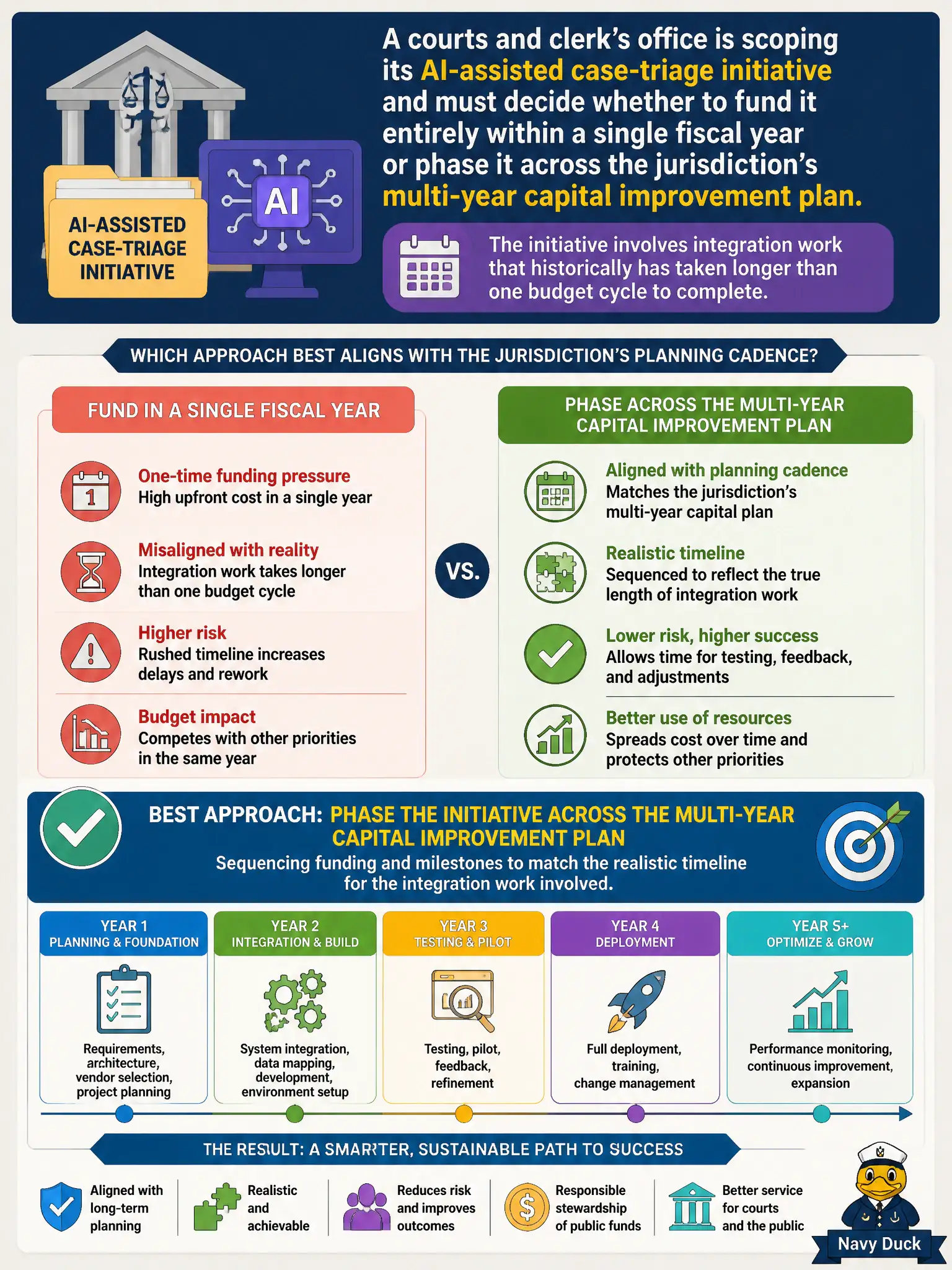
A courts and clerk's office is scoping its AI-assisted case-triage initiative and must decide whether to fund it entirely within a single fiscal year or phase it across the jurisdiction's multi-year capital improvement plan. The initiative involves integration work that historically has taken longer than one budget cycle to complete. What approach best aligns the initiative with the jurisdiction's planning cadence?
Select an answer to reveal the explanation.
Short Explanation
Think of renovating a kitchen you know will take eighteen months, but insisting on paying the contractor in one lump sum this year — the money and the work just don't line up. Multi-year capital planning exists so funding follows the actual pace of the work, not the calendar the budget office happens to use. Phasing the case-triage initiative across that plan matches commitment to reality instead of forcing reality to fit a single fiscal year.
Full Explanation
Aligning an AI initiative's funding sequence with its actual delivery timeline is a core planning discipline, and integration work that historically spans more than one budget cycle is exactly what the multi-year capital improvement plan exists to fund — phasing milestones and appropriations to match the realistic pace of the work avoids both underfunding early phases and stranding the project mid-integration. Committing the entire initiative to a single fiscal year despite a longer integration timeline creates a mismatch between appropriated funds and deliverable work, forcing a rush or a mid-year supplemental request. Seeking emergency appropriation authority to bypass normal capital planning sidesteps the oversight that process provides and sets a precedent that AI projects don't need the same budget discipline as other capital work. Funding only the software license this year and scoping integration separately later artificially splits one interdependent project into two, risking a licensed tool sitting unintegrated while the second phase waits for its own budget cycle. Caveat: phasing doesn't mean open-ended — each phase should carry its own milestone and go/no-go review. Operational check: confirm the capital plan includes a named milestone and funding line for each project phase before the first appropriation is requested.