
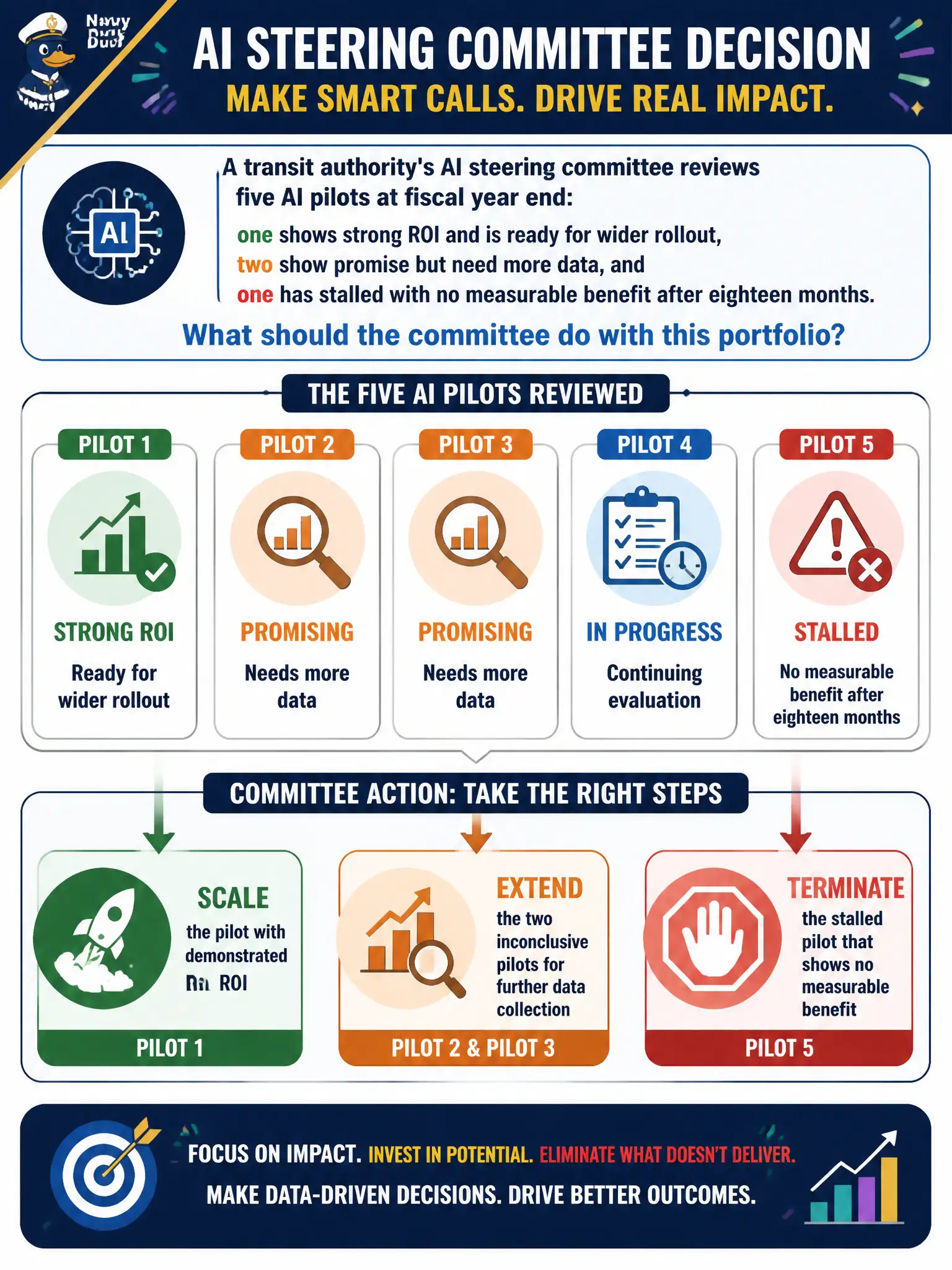
A transit authority's AI steering committee reviews five AI pilots at fiscal year end: one shows strong ROI and is ready for wider rollout, two show promise but need more data, and one has stalled with no measurable benefit after eighteen months. What should the committee do with this portfolio?
Select an answer to reveal the explanation.
Short Explanation
Think of a pilot portfolio like a garden: you don't water every plant the same amount just because you planted them all the same season. You give more resources to what's thriving, more time to what's still budding, and you pull the ones that clearly aren't going to grow. Scale, pause, and terminate decisions work the same way — they're driven by results, not by how much time or money has already gone in.
Full Explanation
A mature AI portfolio review applies differentiated decisions to each initiative based on evidence, not a uniform pilot calendar. The pilot with proven ROI graduates to a scale decision because it has already demonstrated value; the inconclusive pilots warrant continued monitoring because ending them too early would discard a legitimate signal that hasn't arrived yet; and the stalled pilot with no measurable benefit after eighteen months is a termination candidate because prolonging it only consumes budget that could fund something more promising. Continuing every pilot on its original timeline mistakes a committed schedule for evidence of value — a sunk-cost trap, not portfolio management. Scaling the stalled pilot alongside the strong performer commits the same error more damagingly, rewarding elapsed time rather than results. Pausing the top performer to fund the inconclusive pilots gets the resource-shifting instinct right but aims it at the wrong initiative. Caveat: a pilot with weak early metrics isn't automatically a terminate candidate if its measurement window was too short for its use case. Operational check: pull each pilot's original success criteria and compare actual results line by line before the committee votes.