
A parks and recreation department is preparing to renew an AI vendor contract. What should the department establish before renewal to keep performance accountability intact?
Select an answer to reveal the explanation.
Short Explanation
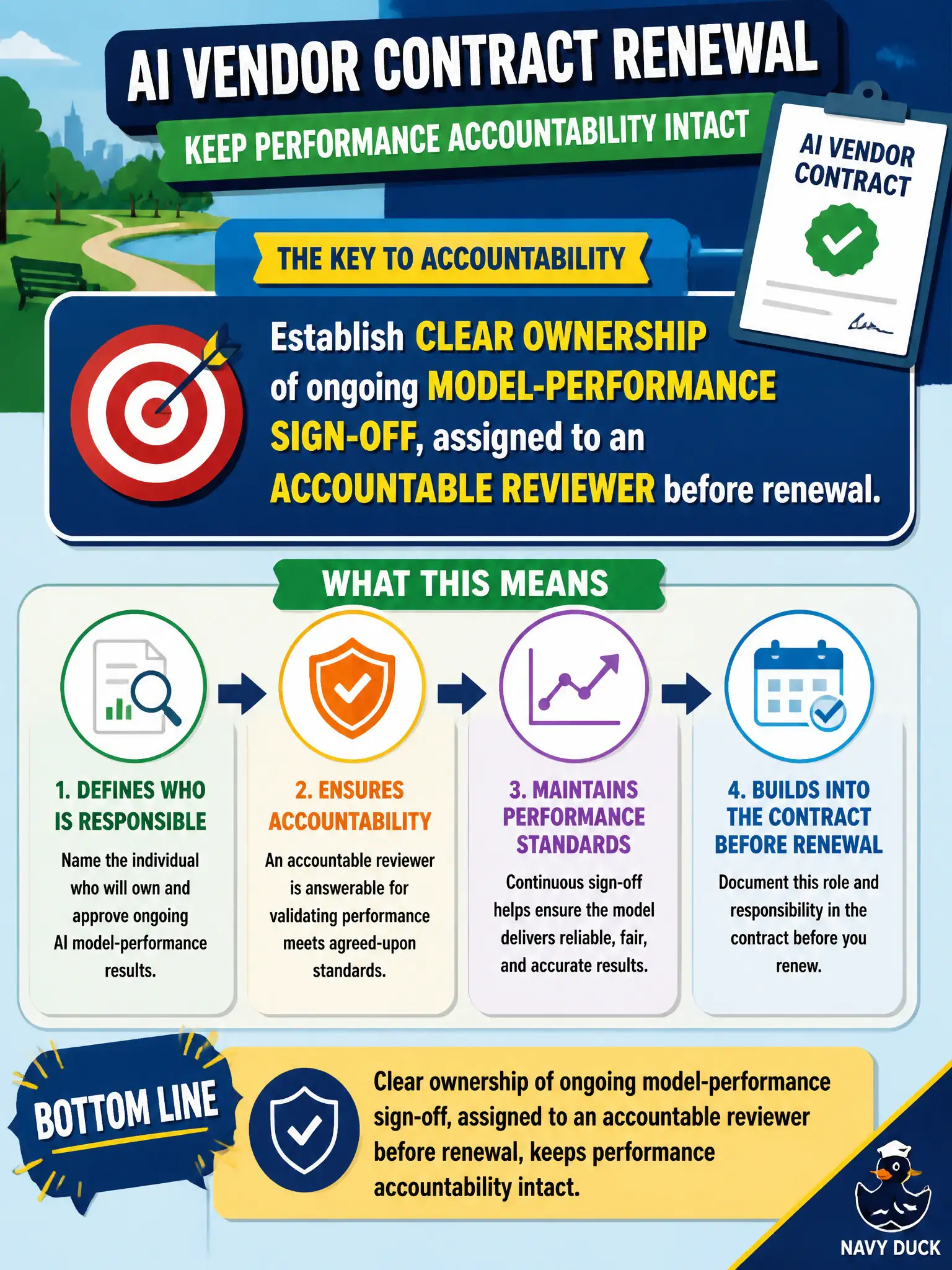
Renewing a contract on autopilot is like re-upping a gym membership without ever checking if the equipment still works. Someone specific has to own sign-off on whether the tool's actually performing, or renewal just becomes a formality nobody's accountable for. Named ownership is what turns a checkbox into a real review.
Full Explanation
Accountability requires a named owner, not an ambient expectation that performance will somehow get reviewed. Assigning clear ownership of model-performance sign-off to a specific accountable reviewer means someone is formally responsible for evaluating the tool's actual output quality before the department commits to another contract term. A newsletter schedule informs staff about features but does nothing to evaluate whether the tool is meeting performance expectations; awareness is not the same as accountability. Trusting the vendor to self-report performance issues creates a conflict of interest, since the vendor benefits financially from renewal and has little incentive to surface problems that could jeopardize the contract. Assuming performance is fine because no complaints have surfaced confuses silence with success; complaints are a lagging, incomplete signal, and many performance problems go unnoticed by end users even when they are measurably affecting outcomes. A scope caveat: the reviewer assigned sign-off authority should have access to actual performance data, not just anecdotal impressions, or the review becomes a formality in substance even if not in name. A concrete operational check is to require a documented performance sign-off memo, with named reviewer and date, filed before the renewal decision is finalized.