
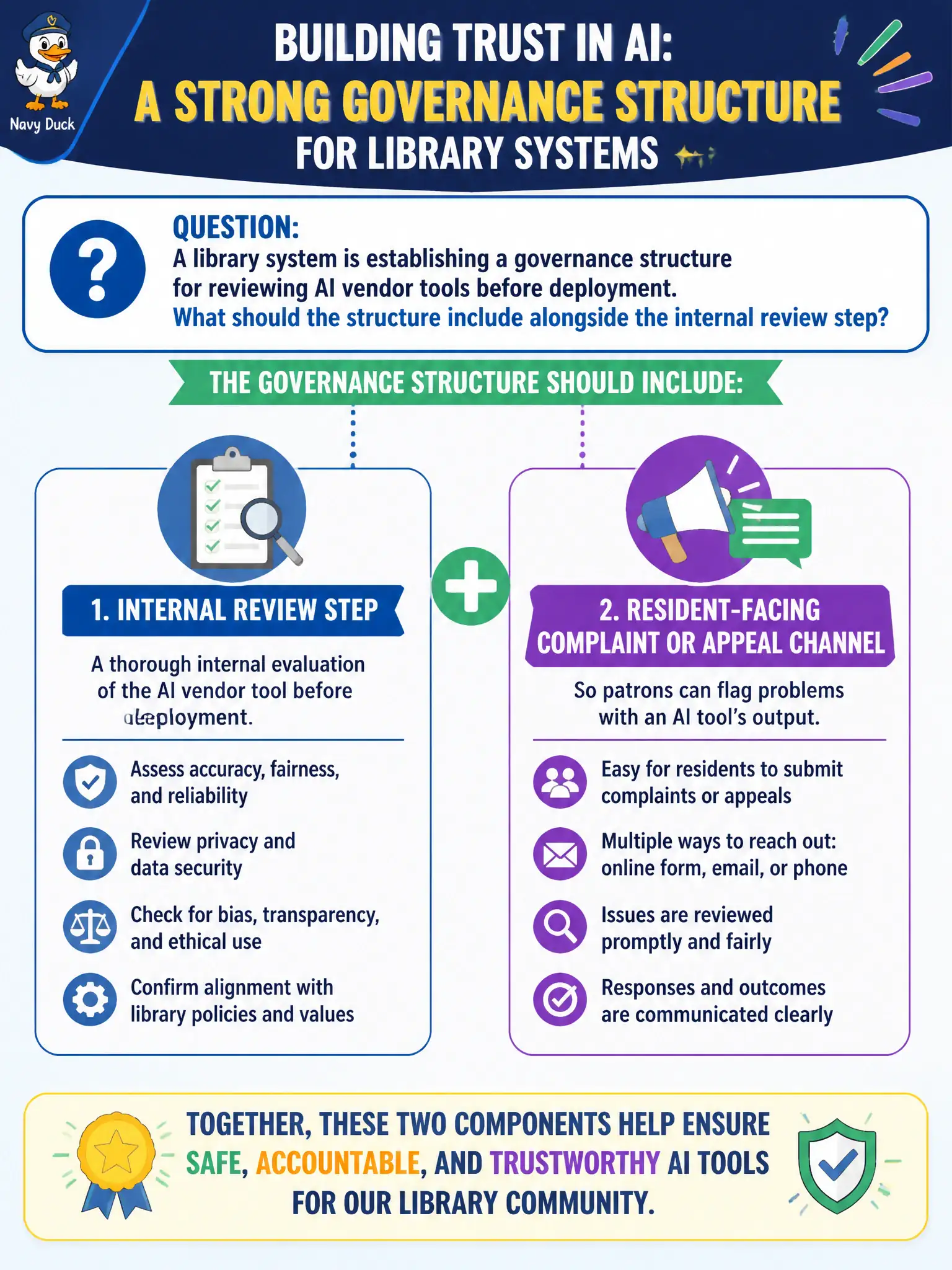
A library system is establishing a governance structure for reviewing AI vendor tools before deployment. What should the structure include alongside the internal review step?
Select an answer to reveal the explanation.
Short Explanation
An internal review only catches what staff happen to notice. Patrons using the tool day to day will spot problems staff never will, so a resident-facing complaint channel is what closes that gap. Governance isn't finished until the people actually affected have a way to speak up.
Full Explanation
A governance structure that stops at internal review only captures issues staff are positioned to see, which is a narrow slice of the tool's real-world impact. Including a resident-facing complaint or appeal mechanism means patrons who encounter a confusing, inaccurate, or unfair AI output have a direct, documented path to raise it, and that feedback becomes part of the system's ongoing oversight rather than being lost. Restricting concerns to library board members excludes the very population the tool serves and turns oversight into a closed loop that misses frontline experience. Routing everything through the vendor's customer-support line hands a third party with commercial interests control over which concerns even reach the library, and vendor support channels are typically built for product troubleshooting, not governance accountability. Limiting feedback to written letters at an annual budget hearing creates a once-a-year bottleneck for issues that may need addressing immediately, and it excludes patrons who cannot attend that specific hearing. A scope caveat: a complaint channel needs a defined internal owner who actually reviews and acts on submissions, or the channel becomes symbolic rather than functional. A concrete operational check is to confirm complaints logged through the channel are routed to the same governance body that approved the tool, closing the feedback loop.